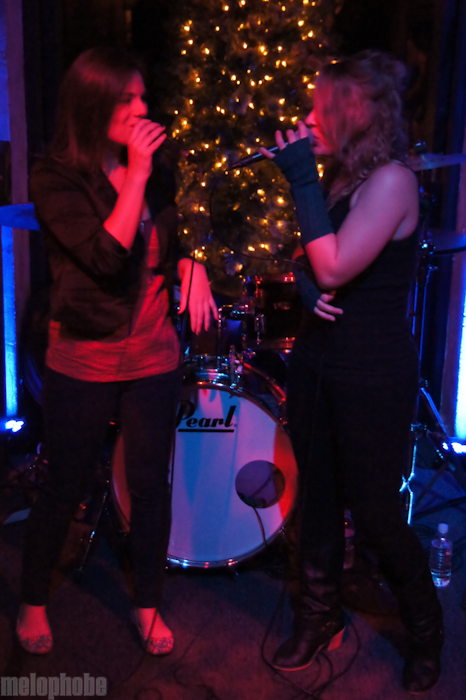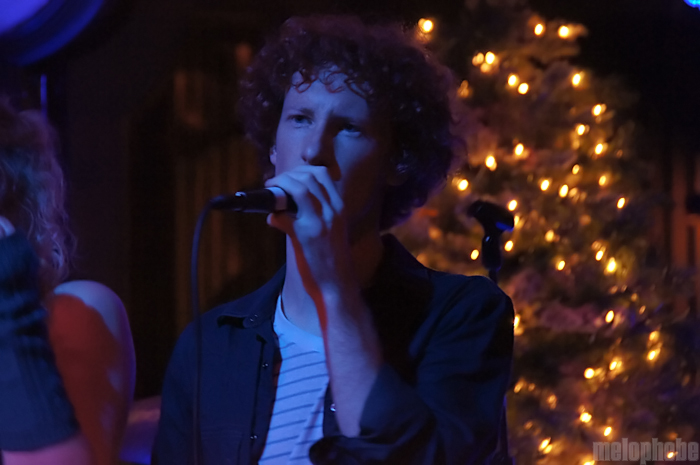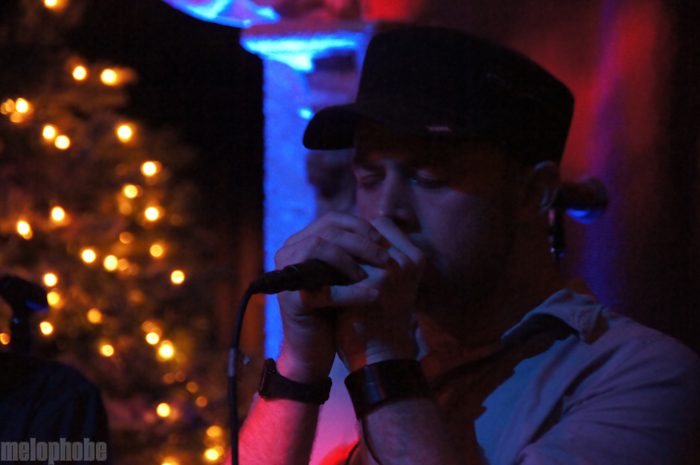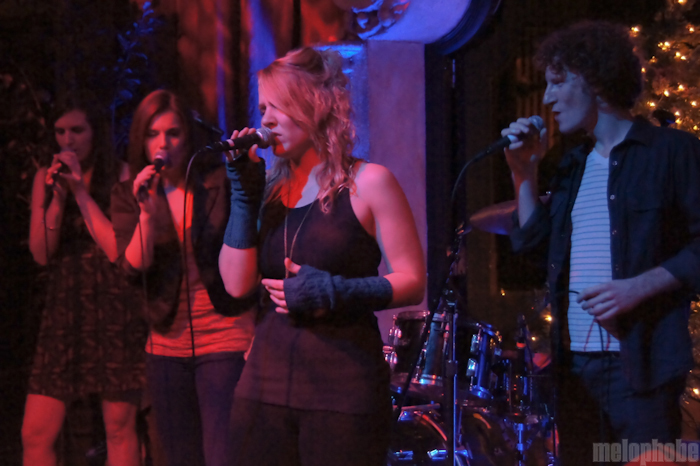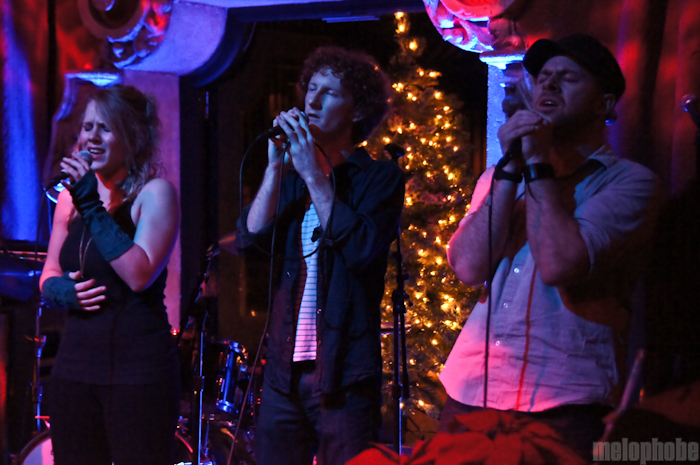
After finishing a successful year which included singing on-stage with Sarah Barilles, collaborating with the LA Contemporary Dance Company, and winning a handful of CARA awards (Contemporary a Cappella Recording Awards) Sonos vocalist Jessica Freedman had a chance to sit down with Melophobe and discuss the state of a Cappella, Sonos' latest album, and the secrets behind their affecting style of music.
Joel Danto for melophobe: Singing groups such as Sonos have been around for decades, but with new television shows like “Singoff” and “America’s Got Talent,” a capella has recently increased in popularity. What do you think separates Sonos from the rest of the competition?
Jessica Freedman: The growing popularity of a cappella/vocal music in the mainstream with shows like "The Sing Off" and "Glee" can ultimately only help us. While we don't really fit the "mold" that shows like this are showcasing (super mainstream material, choreography, a generally upbeat, entertainment-focused show choir vibe, etc.), it's not out of the question that we would do a show like this if we could truly be ourselves. For us, it comes down to the right kind of exposure over just any exposure at all. We strive to represent ourselves in a certain light, and the producers of shows like "The Sing Off" have their hands all over the end product that the viewers see. I think what separates us from the rest of the competition is that we have a very specific artistic vision that we aren't really down to compromise. While our repertoire and performance style may not be the most mainstream, high energy stuff, we sing music that we are inspired by and genuinely connect to. Also, the effects pedals that we use are a huge part of our sound, as well as something that distinguishes us from other vocal groups, and it would be unlikely to be able to use them on a show like this.
melophobe: Despite this recent wave of interest in group singing, a capella still hasn’t caught on as a mainstream genre. Why do you think the genre isn’t as successful outside of say, colleges and cruise ships, and what do you think can be done to improve its standing?
Freedman: The genre is definitely gaining mainstream popularity with the help of aforementioned TV shows, but it's definitely not universally loved or respected. Ultimately a cappella is a style, not a genre, as any genre of music can be adapted and performed a cappella. That said, 99% of a cappella revolves around performing a cappella covers of well-known material, which can perhaps be one of the reasons it hasn't "caught on." There are very, very few vocal groups writing original material. In our case, it's already a big enough challenge to convince people who have never heard a cappella that an a cappella version of a Radiohead song can change their mind. I think we're really proud of the covers we've done, as we've really tried to pick artists/songs that speak to us, no matter how popular or well known they might be. That said, we have recently begun to write original material and hope our second album will consist solely of originals. I feel like this is the missing link between a cappella and its potential for legitimate mainstream success. How many successful artists can you think of who depend solely on covering other people's material….? You love Coldplay because you love the songs that Coldplay writes. The success and career longevity of an artist, no matter what genre, depends on the quality of their original material. This just hasn't really been done yet in a cappella, thus why it's most popular in small niches like colleges and cruise ships where its main goal is to be fun and entertaining.
melophobe: Sonos will be going into the studio to record a new album soon. What are some of the goals you’d like to accomplish for this album?
Freedman: The big goal is for it to consist of all original material. We are all songwriters with unique styles and perspectives, so we are super excited to bring this to the table. Our fans know our individual voices and group style, but only in the context of covering songs they may already know and love. We're also looking forward to pushing the envelope in terms of the production/mixing. Chris (bandmember/recording engineer) records and mixes all our stuff, so we have the luxury of keeping it all in the family, so to speak. He is incredibly talented and wonderful to work with, always bringing amazing, creative mix ideas to the table as well as encouraging the writer/arranger to contribute to the mix process. One of the most exciting processes for us is bringing the new recordings to life, effects and all, with the use of pedals. In terms of the live show with second album material, we're hoping to greatly expand the use of these effects, while still always staying true to the voice as the sole source of sound.
melophobe: A lot of your music thus far has been mellow and emotive. Will you continue this trend on the next album, or are you going to try and produce songs that are more upbeat and accessible?
Freedman: A good friend has jokingly called us "sad, sad Sonos". I think there is definitely truth in the fact that a good portion of our material is mellow/emotional/moody/etc., but it's really just a part of our sound and identity as a group. We definitely have some fun, upbeat material like a recent Janelle Monae cover of "Tightrope" and we hope to do more stuff like this. One of our biggest challenges is riding the fine line between honest musical delivery and entertainment. I personally don't believe there has to be such a stark difference since I enjoy a lot of emotional music. It's up to an individual to decide what is entertaining to them. I would be way more entertained by a moving ballad than a crazy, fast, fun song if the former made me FEEL more. It's all about connecting and I think you can connect to your audience through any tempo, groove, whatever. It just has to feel real to them. Many of our fans' favorite songs of ours are some of the slower, more intense emotional songs. As far as the word "accessible" goes, I think there is plenty of moody, emotional music that has become mainstream accessible (Coldplay, Radiohead, Fiona Apple, Bon Iver, to name a few). Accessibility has a lot more to do with an artist's overall identity and message, rather than musical specifics like slow or fast. That said, we're definitely going to have some groovy upbeat stuff on the album because we ultimately want it on there, not because we feel we have to.
melophobe: Do you think doing covers has pigeon-holed your sound and audience? Why or why not?
Freedman: I think it has both helped and hindered us, though probably helped more since we were a brand new band. While we could perhaps be taken more seriously with strong original material, I don't believe that we could have achieved the level of success we did in two years without the vehicle of people identifying with the songs we covered. Many people first came to discover and love our music because they loved that Fleet Foxes song, that Rufus Wainwright song, etc. The first recording we did was Radiohead's "Everything In Its Right Place" and most of the reactions were something like, "Wow I can't believe they are doing Radiohead a cappella". I think the covers help us to achieve one of our big goals - to hook people who have otherwise never listened to or liked a cappella music. People with no prior exposure or disposal to liking this style may not give care after hearing a song they don't know by an a cappella group, but throw in that it's a Bon Iver song to the mix and their ears may perk up.
melophobe: This past November you released a Christmas album, December Songs. Why a Christmas album instead of a new studio album? Was it due to time restrictions? Was it something the band really wanted to do?
Freedman: December Songs was something we had talked about doing for a couple years and never got off the ground since we were busy releasing/touring in support of our first album. There wasn't really much discussion, it was just something we wanted to do in part for fun, in part to record/release new material and keep people listening! There were a lot of time and budget restrictions - we basically recorded the entire thing in the summer (great for winter inspiration!) in Chris' bedroom/bathroom. We spent very little money and just about any spare time we had in between summer touring. I won't lie and say it wasn't stressful, but that's one of the main reasons we decided to do a holiday record in this fashion, rather than a full-length second album. We really want to spend a lot of time and focus on the next album and not have it be rushed in any way at all. That said, we're really proud of the holiday record - it was a fun challenge to try to put out a collection of holiday music that wasn't really cheesy and lame. Hopefully we succeeded!
melophobe: As a group, what songs are you most proud of from December Songs?
Freedman: I think we're collectively all really proud that there are four original pieces on the album. The success of these originals has been really inspiring in terms of getting ready to get all original songs done for the next record. There are also a lot of lesser-known carols and beautiful hymns on the record that we are proud of since they are unique choices. People are always pretty skeptical and wary of Christmas records (rightly so) and I think we're really proud that the album as a whole strays from any corny, cliché holiday repertoire or cheesy jingle-bells stuff. A good friend of ours commented on the fact that it's not so much a collection of Christmas songs as it is a collection of songs about what that whole span of time makes people feel. The holidays are time of great happiness and joy, but also can be stressful or sad. I think our album speaks to all of these different feelings, good and bad, and we are really proud of that.
melophobe: How did you go about choosing which songs made it onto the album?
Freedman: It was a relatively rushed creative process so it basically came down to what we were all initially inspired to do from the get-go. There weren't too many tracks that didn't end up on there, nor debates about one song vs. another. We sort of just dove in, each of us bringing arrangements to the table. The original songs were definitely a priority, and we also knew we didn't want to have too many ballads. It ended up being a really nice balance of different stuff, but with a common thread running throughout in terms of style and mood. I think the album is very cohesive as whole considering that there wasn't too much trial and error or careful deliberation of song choice. We just kinda went with the flow.
melophobe: Which leads me to my next question: what’s the methodology for song creation for Sonos? Specifically, who comes up with the arrangements? How do you decide which songs to cover and who takes lead on songs?
Freedman: Chris arranged the majority of the songs on the first record, but these days we all arrange (all of us are represented as arrangers on December Songs). I think from this point on we'll all be arranging, and I also hope it will become a more collaborative group process once we're working on originals. Arranging is a really unique process and there's really no one way to do it. A lot of us arrange on our own, but will also often work in pairs (Kathy and I arrange a lot together, as do Chris and Rachel). There really isn't a methodology or specific way that we pick songs. It's really up to the arranger to be inspired enough by the music to want to arrange it for the group. The arranger will also generally decide who they'd like to sing lead and arrange it with that person in mind. We all know each other's voices really well so it's sometimes obvious who would be the best fit for a specific solo. We have a lot of trust in each other's musicianship and taste, so there's rarely a disagreement about doing a certain song. I think that's also contributed to our eclectic repertoire…six different musical influences combined into one.
melophobe: How has your sound transformed since the group has gotten together?
Freedman: There have been many stages of Sonos since the initial concept began about four years ago, so we have definitely gone through quite a transformation since those days. In the beginning of all this we didn't really have a clear goal or vision that we were working towards. We all loved vocal music and knew we wanted to do inspired arrangements of really cool material, but that was about all we knew. It wasn't until after some member changes and a few of us finishing school about two years ago that it became the 6 of us with a more serious commitment and vision. We've also evolved a lot in terms of gradually adding pedals and experimenting with more electronic effects. It wasn't too long ago that we were barely using pedals, and now they are a huge part of our sound and something we will continue to expand upon. As cliche as it sounds, it's all been a really organic process of discovering ourselves and going through the ups and downs of being in this industry that has led us to where we are today. We definitely have more of cohesive vision for ourselves as a band today than we ever have before, so we are really excited about the next album and the future in general.
melophobe: You recently sang along with the LA Contemporary Dance Company. Did you like collaborating with performance artists and do you think there’s a future for Sonos to tour with dancers?
Freedman: Collaborations are always a blast, especially when working with a different medium like dance. The LA Contemporary Dance Company is amazing and we're actually continuing this collaboration this month to do another performance of the show we did with them at the Ford Amphitheatre back in June. The piece is called "Gods and Marionettes" - it's an exploration of the concept of free will vs. fate, incorporating the six of us, about ten dancers and an actor. It's a really unique, interesting show and we're definitely excited about the possibility of touring it around a bit this coming year.