There is no way in hell a group of obsessive music fans are going to completely agree on their top 20 list. It's just not possible. You can get pretty close, and that's what we do every year, but never all the way. melophobe has a go-to remedy, though, that seems to soothe any natural discontent. It's called the melophobe mutiny, and for the third year running, it is what our contributors use as an excuse to throw as much venom as they can at any album that they can't stand. I think it's safe to say, it's also most people's favorite feature of the year. That said, we don't want to publish a slam book; so any time someone makes a case for throwing an album out, they also have to lift another up in its place. Those are the rules of the road. So have a look at where we landed. You just might find yourself agreeing with the lesser points of an album you thought you loved. I know a few of us did.
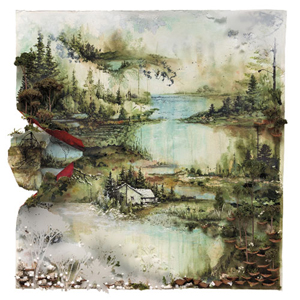
Despite his heavy reliance on, and apparent love for, auto-tune, Justin Vernon is probably a pretty cool guy. No regular Joe Schmo gets hand-picked by Kanye West to help put together an album, then share vocals with the likes of 'Ye, Rick Ross, Jay-Z and Nicki Minaj on that same album, right? And if you're capable of isolating yourself in the woods for a season, to overcome both a girl and band break-up, and end up creating a heavy-selling, widely appraised record while out there, you've obviously got some cool to you, right?!
Still, I'm yet to glean any “cool,” or much enjoyment at all, from Vernon's sophomore release, and I've come at it from about a hundred different angles. I didn't mind For Emma, Forever Ago, but Bon Iver, Bon Iver is tough to swallow. Overall, it feels he's trying too hard to make it different, forcing slide guitar and synthesizer to play nice while layering his somewhat whiney, and weirdly varying, vocals over them. It's a jumbled mess, in my book, yet many claim the album to be revolutionary, as well as beautiful.
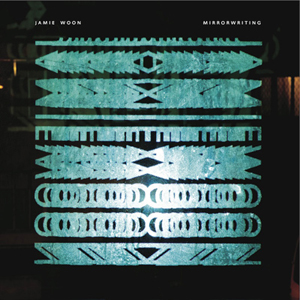
Wanna talk true beauty, or successful innovation, for that matter? Start by bringing Jamie Woon into your life. Woon's debut, Mirrorwriting, marries '90s R&B with the most dancing of electro-beat, and does so in such a smooth and soul-touched way, it leaves your brain dripping with low vibration. Each song hints at so many different eras of R&B, and does it well, never getting lost in an attempt to stay both within, and outside of, the box. Bon Iver tried to do that, and his album fell short in its unnecessary additions. Mirrorwriting, on the other hand, is more than just an exciting record–it's a solid upgrade on the idea of what sexy music can do with itself, and how subtle mixing of genres can develop an untouchable sound.
Jamie Woon isn't just cool, he's an ambassador of trip-soul awesome. Play Mirrorwriting at your next party, and it'll leave you dancing, getting laid, or sitting spell-struck on a couch. You're welcome.

It has only been three years since the Fleet Foxes’ self-titled full-length debut, but to hear them on Helplessness Blues, you would think it has been thirty. Their sophomoric sophomore release is full of premature reflection on a bygone youth not nearly yet gone, a shortsighted and self-absorbed indulgence that evokes (a crime in itself) Drew Barrymore’s autobiography. You know, the one she published at the ripe old age of fifteen.
What makes the Fleet Foxes’ constant references to times since passed so cringe-worthy is that they seem to believe that through their experience they have developed a deep and profound insight. That’s not to say they come across as know-it-alls. Instead, they stare bewildered at the unknowable vastness and mutter bumper sticker aphorisms in rich, reverb-soaked harmonies. The songs are as clumsy and muddled as the ideas, dragged down with awkward, pretentious phrasing and a forced grandeur that substitutes movements for mere verses and choruses. Their ambition is admirable at times, but they simply don’t have the heft to pull it off.
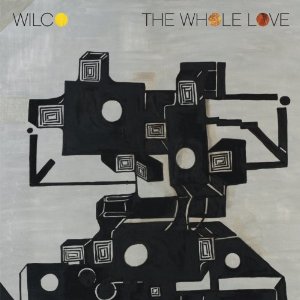
The record that actually offers insight from experience and deserves the Fleet Foxes’ spot among the top twenty is Wilco’s The Whole Love, their eighth studio release in what is now a seventeen-year career. During that time, Wilco’s been dismissed and heralded, redefined both their sound and lineup multiple times, and temporarily stalled out as their lead singer battled addiction. The Whole Love shakes off the weight that accompanies it all with a renewed buoyancy, confidence and sense of scope, seemingly unafraid of having fun for its own sake or facing up to demons of the past.
Helplessness Blues searches for the answers to what it thinks are deep, important questions and looks back wistfully on a thread of life experience, calling it a tapestry and wondering why it provides no warmth. The Whole Love also looks back but is much cagier about revealing what it sees, hinting at an outline of loneliness and resignation while managing to keep from taking any of it too seriously. It’s a level of awareness the Fleet Foxes might attain sooner than Wilco managed, but they aren’t there yet.
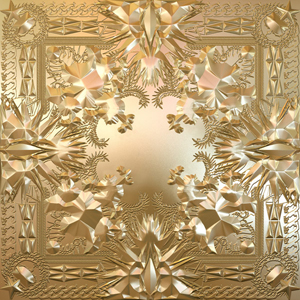

Rarely has an album garnered such acclaim on so little substance. In a year where hip-hop has thrived on innovation (see Shabazz Palaces, Death Grips, Danny Brown), Watch the Throne exists solely on hype and previously-earned accolades. With all due respect to my colleague, Ian Doreian, why on earth would I want to listen to a record of a couple of buddies messing around, when they could be making something great? Watch the Throne provides the bare minimum of what might be expected from a collaboration of this generation's most influential hip-hop artists: some banging beats under arrogant verse after arrogant verse. Sadly, it fails to capitalize on the strengths of either MC: Jay-Z sounds enthused on only a few tracks, allowing his well-practiced flow to carry sub-par verses, and Kanye lacks any of the insight or depth that made MBDTF great, and instead, often sounds like a petulant child. Granted, Watch the Throne has good moments, in particular, "Niggas In Paris," whose menacing beat propels Jay's impenetrable delivery to exciting heights. However, solid production can carry an album only so far. And without comparable lyrics or energy, the project cannot sustain itself through repeated listens.
Oddisee's Rock Creek Park is everything Watch the Throne is not. Arriving with little fanfare and containing no certified bangers, Rock Creek Park is innovative, exciting, and endlessly replayable. Soul gives way to bossa nova gives way to smooth jazz gives way to funk in Oddisee's beautifully textured pieces. Underlying these impeccably layered instrumentals are hip-hop grooves that keep your head nodding from track to track. In short, the depth and thoughtfulness of the compositions on Rock Creek Park are of a caliber not often seen in today's hip-hop arena. Nor is its versatility. Rock Creek Park fits equally well backing a dinner party as it does filling your headphones on a 2 a.m. walk home from your local drinkery. Or, as Oddisee puts it, "it's a summer time feel good record for that ass."
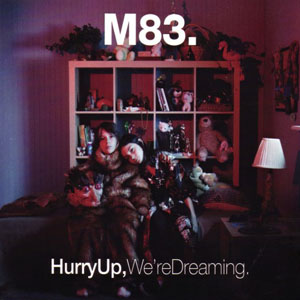
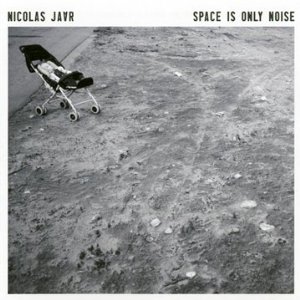
The way people are going on about the “epic” Hurry Up, We're Dreaming, you'd think M83 invented the crescendo. Newsflash: he didn't. The fact of the matter is, he hasn’t invented much of anything lately, this year’s offering being at best a reinvention of every previous M83 release. So it comes as a surprise that the cheap thrills that are the bread and butter of every one of those albums have somehow retained their power to suck in gullible listeners. That’s not to say the album is without its strengths: it does, for instance, sound pretty sweet as background music. It might even work as an alternate soundtrack to a bad sci-fi movie or some contemplative indie film. But if it’s cinematic you’re looking for, try Nicolas Jaar's Space is Only Noise instead. While M83 was busying himself crafting intricately layered redundancies from the refuse of Hollywood's dustbin, Jaar quietly created the best electronic album of the year, an album that is a cinematic experience in and of itself. Granted, the more patient approach of Space is Only Noise isn’t as immediately stimulating as Hurry Up, We’re Dreaming, but that’s only because Jaar, on his full-length debut, has already mastered what consistently escapes the go-for-broke M83: the art of subtlety.

Too much slide guitar will kill you. Trust me, I've seen it happen. The Decemberists' newest, The King is Dead may have been a breath of fresh air for many, especially after a prog-ridden concept album that divided camps pretty strongly. However, some magic was gone after this effort. I understand, you guys went out onto a farm and did some pastorals, a couple of hymns, and went full Americana on our ears; these things all go together, but maybe not for the Decemberists. The switch from songs that begin with "I am (insert esoteric occupation)" to country jams is a bit jarring. The mood shift just doesn't sit right; and while the songs, in their merits, are very well crafted and pretty, I can think of a phase shift that better suits a top 20 list.
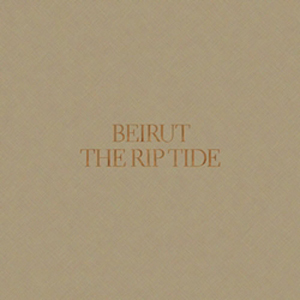
Beirut's The Rip Tide shifts from a trend of albums that evoke a specific ethnic sound, to a more whittled down Beirut sound, drawing from each of their influences. Gone are the Eastern European drinking chants and the Spanish trumpets, but introduced are those same sounds in a different setting. The Rip Tide takes from some of Beirut's previous tropes--electronic elements on "Vagabond" and "Santa Fe," trumpet-centered crescendos, and even a piano ballad--to create a short and extremely sweet album. Take "Port of Call" as a culmination of Beirut's sound, and perhaps the prettiest thing they've ever written. The ukulele straight out of "Elephant Gun" is slowly joined by scattered piano notes, drums, horns, and harmony until it reaches its peak and ends the album, and if I had my way, that one song could put Beirut on a top 20 list in an instant.