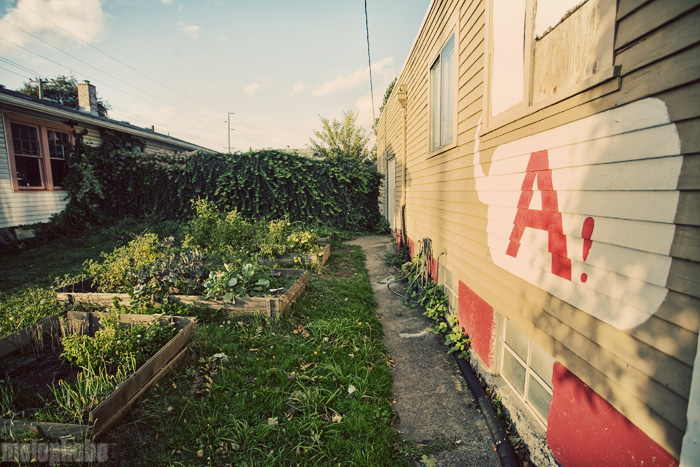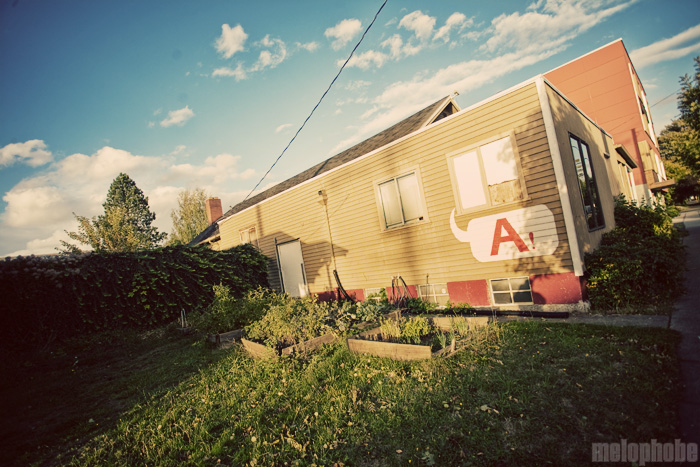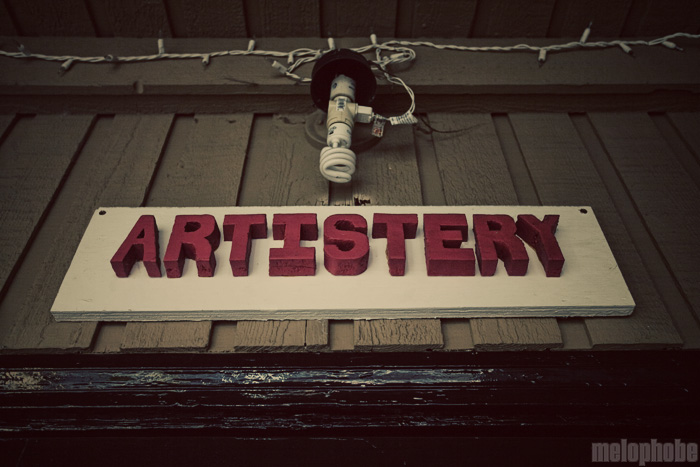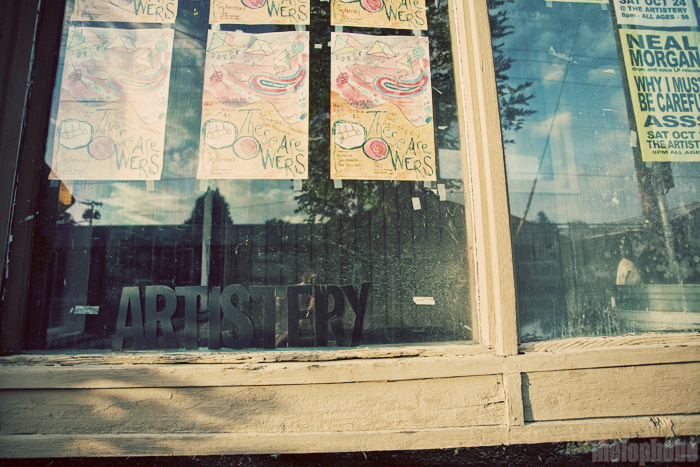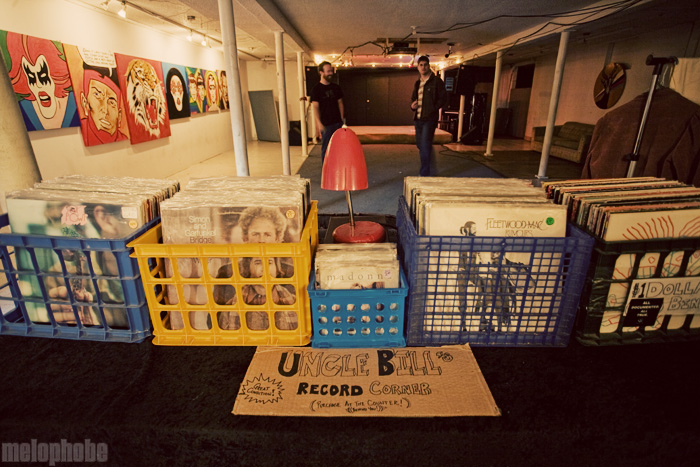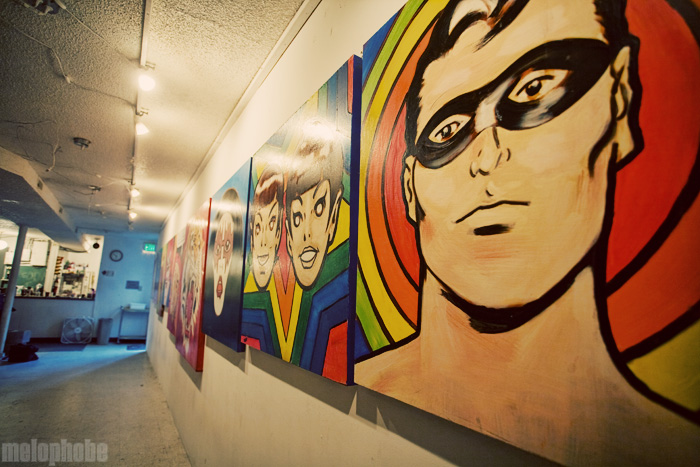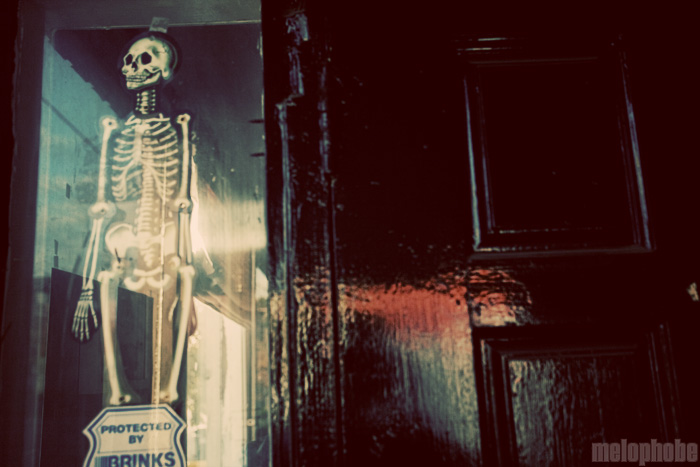
If everyone in Portland is, as Chuck Palahniuk claims, living a minimum of three lives, then so too are many of its buildings. But few pull off the feat as thoroughly, and compactly, as one unassuming little building nestled on a burgeoning stretch of SE Division. Originally a church, the building has hosted a variety of endeavors, both spiritual and commercial, including a roofing and siding company, a dental office, a medical marijuana clinic (sorry, no leftovers), and now a multifaceted artists’ community known as the Artistery.
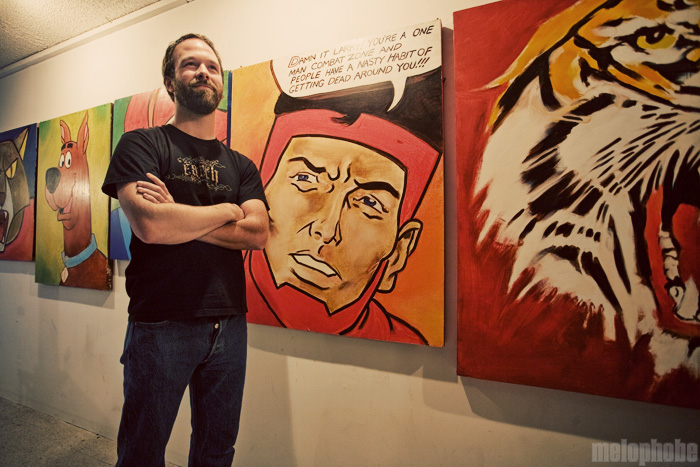
Though its primary mission is to provide studio space for local artists, the Artistery is as relevant—and as powerful—for its auxiliary activities. Aaron Shepherd, the de facto administrator of the Artistery, stresses the significance of the venture not just as studio space, but as an artists’ community. Indeed, he makes no secret of the life values that motivate his work. “It’s basically trying to understand how people function, knowing that relationships are probably [one of] the top two important things that I can be doing in this world. You know, caring about relationships, loving people, trying to work through issues, things like this.”
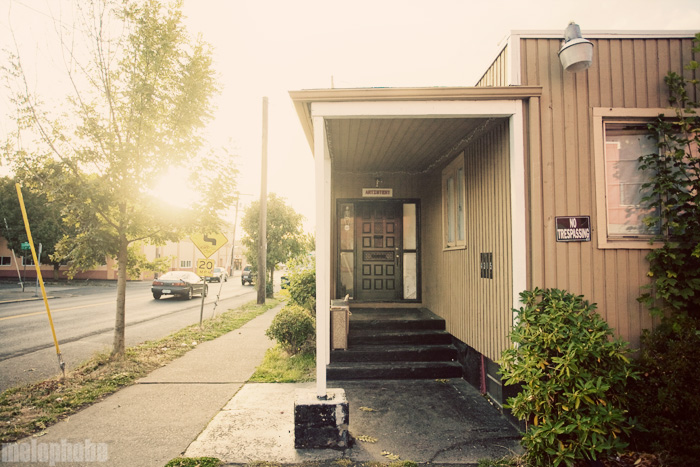
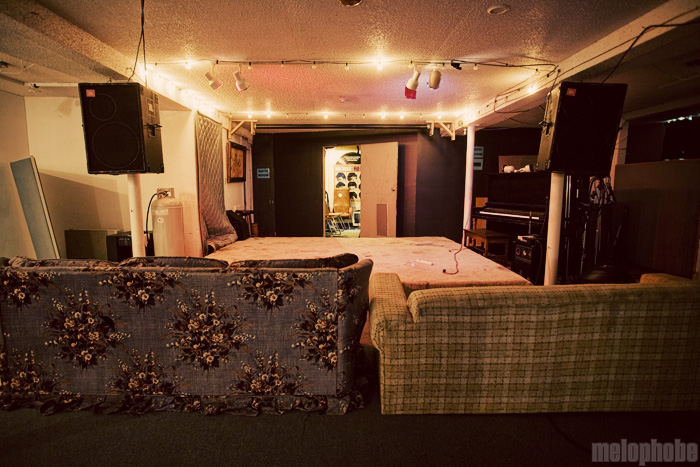
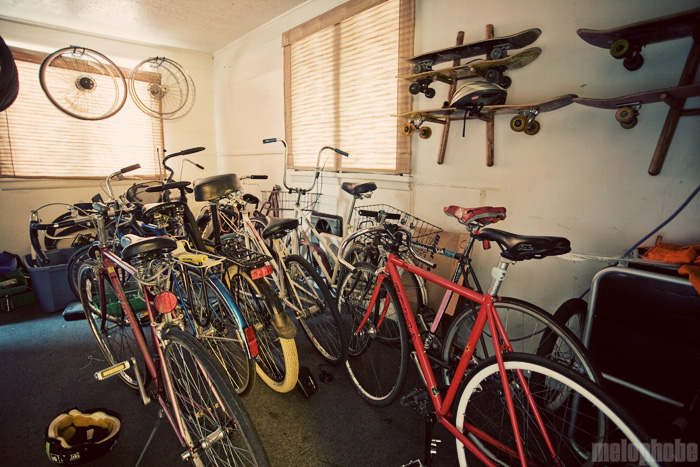
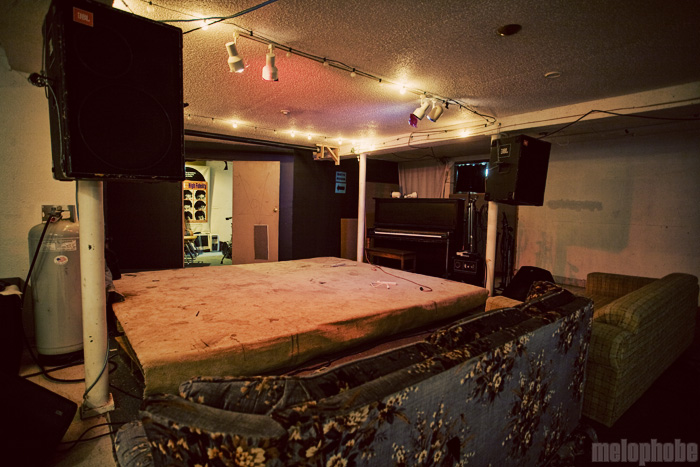
Founded by Peter Jenkins in 2001 in a house on Milwaukee Avenue, the Artistery was originally a live-work space for young male Christian artists. In 2005, when Jenkins left and Shepherd took over administrative duties, the Christian requirement was dropped, and women were welcomed into the fold. Shortly thereafter, the Artistery moved to its current space in the Richmond neighborhood, housing artist’s studios, residential space in an adjacent house, and a basement concert hall that has become a fixture of the hyper-creative local arts and music scene.
Given that the Milwaukee house had been hosting bands for much of its tenure, it seemed logical to put the spacious basement at the new location to similar use. Publicizing events largely by word of mouth, The Artistery became a sub rosa success—until it attracted too much attention. “We had this show, it was the first show in the new space that got written up in the weekly papers,” Shepherd says, “and the fire marshal was like, ‘Hmm, never heard of this place before.’ So they came in, and this place was just full of sweaty people, and they’re like, ‘Hey, who owns this place?” It turns out that, even in DIY-friendly Portland, there are some basic rules to follow. The first issue was whether the building was even legally permitted to host gatherings. Researching that question led the Artistery crew to the discovery that the building, almost a century old, had been built as a church—and therefore passed the test. Next it was back to the fire marshal, who took umbrage with, among other things, the network of extension cords stapled to the ceiling, a critical issue that had to be addressed before life in the Artistery could return to normal. When all was said and done, though, the basement had become a legitimate, permitted music venue, and the Artistery was officially a commercial space. Needless to say, that wasn’t how anyone involved envisioned it. “Just like anybody who goes into something being really excited, I don’t think about that stuff,” Shepherd says. “I just got really stoked about it. Now I am a lot more thoughtful of those types of things.” And, commercial space or no, The Artistery has held onto its community-oriented mission. The rent from studio space pays for the building, and the modest door admission goes toward the utility bills and the bands. Shepherd’s only compensation is that his own studio space is comped. “Nobody makes any money on this,” he laughs.
Now embarking on its fifth year at the Division Street location, the Artistery has become something of an underground phenomenon in the Portland music scene. With a standard admission price of $6 and no bar, The Artistery is as popular with Portland’s youth as it is with the artistic types that comprise its community. “If we were better business people, we’d figure out a way [to sell alcohol],” Shepherd says, but the design to be a good neighbor takes priority. The venue also deserves some credit for the eclectic catalog of bands it has hosted. Past visitors have included Blitzen Trapper, Calvin Johnson, and The Builders and the Butchers, as well as a host of emerging national acts. Frequent movie nights, complete with a ceiling-mounted projector, attract visitors as well.
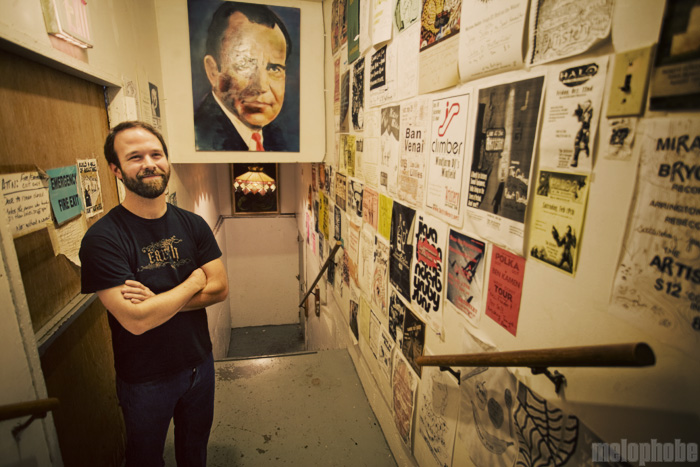
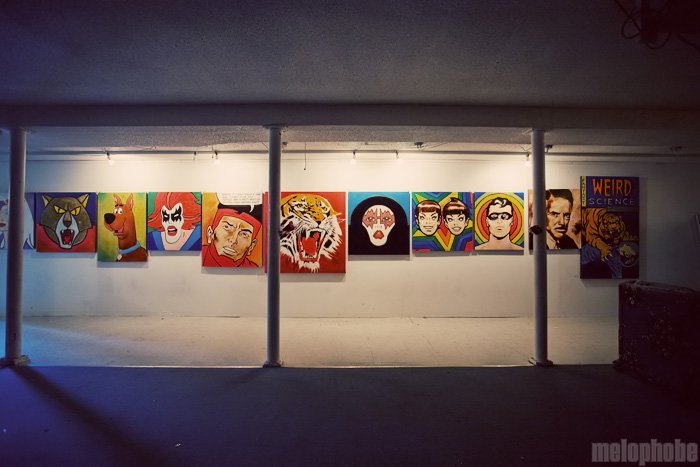
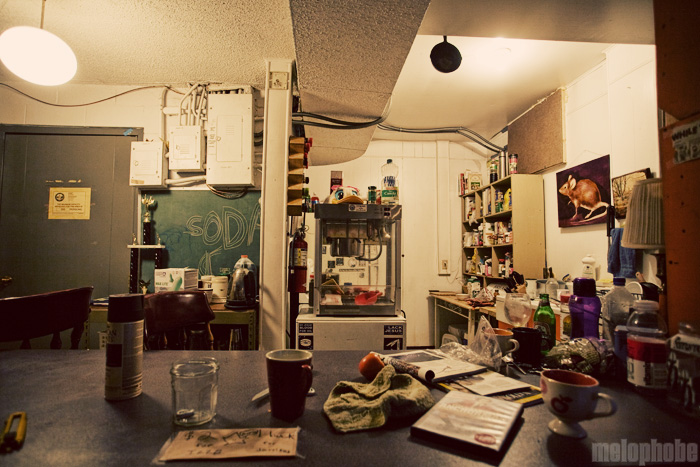
For all its success as a music venue, though, the main emphasis for the Artistery remains the artists who work there. Much of the time, in fact, the basement simply serves the various needs of the tenants. As Shepherd explains it, “The venue is a big part of it as far as the public is concerned, but a small part of it as far as people who have space here.” Nevertheless, those who do have space are heavily invested: the rental agreement stipulates that tenants help staff shows, and anyway, as far as perks go, running your own concert hall isn’t bad.
For a small building and a small community, the Artistery is impressively diverse in its offerings. Indeed, if Palahniuk’s three lives are a Portland ethic, the Artistery—studio space, music venue, and artistic community—is a shining example of it. As is Shepherd, who works part time at a warehouse in addition to his work as an artist and his responsibilities at the Artistery. And in a city that, in recent years, is constantly in flux, the Artistery seems to be here to stay. This month marks its eighth anniversary, and the slate of activities, from concerts to film festivals to private parties, continues to grow. With such an array of events, it’s not surprising that the guiding principle is, in essence, a lack of a guiding principle. “If something looks like a good idea, we’ll do it,” Shepherd shrugs. “We don’t have an agenda like, ‘We need to have a place where bands can come play.’ I guess I don’t feel that that’s our job. We do things that we like to do, and that helps makes it fun, because it gets people into it, and we’re into it, and don’t feel like martyrs or something.”