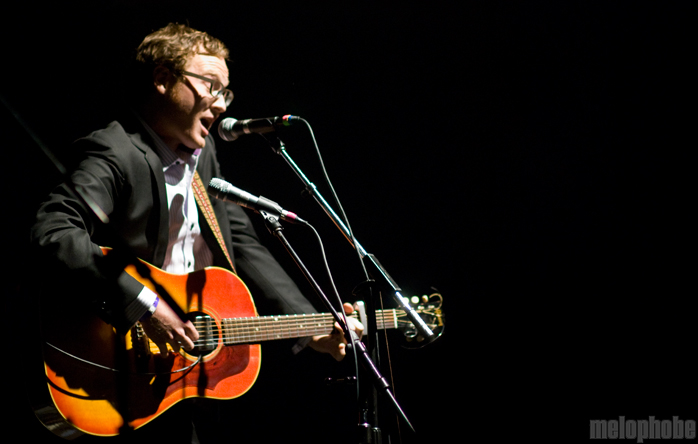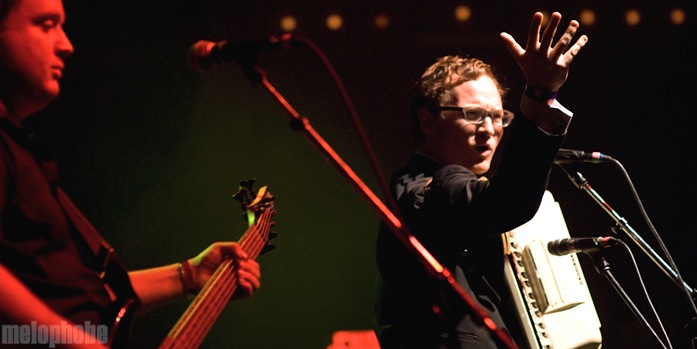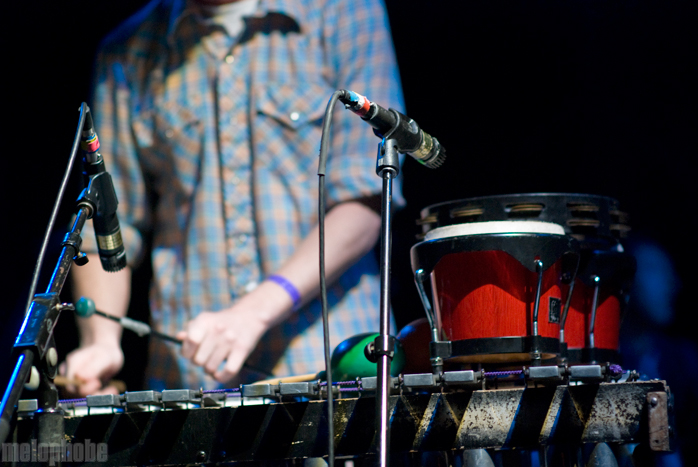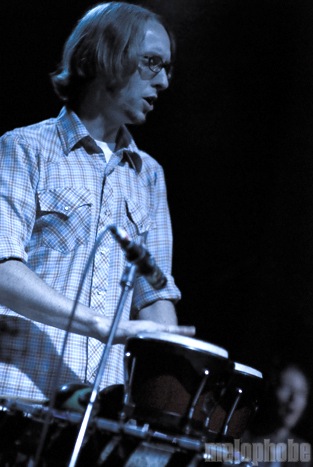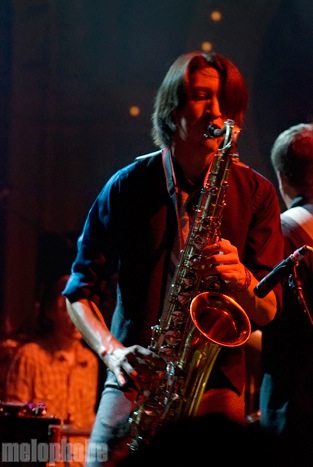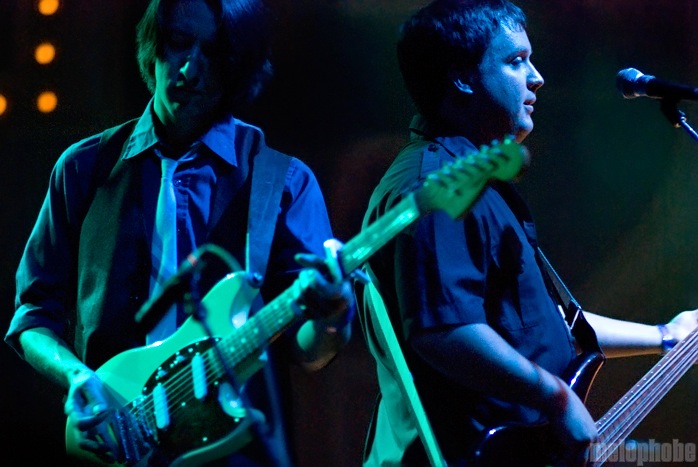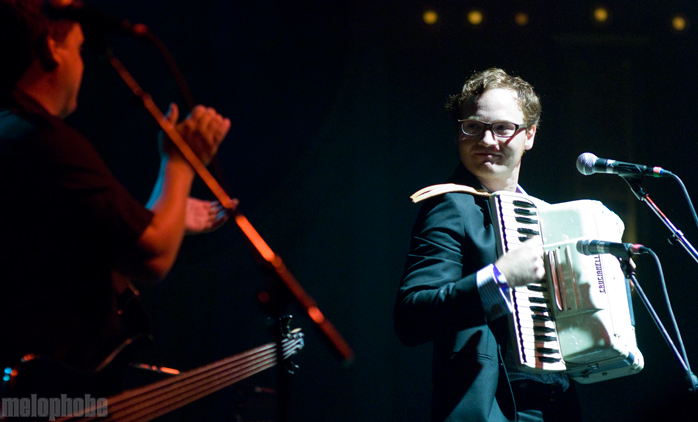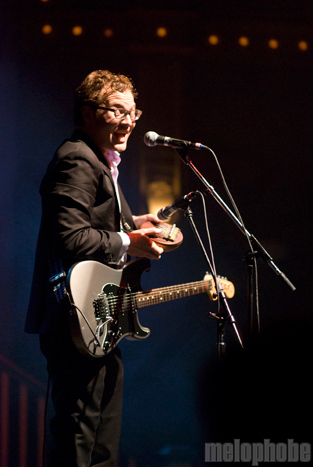
A young man in a suit and glasses came out alone with a guitar, and a solitary spotlight isolated him on the stage. Without a word, he started to play a tight quick-step folk tune. He chanted, “Tell Me Something I Don’t Already Know,” and the crowd started to sing along as if prompted to communicate this information back to him in complaint. The song did feel like something we already knew, but enjoyable nonetheless. He enlightened us with a little information between this and the “Country Song”: “I’m James Dean Kindle from Pendleton, Oregon.” Turns out, "mystery-man" James Dean Kindle from Pendelton, Oregon is a good friend of Paul Collins from Beirut, has played music with Point Juncture Washington and Blitzen Trapper, and has shared bills with a long list of local musicians including Laura Gibson and the Helio Sequence. But the surprises didn’t end there. Mr. Kindle brought up his band, The Eastern Oregon Playboys, and they proceeded to pull a garden variety of instruments out of their pockets continuously until the end of their show. Kindle strapped on an accordion (to the crowd’s audible delight) for “Pit of Love” while the rest of the band grabbed some other pretty standard instruments – a drumset, a bass guitar, a dinner triangle, and a tambourine. “Depends on the Weather” was a rockabilly jam that transported us all back the '50s-dance-parties we never went to, all very similar to the swanky strut of The Stray Cats, plus glockenspiel.
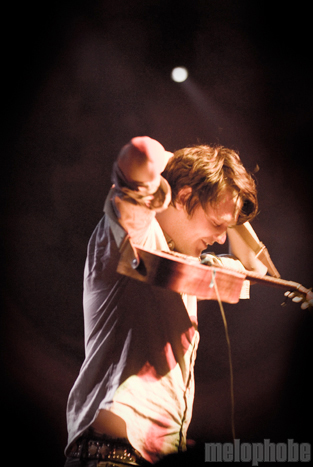
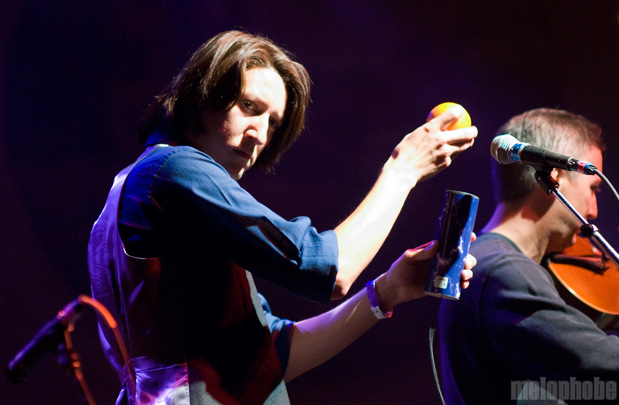
The band drifted from sock-hop back to the saloon for a Johnny-Cash-soaked country-rock number that involved an orange kazoo and Kindle’s subsequent ejection of it with the cavalier of a cowboy spritzing tobacco crabwise without so much as a blink. Guitarist/glockenspiel-ist/drummer/dinner triangle-ist/saxophonist brought two shakers (one cylindrical and hollow with a spring dangling from the bottom for a cool wobble/whale-cry effect) for one of the final songs; by his side, another stupidly talented multi-instrumentalist played violin. Their last song, a kind of Jewish Polka, went a little over the top in terms of tempo, but I still came away with a hunch that Eastern Oregon is rich with culture and can easily hold its own next to Portland.
Santa Fe, New Mexico can likewise hold its own musically next to all of Eastern Europe and Latin America.
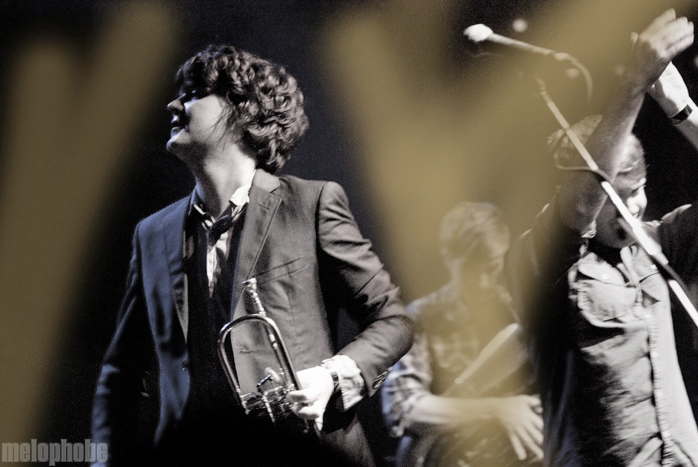
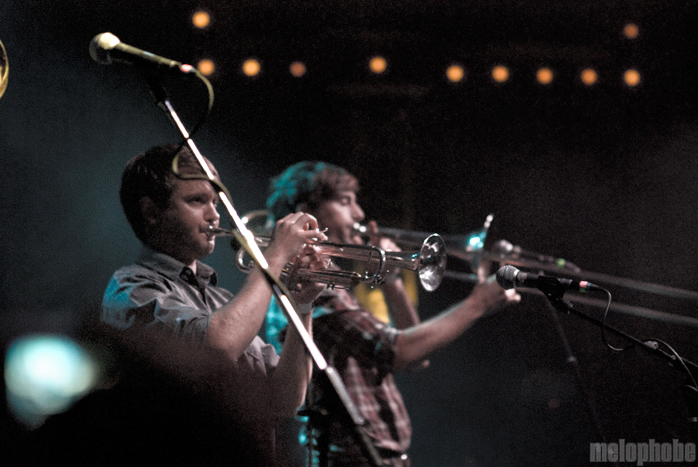
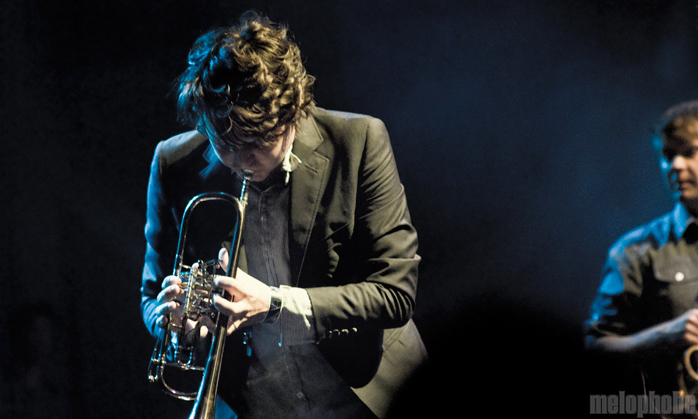
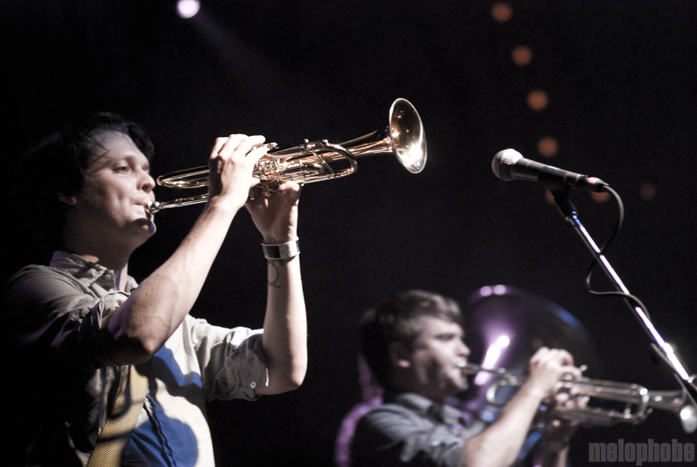
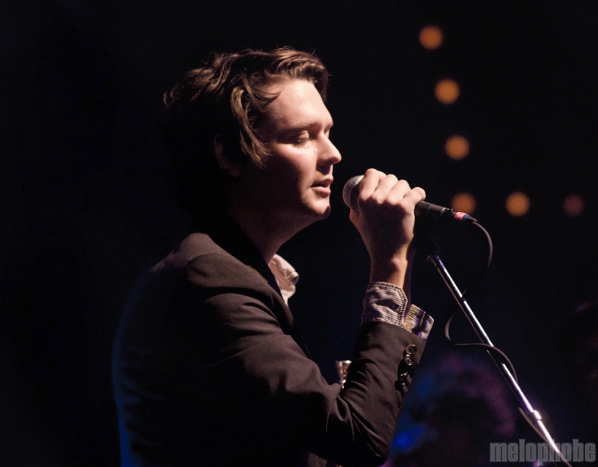
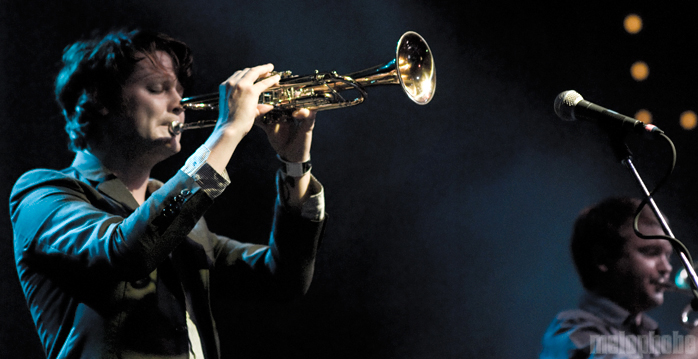
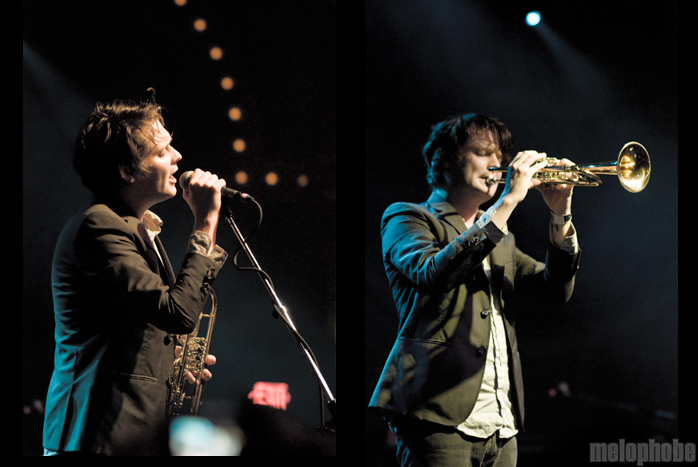
Beirut played to a sold-out room (typical at this point in their career) of handsomely dressed fans, many clad in suspenders, tucked-in button up shirts, caddy hats, fedoras, and loafers. The vintage-fashion enthusiasm, however, stopped at the stage where Zach Condon and his band of many sported casual slacks, three-quarter-buttoned shirts, suit jackets, and wind-combed hair. Each song began enticingly with a battery of horns (flugelhorn, trumpet, euphonium) or some other isolated group of like-instruments, and each ended with a long train of sound colliding suddenly with silence. Every song was phenomenally emotive, transporting, and meticulously arranged, channeling the ancient romance of old-world Balkan landscapes and the fiery spirit of Flamenco. Condon’s anguished baritone melodies alongside the melismatic cries of the horn section had girls and boys alike swooning.
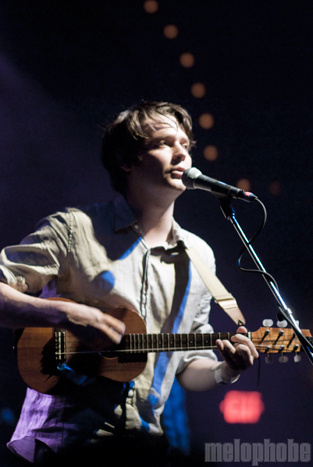
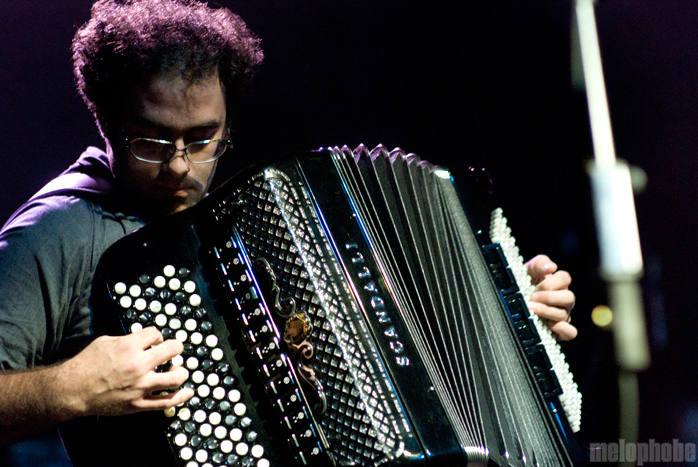
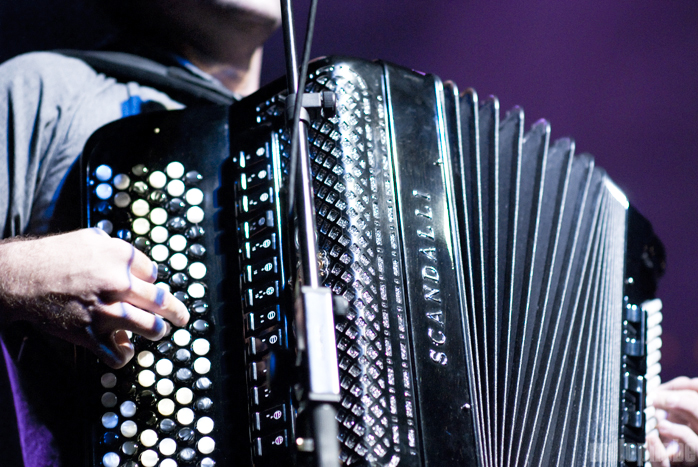
The sudden appearance of an accordion onstage unfailingly instigates mass applause, but when it surfaced during Beirut’s set, people collapsed in ecstasy. The ukulele, when held by Zach Condon during “A Sunday Smile,” produced a similar effect, but this time, instead of collapsing on the ground, friends and lovers collapsed into each other’s faces, smothering one another with impassioned kisses, smiles, and embraces. This happened repeatedly, but with special fervor during the waltz-y “St. Appollonia.” Beirut granted us a total of four encore songs, and we would have all gladly stuck around for five or fifty.