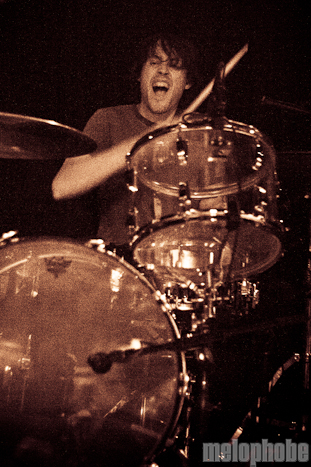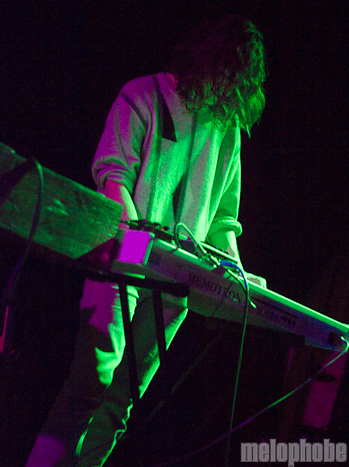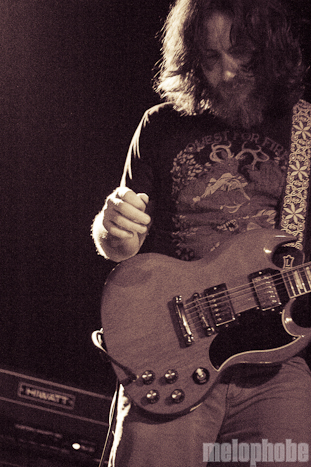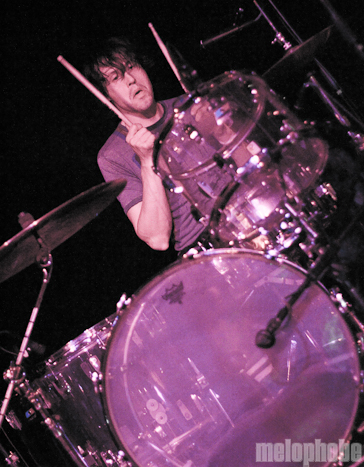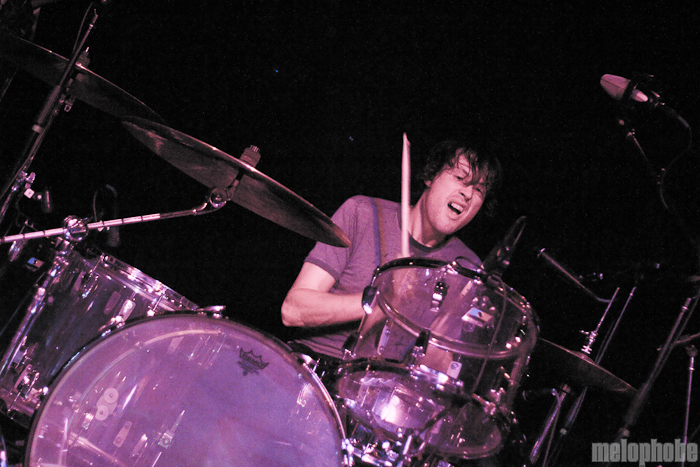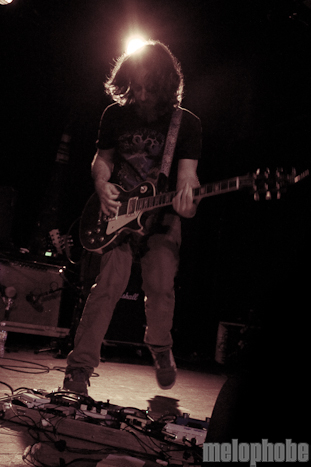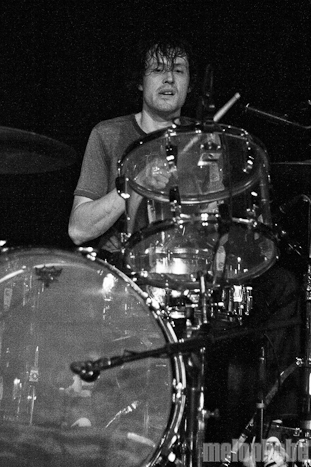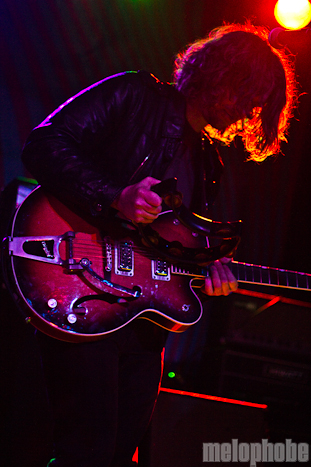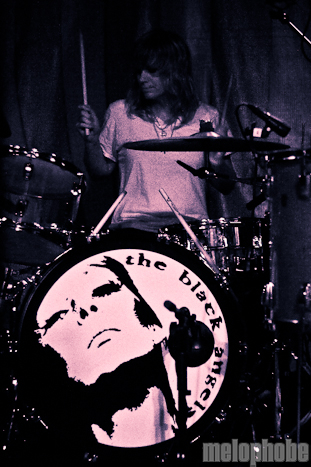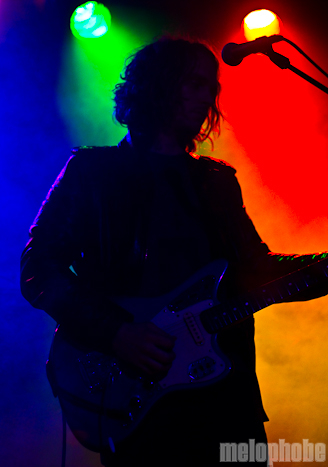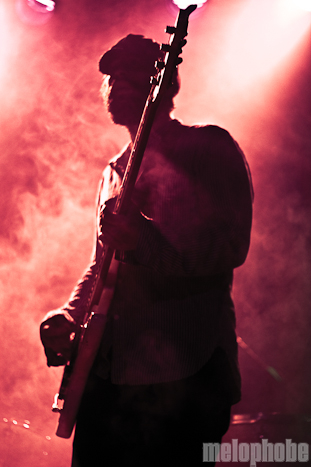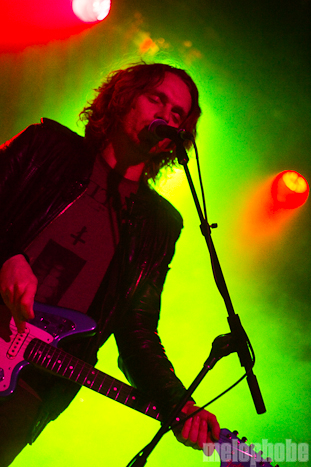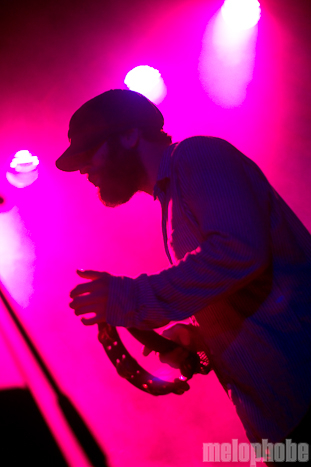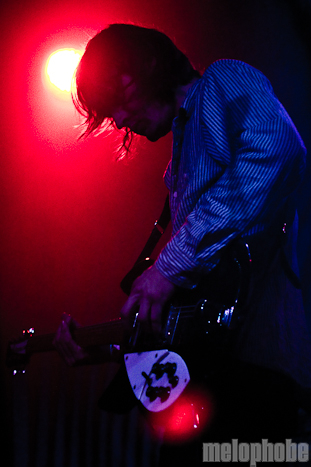
"You should see them when you're high." This familiar refrain has, in my own experience, been applied to the Black Angels probably more than any other band over the last several years. And I’m not here to say it isn't so, but I'll certainly submit that seeing them sober is not what you want to do. Judging from the skunky clouds wafting overhead at the Wonder Ballroom on Sunday night, a lot of other people have come to the same conclusion. The question is whether that strategy promises any kind of improvement.
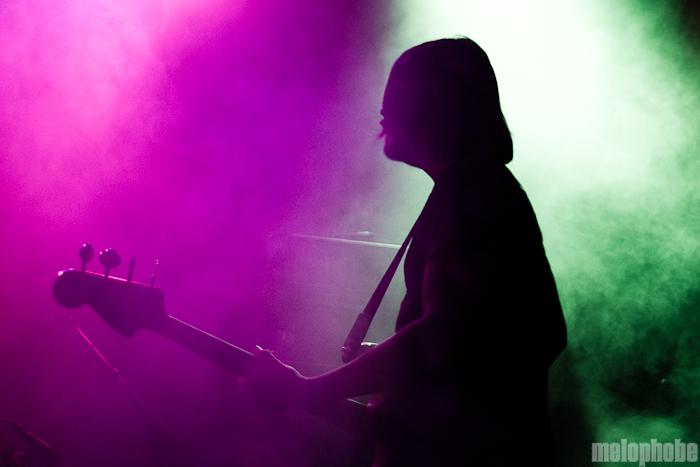
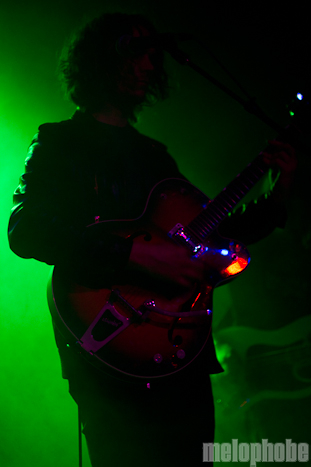
The Austin natives create music that is, almost palpably, a psychedelic storm. A swirl of guitars meets spaced out vocals and an industrial strength rhythm section, but the effect might best be described as ponderous. This is, of course, psychedelic music. It wears its 13th Floor Elevators influence (and countless others) on its sleeve. Accordingly, the music will have a certain effect on those under the influence of a certain class of drugs. But the bland compositions, digitally enhanced howls, and sheer lack of performance ethic tend to fall flat on less chemically enhanced states of consciousness. Indeed, for a band belonging, undisputedly, to such a dynamic genre, the Black Angels manage to be surprisingly monotonous. Late in their set, the song “Telephone,” a highly derivative but at least uptempo tune, brought a welcome change of pace. But that exception aside, the set amounted to 75 minutes of throbbing bass, fuzzy guitars, and tired vocal effects. That said, when the band finished, a number of fans could be heard calling for more. It would be trite to simply chalk it up to a difference in taste, except to note that, whatever those differences may have been, they were thoroughly erased once Black Mountain took the stage.
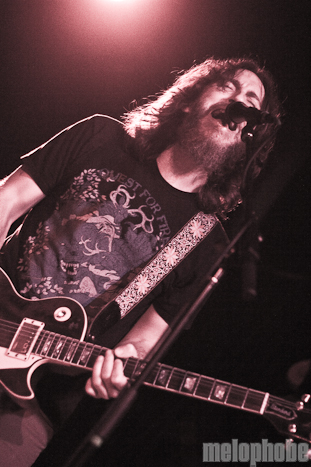
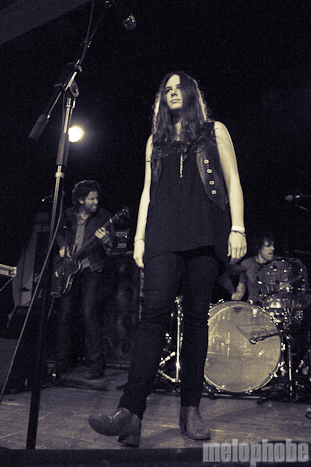
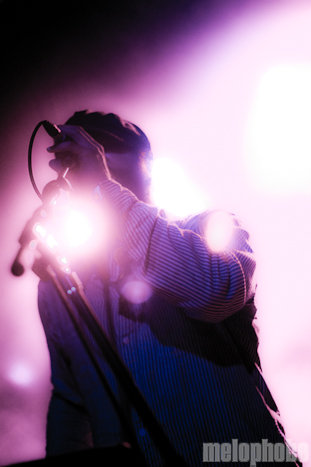
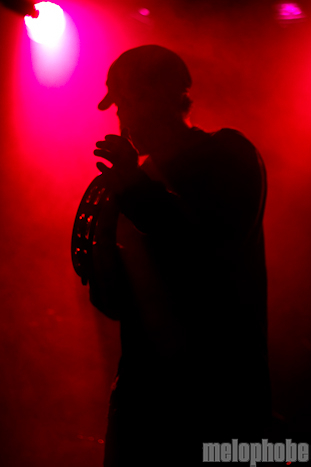
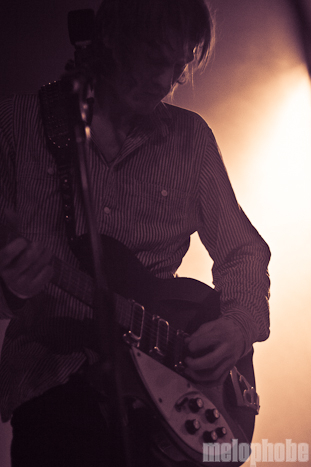
In contrast to the Black Angels, Black Mountain is a truly virtuoso outfit. Forget that Stephen McBean has another, equally outstanding group through which he expresses his less aggressive side. That Pink Mountaintops often resides closer to the folk end of the spectrum isn’t to say that Black Mountain neglects that territory. In fact, it would be hard to identify a point on the spectrum that Black Mountain hasn’t touched. Jazz? Post-punk? Okay, maybe. But when a band moves seamlessly from metal to folk to funk, never abandoning the basic mind-fuck ethic of psychedelic rock, you have to be impressed. Granted, there were more than a few occasions when Black Mountain showed some similarity to the Black Angels – apart from the shade of their moniker. If anything, they started off even slower, with a needless pre-recorded bit that sounded a bit like the Gregorian chant CDs that used to be peddled on daytime TV. Later, it was possible to discern something of the Black Angels in the heavily emphasized heartbeat rhythm of the drums, but that comparison seemed to require stripping away layers of precise instrumentation that, in a Black Angels counterpart, would be manifest only as an amorphous buzz.
Whatever advantage in diversity they possessed, though, my greater enjoyment of Black Mountain was nevertheless reducible to a matter of taste. The obvious heavy metal influences–and we’re talking the very canon of heavy metal, like Black Sabbath, Deep Purple, etc.–are displayed like a badge of honor. Sometime late in the ‘90s it became something of a faux pas to show too much appreciation for heavy metal. We probably have Fred Durst to thank for that. But Black Mountain exemplifies the upside of that dynamic, picking and choosing from the elements of the genre that serve their purposes to create something new and original. In a sense, that’s typical of the interplay between musical genres and influences, but it’s particularly on display in Black Mountain, a band unusually diverse in its obvious influences, yet distinctive and concise in its sound.
Perhaps it’s unfair to suggest that Black Mountain differs so much from the Black Angels in that regard. The two have numerous similarities, and the breadth of the Black Angels' influences is not to be trifled with either. The telling difference, if I may venture, is that the one sounds fresh today, whereas the other sounds a lot like something that was fresh circa 1968. But in deference to the majority opinion, it must be noted that the consensus seemed to be in favor of the pairing. As a music lover, in fact, there is little to complain about in a lineup that offers a duo of bands doing very different things within the confines of a single genre. Cheers, then, to that.