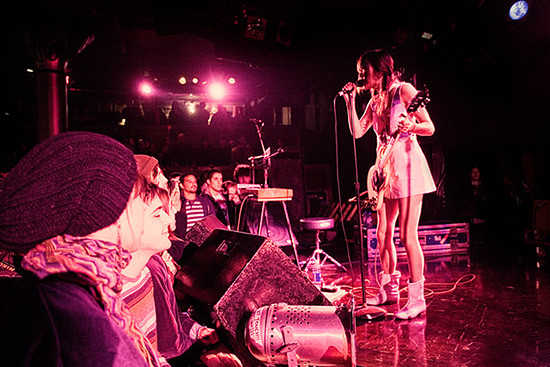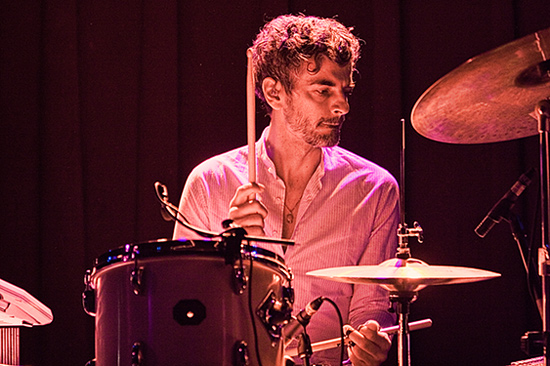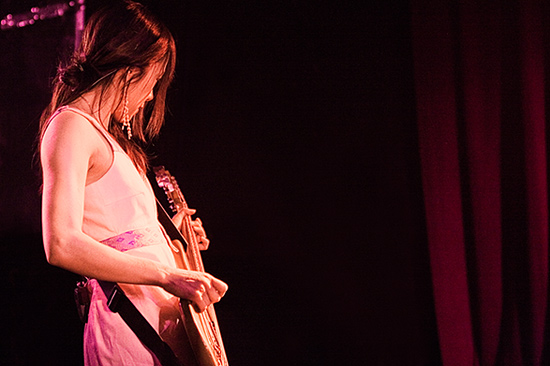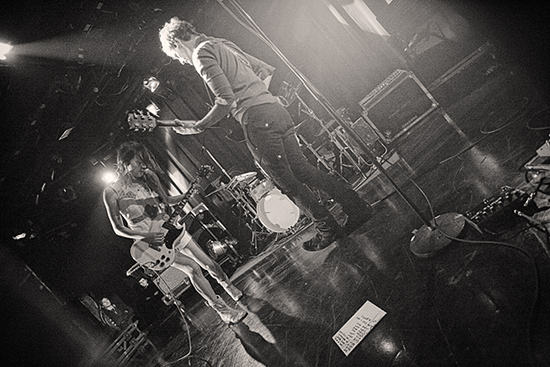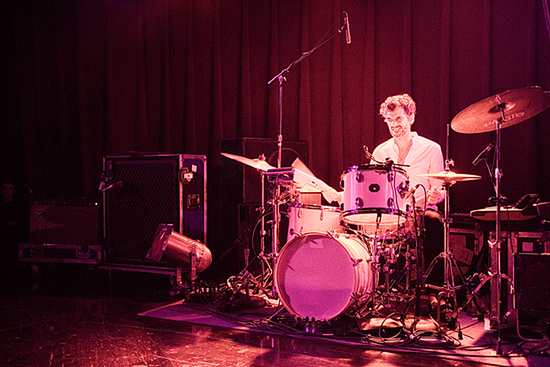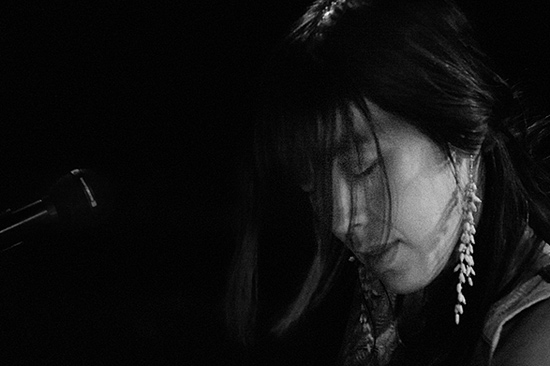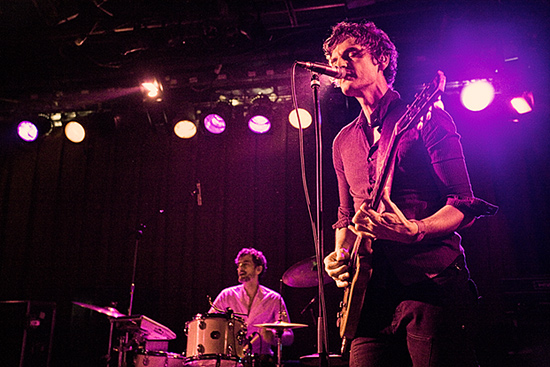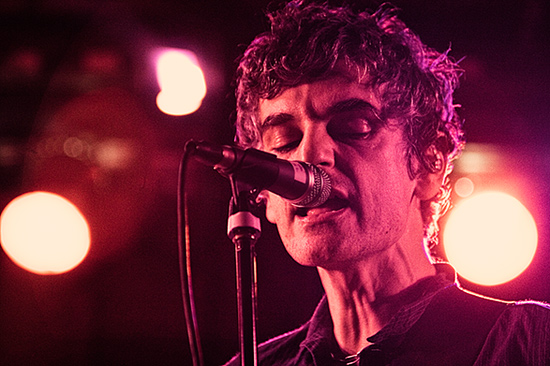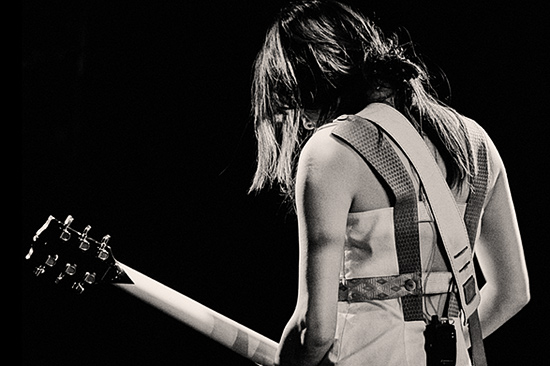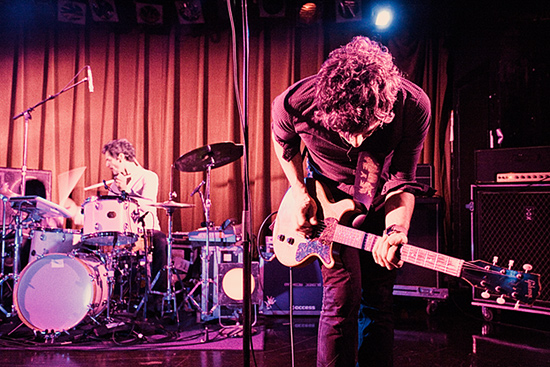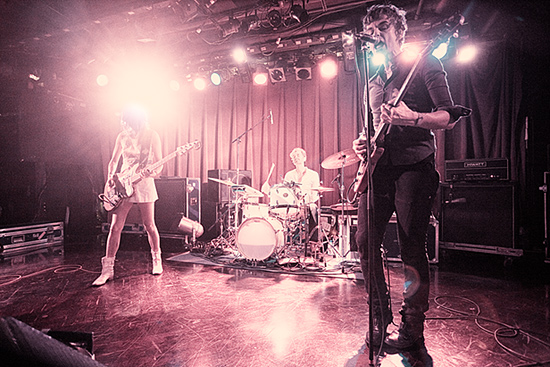
It is a genuine privilege to hear Blonde Redhead live. Blonde Redhead is Kazu Makino, Simone Pace (drums), and Amedeo Pace (guitar). Blonde Redhead played for about 90-minutes, including a 3-song encore.
Makino sings; her voice is high and reed-like, her words are undecipherable. Blonde Redhead creates tension by repetition. Melodic riffs and pounding drums support Makino’s eerie wailing. Besides supporting Makino, Amedeo’s guitar often mirrors Makino’s voice. His riffs match her tone, creating a driving and explosive momentum that produces chills. It’s been said before, but Blonde Redhead is noisy like Sonic Youth was noisy. However at this point, the noise is their own.
Makino and the Pace brothers played together like they knew each other’s every thought. They truly played as a band. Blonde Redhead’s togetherness came through not only in their sound, but in the overall concert experience. Many times throughout the night they made eye-contact, and executed a seamless transition.
Apart from the sounds, Blonde Redhead is visually stimulating. Makino is fashionable and captivating. Once on stage she’s lost in her creation. Makino’s movements invoke a robotic “go-go girl.” The Pace brother’s are equally fashionable: they shine in silver and gold necklaces, tight button down shirts with sleeves incapable of reaching their wrists, jeans with flashy buttons, and tufts of curly gray hair.
Blonde Redhead seems to be constantly touring. Their shows are polished and effective and they are only getting better.
School of Seven Bells
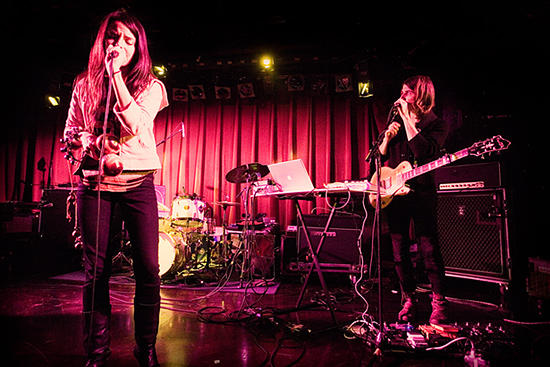
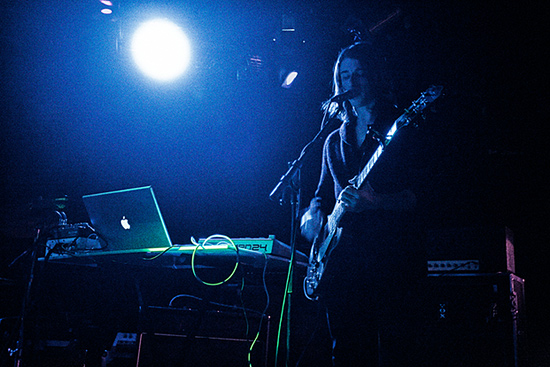
Two computers, two brunettes, and no drummer: School of Seven Bells failed to be distinct, failed to make an impression. School of Seven Bells is Alejandra and Claudia Deheza, Benjamin Curtis, and James Elliott. They played roughly 6-songs in 40-minutes. Alejandra and Claudia sing front-center, Benjamin and James take up the sides playing guitar and bass.
When Seven Bells is at their best, computers blast tribal beats and brunettes harmonize. When they are less than their best, the brunettes look shy and withdrawn, and the boys appear to check their email on computers producing cheap synthesized drum beats.
Seven Bells is a work in progress. They have enough to grow, but they need to grow. To become a headline band, they need to develop diversity in their set-list. Too many of their songs involved the Deheza’s hitting the same notes. They need to communicate with the audience. Several times I wondered whether they enjoyed being on stage. As Kazu Makino of Blonde Redhead said, “we share the practice space, but sometimes they don’t pay rent.”