I own a total of two hip-hop albums: Brother Ali – Us, and Sage Francis – A Healthy Distrust. Neither of which I have listened to in months, so the only hip-hop that has entered my world of late is involuntary and usually blasting through my boyfriend’s car speakers.
But then I go to this hip-hop show. I walk in the door unfashionably early, and as I’m talking with the door-guy, he introduces me to Mr. Cage himself who says something like “I’ve seen uglier critics” and proceeds to jostle me with repartee. Some subsequent rapport about malicious critics and my unexpected ambiguity toward Thom Yorke causes me to forget Cage’s proper name when I went to shake his hand (I coughed up something generic like “John”), but he graciously forgave me with a pair of drink tickets and a welcome entry into the venue.
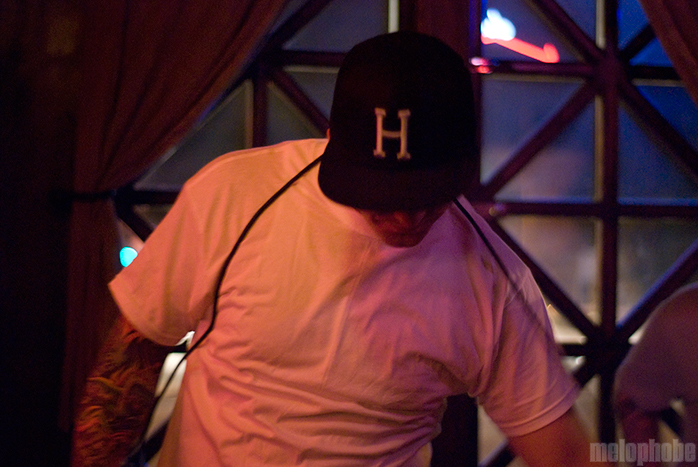
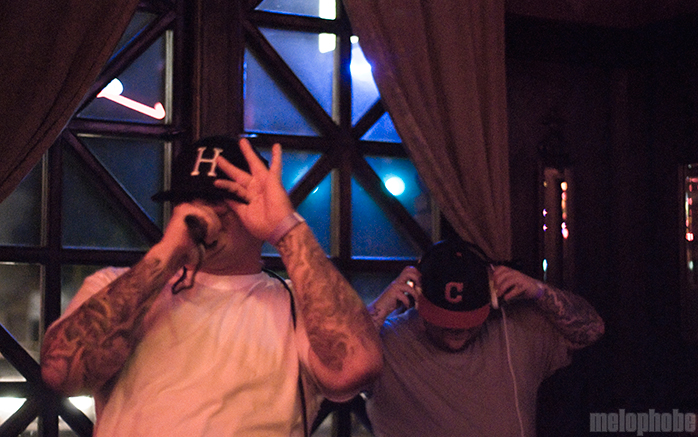
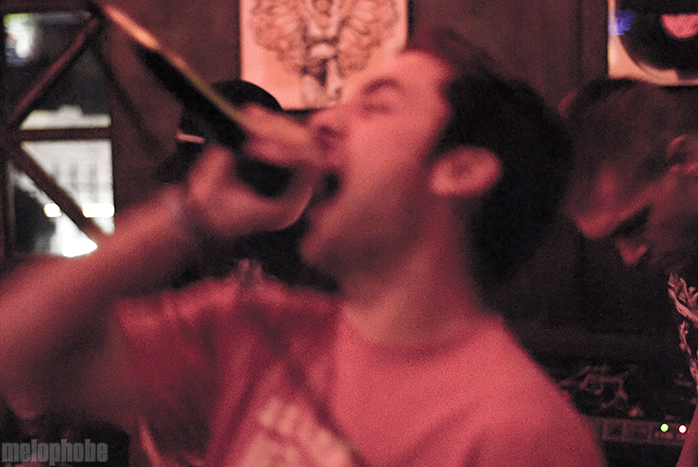
Portland MC Serge Severe, Gen. Erik, and Universal DJ Sect thankfully broke the low hum of conversation that threatened to extend, unaccompanied by music, well into nine-o’clock. Handing the microphone back and forth, pacing across the stage, flailing about, and rhyming something about jumping, see-saws, hearts that beat, “stepping to the mic with the artistry,” and kangaroos, Serge and Gen. Erik were likewise boisterous and fun to watch. Still managing to find things to say between rhymes, Serge looked out at the lounging audience and said, “If you give a shit about what we’re doing up here, move up!” Well, that’s a tough one to contest, so the crowd indeed moved toward the stage. I felt like Betty White at a Snoop Dogg concert -- totally out of my element but thinking things like, “Oh, goodness! Aren’t they just adorable?” and “Well, this is kind of groovy!” Severe and Erik naturally and energetically engaged with the audience – despite there only being about ten of us.
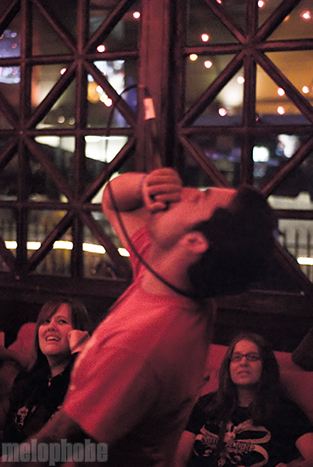
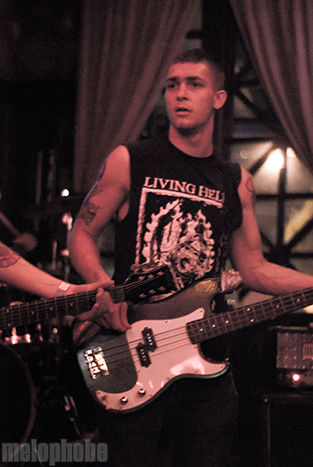
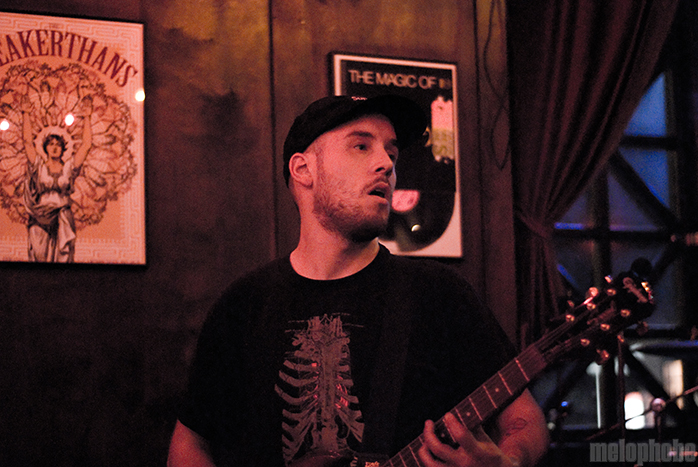
Five-piece Connecticut hardcore band Hate Your Guts set up next and screamed a bunch of stuff, I assume from their new album Bastard’s Disease, into some microphones for a half-hour and deafened me (could have been about French salt bathing and kitties for all I know).
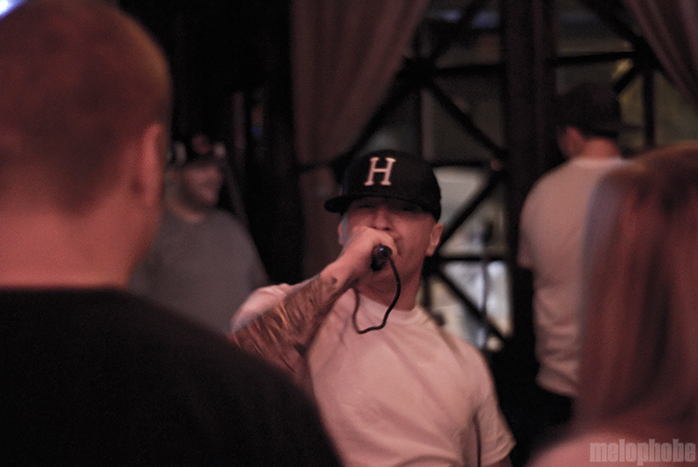
Timmy Wiggins took the spot before Cage, rapping hardcore style about stuff I’ve had very little to no personal experience with, like prison and police, and I felt nothing but amazed at how difficult it must be to remember all those words.
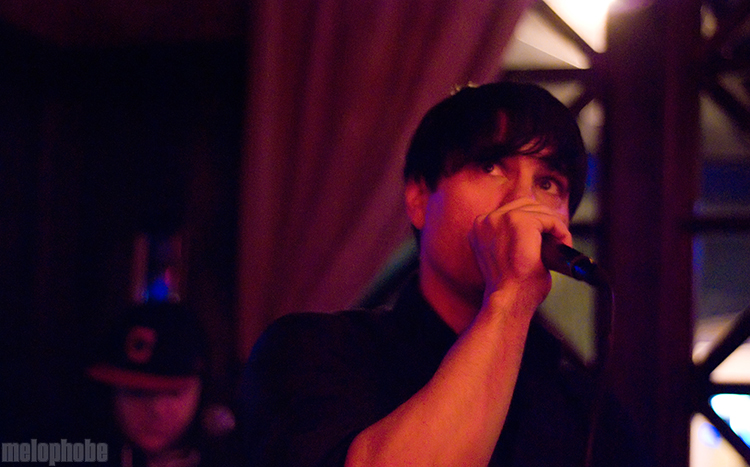
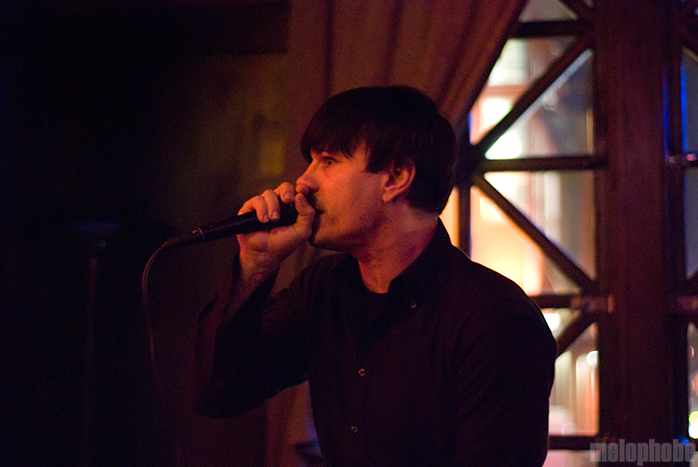
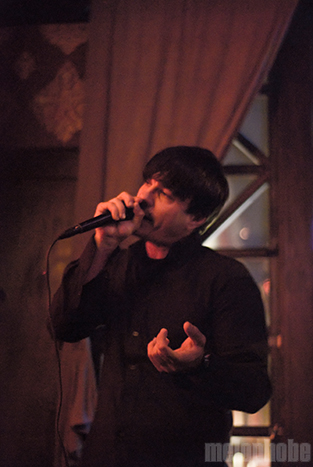
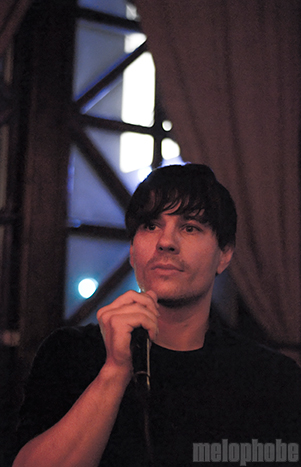
After a short equipment-swap session, the long-awaited Cage aka Chris Palko walked to the stage unassumingly after blending in at the bar for most of the night.
I have to preface these next comments by admitting I have trouble discussing hip-hop because its style is so overtly defensive. The content and arrangement therefore feels non-negotiable, but in that, is also its strength. It indicates unwavering conviction through self-expression, which is partly what draws me to hip-hop fans -- they made a conscious choice to listen to this performer, and from there to connect or disengage. Which is the case with most music, but when hip-hop fans connect, they really connect. They say things like, “This album got me through the toughest time of my life.” The stories and morals that make up hip-hop songs are so specific and personal that fans impulsively feel attached. Hip-hop artists spill their guts like no one else – with humility, vigor, and style.
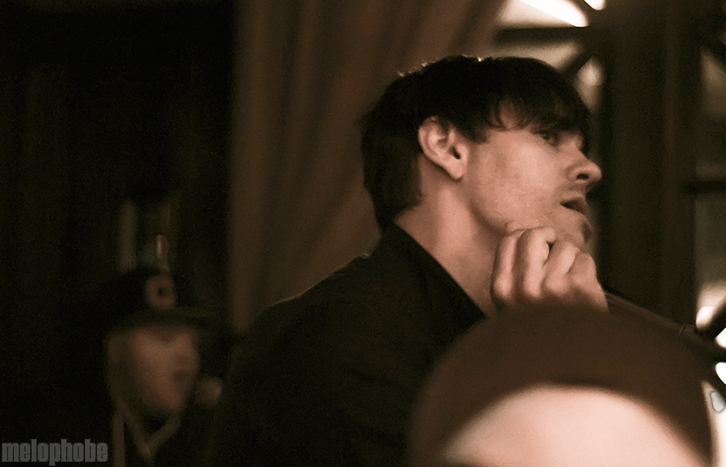
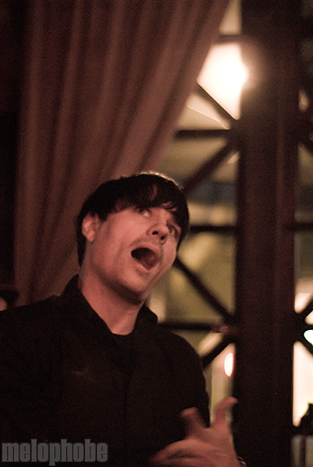
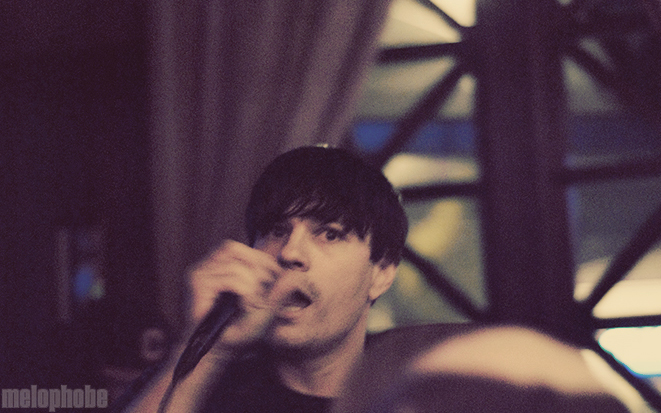
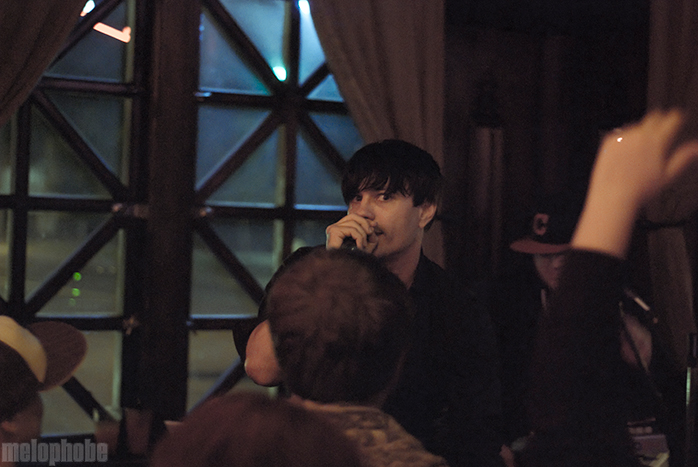
Leaning toward the crowd, gaze barreling toward the back of the room, Cage twisted his “rap-rock” lyrics around the microphone while nearly everyone fervently lip-synced with their eyes locked on his every move. His earlier songs from his 2002 album Movies for the Blind, though more cohesive, communicate heavy torment and aggressiveness ("Agent Orange" features an intermittent cut and scratch of a voice: “People say his brain was infected by devils” while Cage raps: “I survived abortion … got mashed in the canister shaped coffin till stolen from the garbage I was tossed in … psychological pollution, they stickin me with Thorazine solution … Agent orange stompin on MC corpse slim circle body part, call murder scenes abstract art…”), whereas his most recent release, Depart From Me, magnifies deeply personal feelings and experiences, welcoming the listener to connect, instead of angrily pushing them away.
At one point during the show, Cage asked us to raise our hands if anyone close to us had died recently. A shocking number of hands shot up, and he introduced the next song he called “Death,” about a close friend he, presumably, watched die. I discovered later that Palko has a fascinating and tragic history that I won’t rattle off because it’s all over the Internet, and all over his songs.
Death of friends, attempted suicides, drug use, parents’ drug use, parent’s death, physical abuse, institutionalization, neglect, abandonment … it’s all there. And I don’t think the guy needs another reviewer telling him to stop crying about it. The concert was intimate, and Cage’s fans genuinely cared for and connected with him, which is something rare and refreshing to see at a show. I have a feeling my tiny hip-hop album collection will soon be growing.