A couple pieces of advice: first, go see Les Paul; second, do it soon; third, buy tickets in advance and get there early. Because he is a figure who has literally changed the course of music in several ways, some background is needed.
First thing’s first. If you don’t know who Les Paul is (or only recognize the name as associated with Gibson guitars), you need to check out some biographies (All Music Guide, Rolling Stone, Wikipedia, NPR). The long and short of it is this: he invented the electric pickup and pioneered the design of the solid guitar, making electric guitar as it exists today possible; he invented multi-track recording, which made modern day pop music possible; he pioneered echo and reverb effects, making possible effects pedals; he designed the most popular and sought after guitar ever made (Gibson’s Les Paul); and he made hugely influential recordings in jazz, pop, and country music, and has an enduring impact that crosses all musical genres. If that doesn’t make you want to see Les Paul, please re-read the previous sentence, or, optionally, get your head examined.
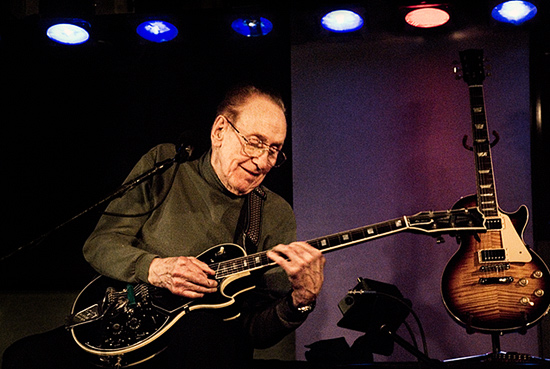
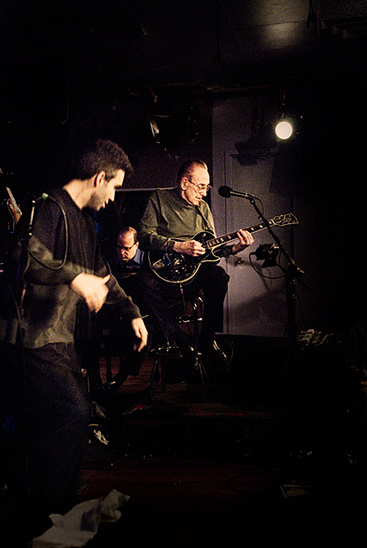
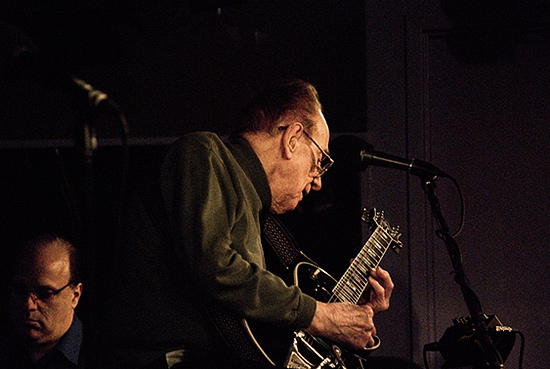
Second, despite being 92 years old, Paul has played two shows every Monday night at New York City’s Iridium Jazz Club on Broadway for the last 12 years. And he’s still good. Arthritis has certainly slowed him down a little, (at some points during the show, he simply sits and holds court, having guest musicians and his band show off their talents), yet his runs and trills are as sharp and tasteful as ever. As Les plays “It Had To Be You”, I close my eyes and it’s 1953 in a smoky New York City jazz club, I’m listening to Paul in his prime, his characteristic fills unmistakably lyrical and crisp. In fact, the only thing missing from that pristine image of the past is the smoke.
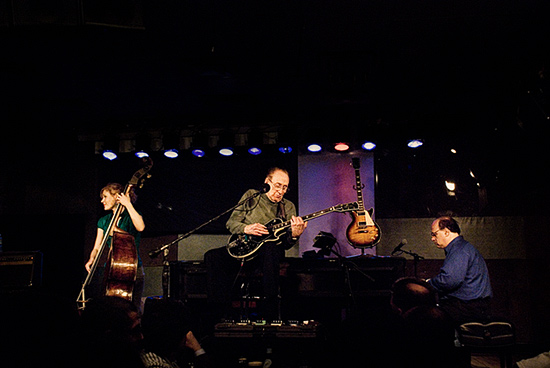
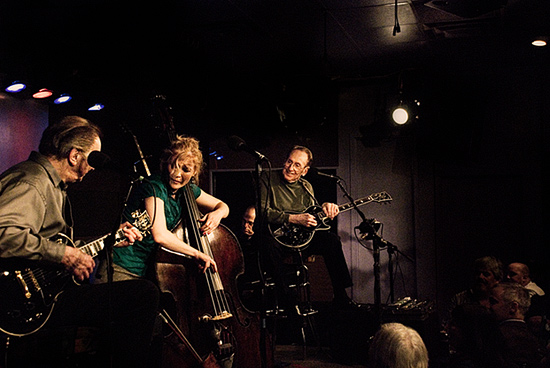
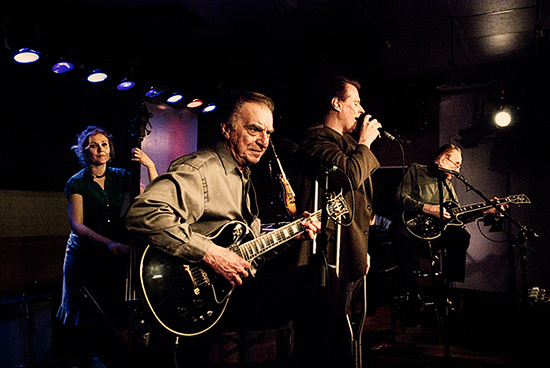
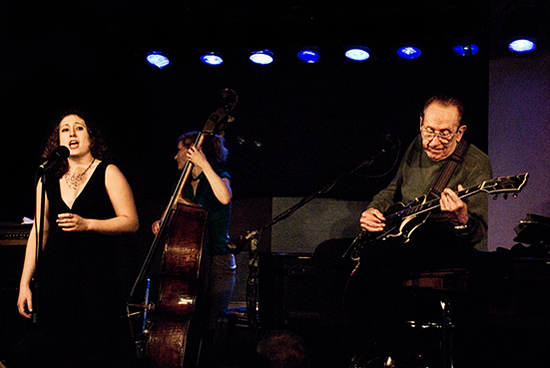
Paul’s three-piece backing band is as solid a unit as you’ll see performing jazz and swing standards today. Their musical literacy is extensive; Paul needs merely name a song and the key, and they immediately launch into a lively, perfectly executed rendition. Pianist John Colianni, however, separates himself from the rest with his virtuosic runs, and surprisingly creative and lyrical solos. Though generally reserved throughout the show (to ensure that Paul is the central attraction), in his spotlight moments, he shines most brilliantly, garnering the most enthusiastic applause of the night (until Paul takes his final bows, of course). Next in line is Australian bassist Nicki Parrottt, whose technique is superb, though she seems to shy from the limelight a bit when Paul requests a bass solo from her. Rounding out the group is understated rhythm guitarist Lou Pallo, who blends into the background by definition of his role. His job is to comp without being flashy, to simply play the chords that fill in the spaces between Parrott and Colianni, gently fleshing out the canvas on which Paul expresses himself. Still, it’s immediately obvious to any serious musician that Pallo is a sensational player, as he moves effortlessly through dozens of chord voicings, adding color and depth to the harmony while constantly scanning the faces of the audience with a distinctly off-putting stare. The band plays a solid hour and a half set, sticking mostly to 30s to 50s era swing and bop jazz music, as Paul weaves in stories about Art Tatum, Cleo Brown and even silent movie star Pearl White.
However, to this point, I’ve recounted only half the show: now meet Les Paul, comedian. I was thoroughly unprepared for this aspect of the performance, but Paul banters with everyone; the audience, the guest performers, and most often bassist Parrott. On introducing the band, he quips “we now have a bass player, a lady… so now we’re the Les Balls Trio.” Parrott replies “are you sure about that?” and Les quickly shoots back “I’d sure like to find out!” The sexual innuendos continue throughout the night, culminating in a song sung by Parrott referencing Paul’s “purple pills” (which Les claims don’t work: “all I am is hard of hearing”) and imploring Les to “get that Viagra.” Paul responds that she makes him “feel like an old building with a new flagpole,” and mentions that he recently had a trip to the Cleveland Clinic “to have a second pacemaker put in, so I can date the bass player.” Paul’s wit and persona are strong, and the audience hangs on every setup, punch line and flirtatious jab.
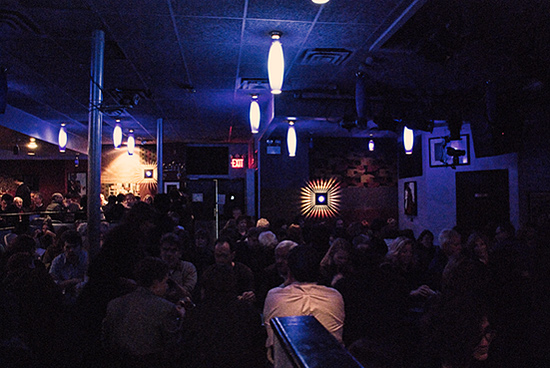
Third, and most practically, the place was absolutely packed. And I mean border-line-fire-code-violation packed. The line for the late (10 pm) show went almost the length of the block, starting around 9 pm, and even people with advance reservations risked nonadmittance with a late appearance. I was certain this had something to do with the President’s Day weekend, but an Iridium manager tells me Paul has been playing to the same packed houses every Monday night for the last 12 years. After the show, Paul sits for hours to sign autographs and chat with the audience as the line stretches through the club (making settling up your tab at the end of the night quite challenging).
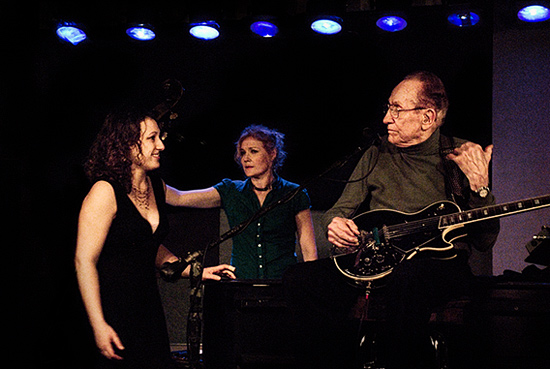
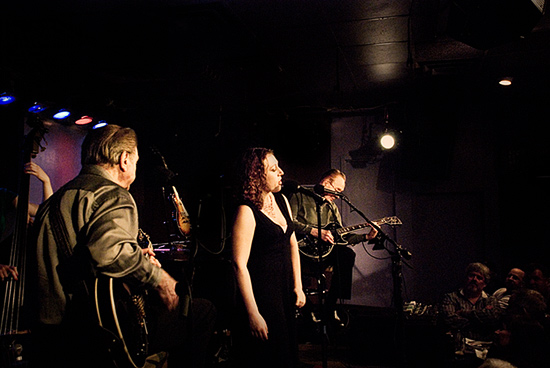
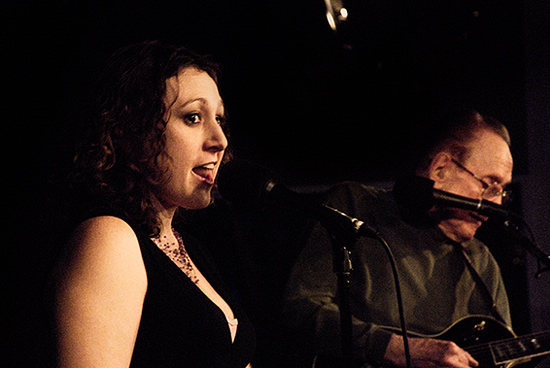
Lastly, Les has on a bevy of guest performers, first of which is a jazz tapdancer. The man is extremely talented, and Paul is amazed by him, asking him questions about his technique, staring during the three song performance, clapping and laughing with delight. Apparently there are some things even Les Paul hasn’t seen. Also joining Paul on stage are several vocalists, the last of which is Carolyn Sills, a talented singer and close friend of mine who performs with several bands in New York (including Boss Tweed, on the cusp of launching their second European tour). Sills performs two songs with Paul, including a dead-on rendition of Patsy Cline’s “You Belong To Me,” bringing a broad smile to Paul’s face.
It takes me a moment for the thought to strike me, but about halfway through the show, I realize in addition to writing many of the songs played, Les Paul created the technology that allowed those songs to be recorded, invented the guitars being played by himself and Pallo, and is responsible for the development of the pedals that sit in front of him and Pallo. Quite simply, there is no other show on Earth where the same can be said.. Again, he is 92 years old. He is unique. He is “just precious” as Pat Martino once told me. Go see him. Soon.