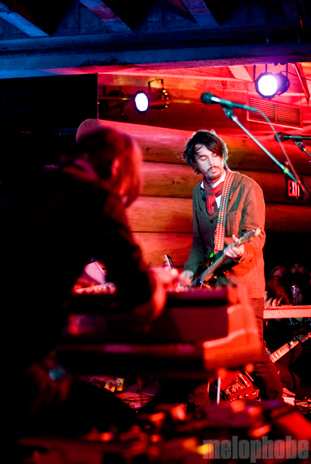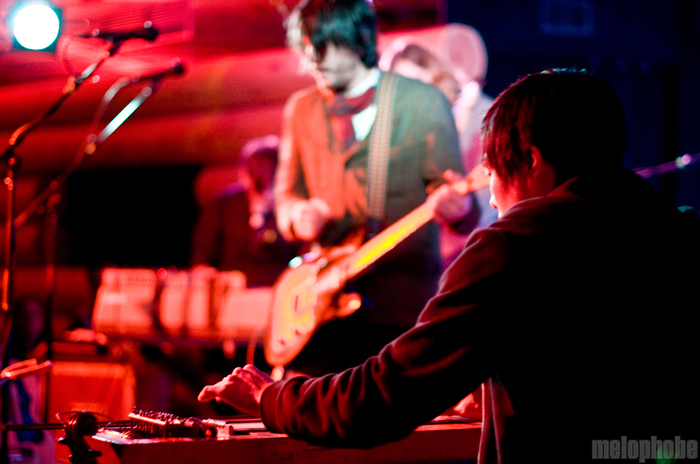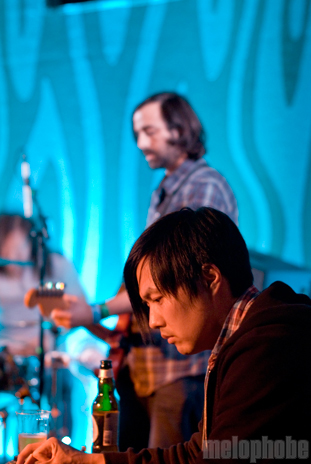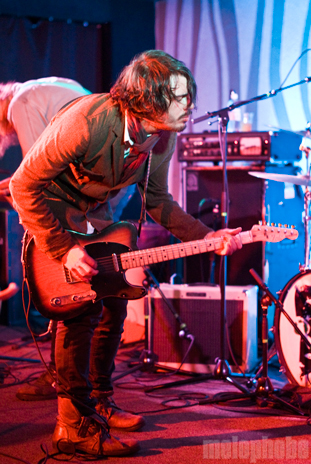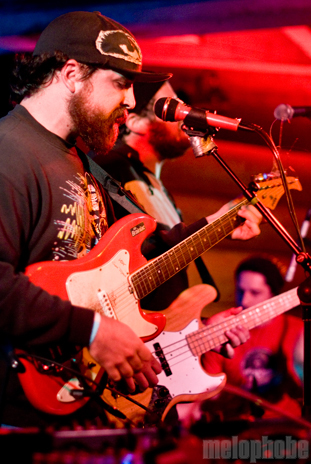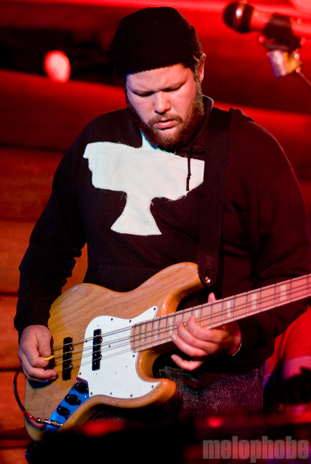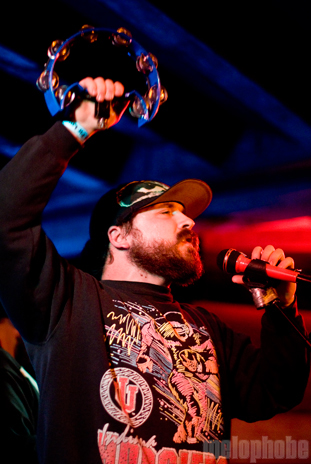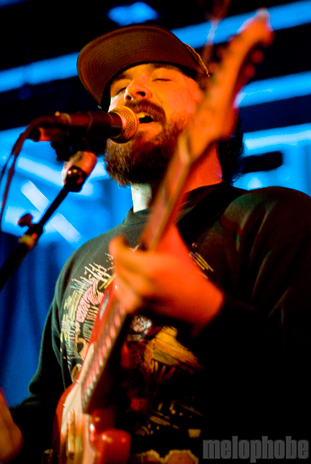
Contrast is the essence of groundbreaking music. Think Bob Dylan, The Beatles, The Rolling Stones, The Pixies, The Cure, all deftly combining one style of music with another (folk and blues, classical and pop, funk and rock, electronica and rock). Think of how amazing it would be to hear a group of cellists play “Toxic” by Brittany Spears or a country band do a David Bowie cover. The function of contrast in music is to make the listener remember by, in a way, confusing the senses. It’s something that’s increasingly difficult to do with the influx of innovative music in the last century, but many talented musicians still manage to pull it off. Only one of the bands I saw at this particular show did this. However, the three bands combined exhibited three distinct styles which don’t usually come together for a single concert lineup. Typically, bands tour with acts similar enough to make sense thematically. For instance, I don’t know how a Taylor Swift concert would fare with Paul Van Dyk and Die Antwoord as opening acts. Though disparate lineups have indeed been popping up lately as venues realize the average person’s musical tastes can be all over the map. So, in a less extreme case, can a low-fi rock band from San Francisco, a clusterfuck party band from Indiana, and a mellow rock band with a penchant for melodramatic lyrics comprise a single lineup and make it work?
In an ideal homogenized concert lineup, San Francisco’s The Burnt Ones would play alongside The Dum Dum Girls, The Black Lips, Harlem, and The Crocodiles. The kids would get a proper dose of crunchy guitars and reverb-vocals superimposed on head-shaking, hip-shimmy vintage beats. Black leather jackets and Ray Ban sunglasses would explode like confetti on the dance floor, and all that is cool and melancholy would fill the room like a James Dean fog machine. Enhancing the cool effect is the connection between this band and their literary counterpart. The Burnt Ones is also a collection of stories written by Patrick White in the 1960s. The stories deal with characters “burnt by society and existence” and thus haunted by “feelings of isolation, intense self-examination, and an acute awareness of how they are different from others.” The name can be roughly translated to, “the poor unfortunates.” The easy self-assurance of this band was intoxicating and perhaps the “poor unfortunate” part was buried in their lyrics. Either way I made a beeline for the merch booth after the set and bought their latest album, Black Teeth and Golden Tongues. Sometimes just being cool and enigmatic is enough to convince people to give you money (see: John Wayne).
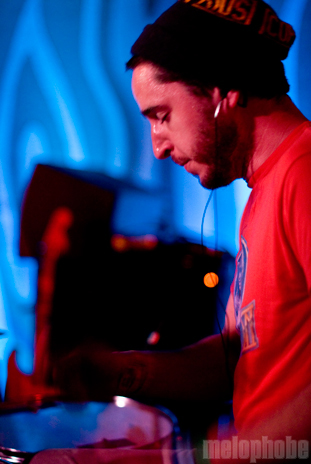
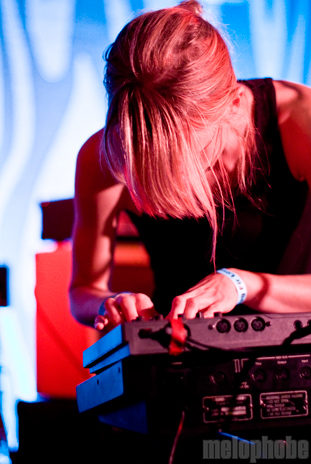
Apparently the second openers, Jookabox, sent an ultrasonic signal out to the street, summoning a large crowd for their set alone. They didn’t require trickery to collect admirers, though. These Indiana natives are naturally loaded with enough energy and spastic dance moves to get a rise out of a punctured bike tube. Most of their songs could conceivably be accompanied by the running-in-place dance, as demonstrated by keyboardist Lisa Berlin during “Light” and “You Cried Me.” In the case of down tempo numbers like “Don’t Go Phantom” or “Zombie Tear Drops,” however, I recommend just plain old running-man (add handclaps if you dare). They belong on the soundtrack of a demented version of a children’s aerobics show like Disney’s Mousercise with marionettes and warped sound. The live Jookabox experience is likewise difficult to classify, and perhaps that’s the point. It’s all familiar in momentary flashes, but just when you get your head around it, they pull out a brooding Casio-recorder-quality duet about “Faith in the Fucking.” Normally this playing around with expectations backfires and turns the broad range of listeners off, directing itself then to a very specific crowd (Xiu Xiu, Panda Bear, early Animal Collective), but these guys (and gal) don’t lock their music behind obscure art or experimental drivel. They are accessible and self-mocking, yet imaginative and complex; in terms of sound, style, and attitude, Jookabox was nothing like the first band, and subsequently the headliners were nothing like either of the openers.
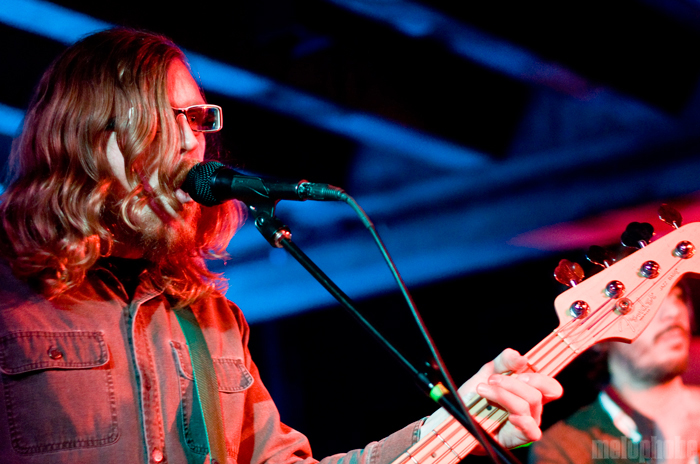
Let’s talk about how Margot and the Nuclear So and So’s have a ten-syllable name. This is too many. It’s like calling Jimmy Buffet Jimmy Buffet and the Coral Reefers (also ten) every time you mention him. It’s an awkward mouthful and is no easier to abbreviate. So for my own snobby purposes and for sake of brevity, I will refer to the band as Margot. Fortunately, the name is my only complaint… okay, one more: Mr. Richard Edwards, lead singer/multi-instrumentalist, was grumpy. This divided the crowd into those who found this attractive in a masochistic, low-self-esteem sort of way, and those who battled against it with heckling, gossiping, and general lack of attention.
Margot’s first album, The Dust of Retreat, feels like the brainchild of a violin-toting Emo fan. Edwards’ bright yet lyrically downtrodden voice is remarkably similar to the pensive sentimentality of Elliot Smith or Dashboard Confessional. Their most recent album, Buzzard, is a clear and confident departure from that in general, but certain tracks, like “Tiny Vampire Robot”, jettison the new digs and return to their original level of delicate instrumentation and emotional vulnerability. The majority of their song selection that night was of the smart-rock sort, a good move given the high spirits of the crowd after the electric surge they got from Jookabox. And while we’re back on the crowd topic, I have to give a shout out to the large group of twenty-first-birthday-partiers yelling “It’s my birthday!” and “Play the [such-and-such] song!” These charming nitwits clobbered a handful of people and were likely the source of Mr. Edward’s foul mood (as they were mine). Several times said partiers fell backwards into me, nearly poured a full White Russian on the photographer, shoved their way to the stage (by the way, the venue was maybe at half capacity, which renders shoving your way to the front completely asinine), and basically made a standard weeknight at the Doug Fir feel like a wild kegger with a bunch of trashed strangers.
The element of contrast surfaced too many times to be ignored, so I have to ask: did it work? Let’s put it this way: I left the show feeling like I had eaten a bowl of garlic and nectarines: fabulous in their own right, but shouldn’t be eaten together.