A couple of friends, music-lovers, gave me looks that bordered on concerned when I told them I was going to the M.I.A. show. "Really," they said, "huh." As though I'd said I was going bungee jumping, or had taken up amateur bullfighting. As I set out, I felt like I should be wearing magic chainmail, or lazer shields. And/or, because there was a fallblown mist on the air, a raincoat.
M.I.A. is an immensely popular musician, and a slightly scary livewire who treats pop music like Damien Hirst used to treat pop art, with an eye for the lunch-losingly large gesture, the patently provocatively political. Her Pollock-like approach to sound takes elements hinted at in the work of others (Timbaland, Missy) and splatters them with a rampant disregard for finesse - aural, political, what have you. That's why she's the most essential artist of her generation. That's why I was going to see her, despite having left my armor at home.
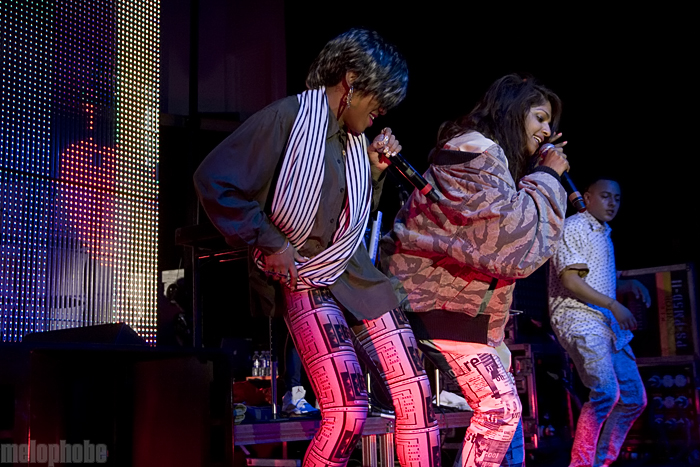
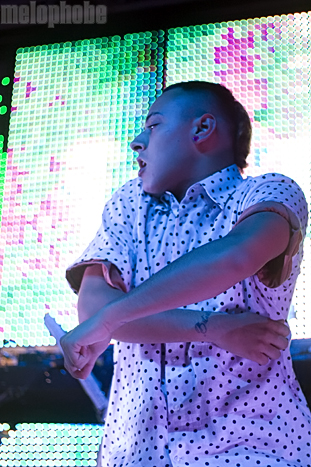
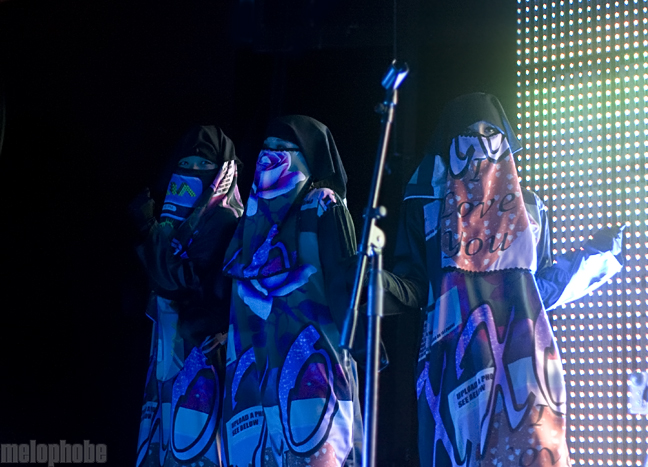
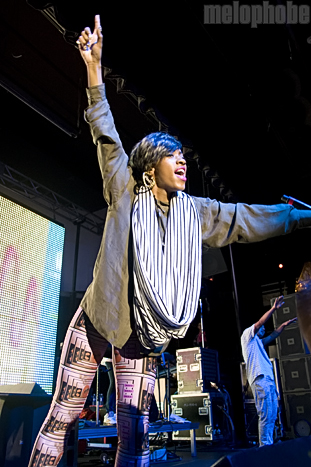
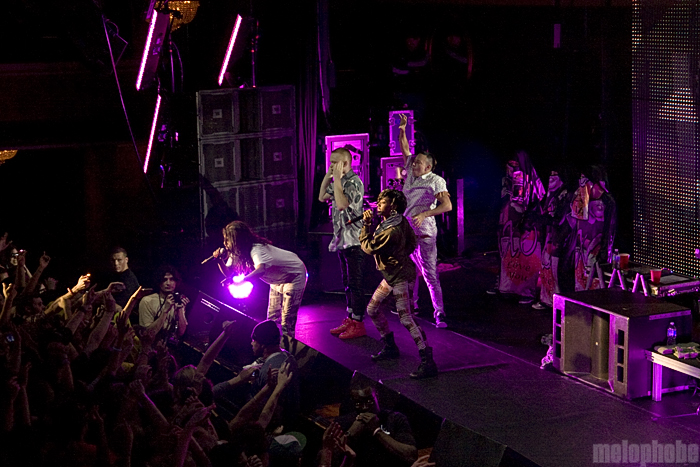
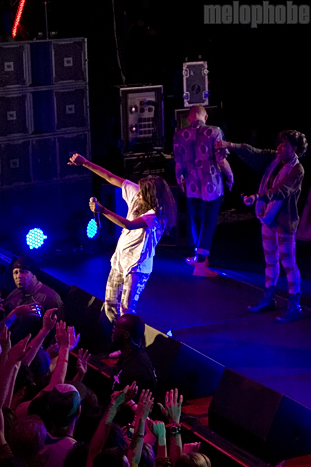
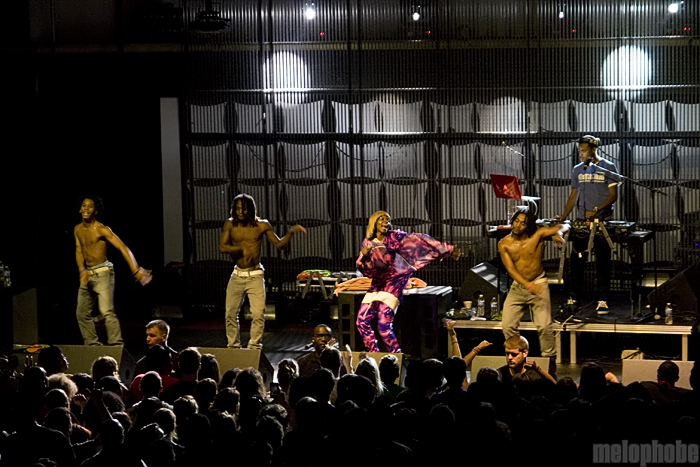
To the strains (more like splintered optical fibre cables) of "Illygirl," M.I.A.'s posse took the stage: a supremely poised DJ, two dancers (one recognizable as an enemy-of-the-state redhead from the "Born Free" video), a keffiyeh-wearing hypewoman, and three women (probably) in lurid niqabs, swaying and occasionally raising their hands. Beneath the eyes of one, the niqab bore the words "Love You." Get it?
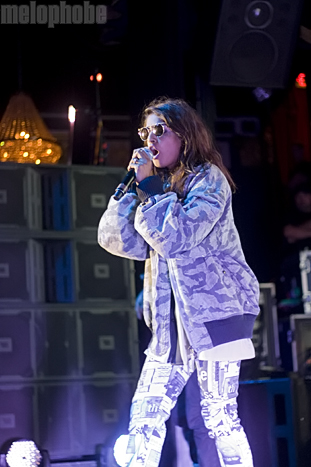
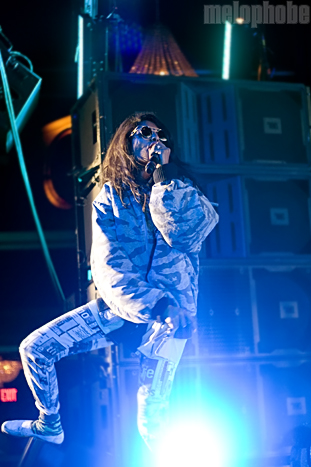
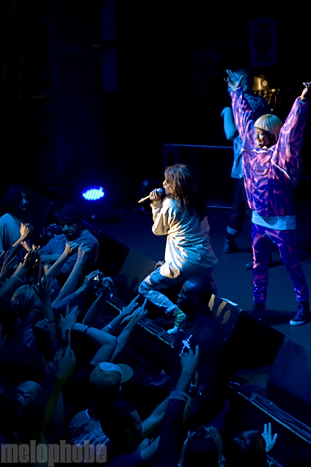
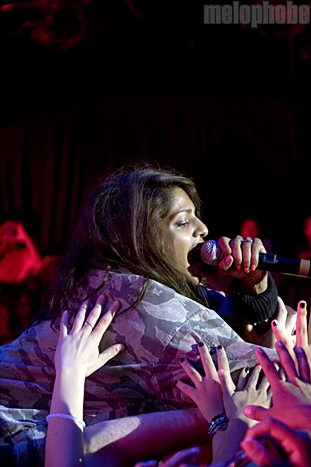
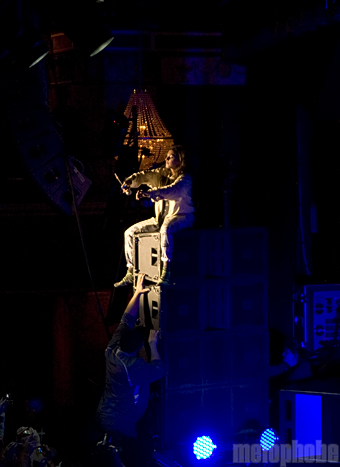
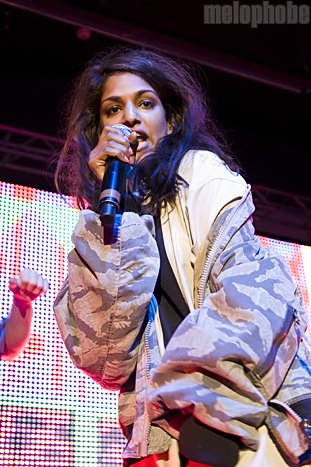
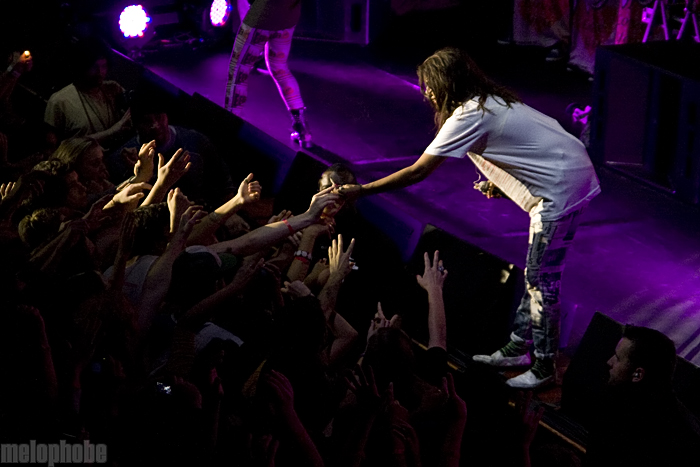
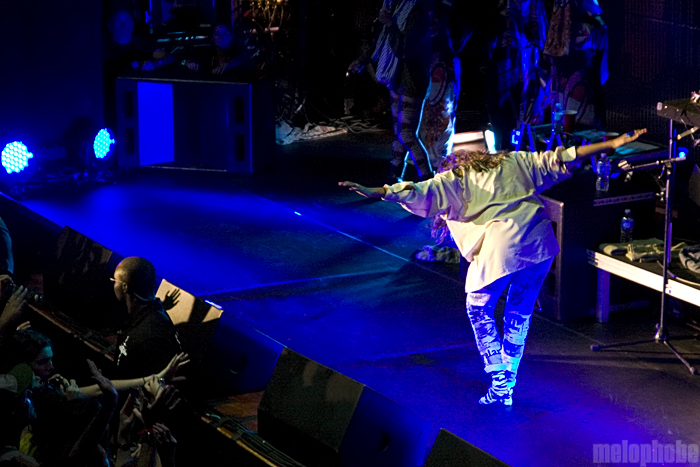
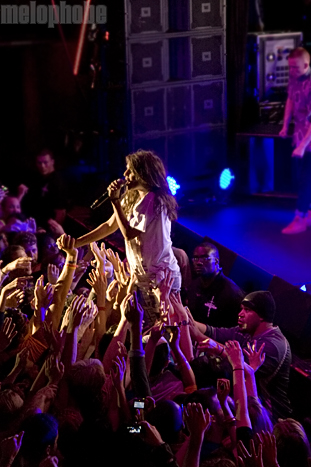
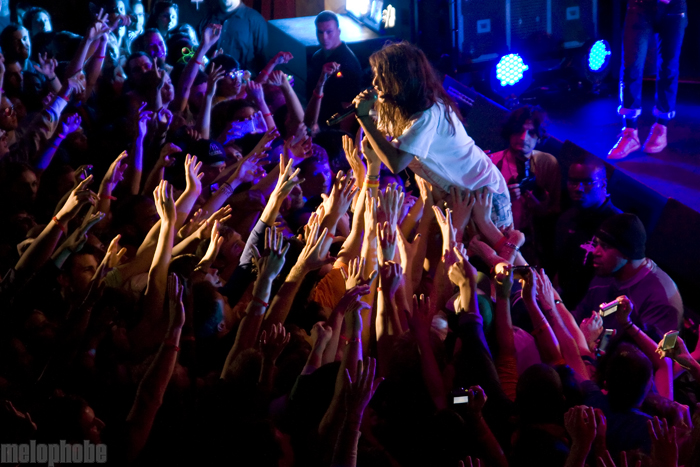
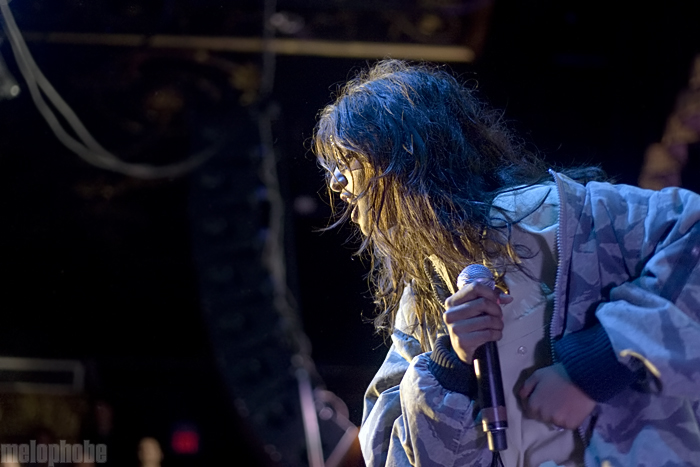
And then there was M.I.A. herself. An early bout of feedback seemed to kill off her mic for much of the show, but it didn't much matter. On "Galang" she thrust her mic into the iphone-headed hydra at the lip of the stage satisfied with whatever inchoate hysteria emerged. The show was a sort of experiment in music as radical democracy - despite a phalanx of scowling bouncers, M.I.A. contrived to crowd surf, climb the speaker stack (she accepted a bouncer's hand down), toss her mic into the audience, borrow a lighter, and pass into the crowd a bottle of something or other, and what might conceivably have been a home-rolled cigarette.
"Bamboo Banga" was the sonic highlight of the night, a crescendo that starts huge and then, tsunami-like, keeps growing deeper and more turbulent. M.I.A. invited a posse of well-turned-out boys onstage to dance, disappearing amidst the throb of bodies and sound. After a brief breather, the second half of the show was devoted to the new album, with "Teqkilla" leading the charge. It would be churlish to complain about the difficulty of the new material, but M.I.A. hasn't fully settled into the new material - she didn't even attempt the pseudo-pop crossover "XXXO."
But she's clearly enjoying the political kerfuffles. She very deliberately turned down a request for "20 Dollar": "War isn't topical any more, we don't talk about that these days." She shouted something about a video banned in this country and not caring before launching into the bloodthirsty surf riff of "Born Free." Hundreds of arms waved, more voices chanted, and somewhere in the thick of it all, M.I.A. cocked her head and rapped "I throw this shit in your face when I see ya / Cause I got something to say."
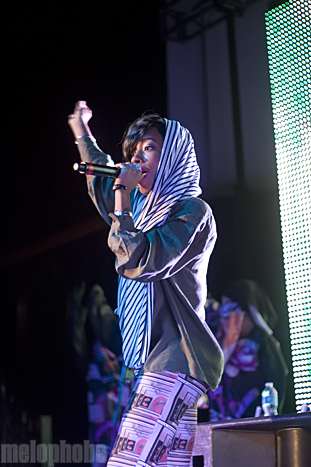
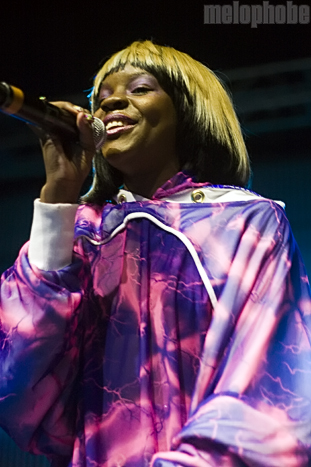
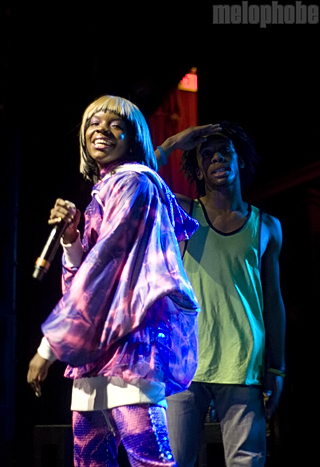
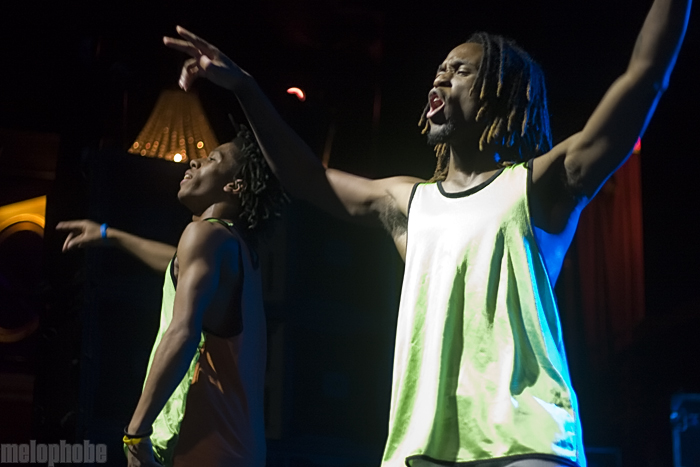
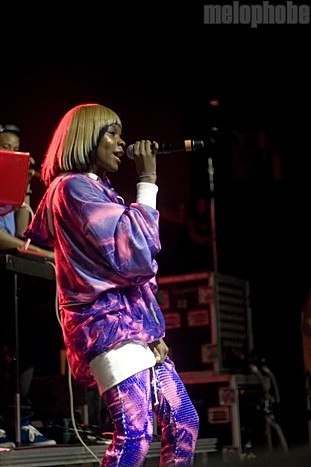
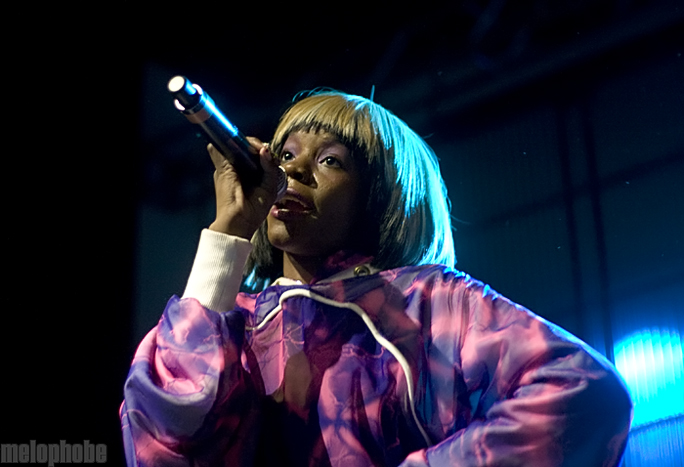
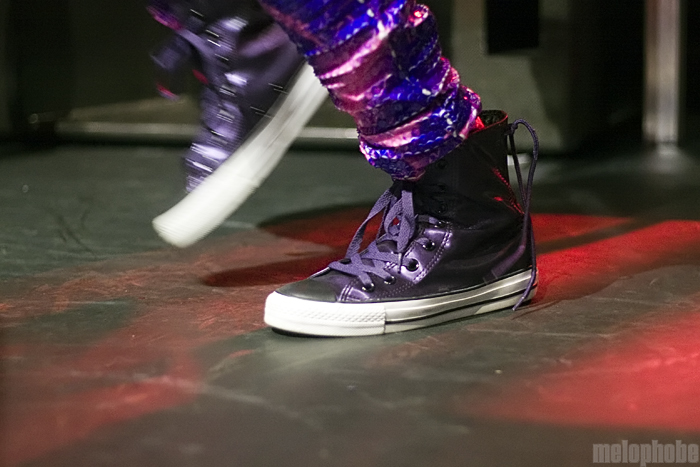
It is hard to imagine a better Padawan to M.I.A.'s Jedi Mistress than Rye Rye, who opened the show. A diminutive dynamo, Rye Rye shares M.I.A.'s mischievously offhand approach to sex appeal, a Missy homonculous in long pink silk-and-leatherette pajamas topped off with a blonde-on-black wig that threatened to come off when she joined her dancers, who must have been carefully selected so as not to be more than a couple of inches taller than the star.