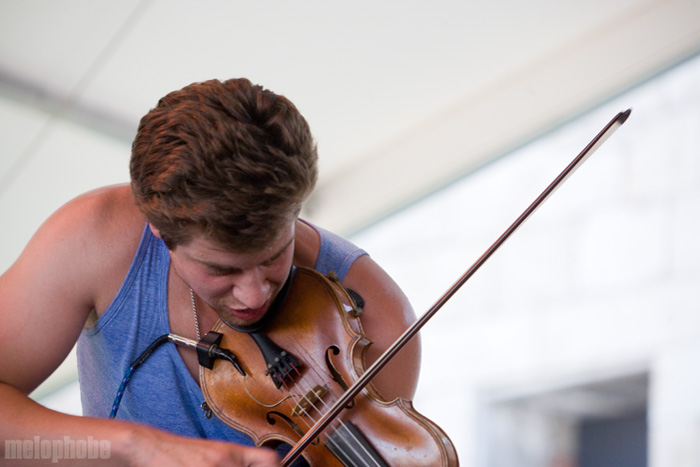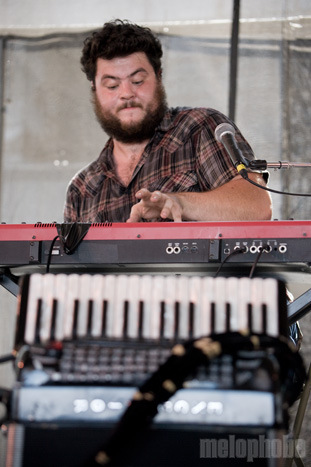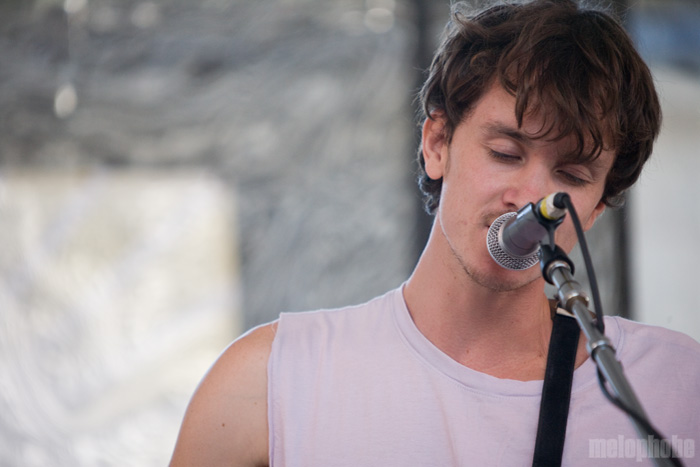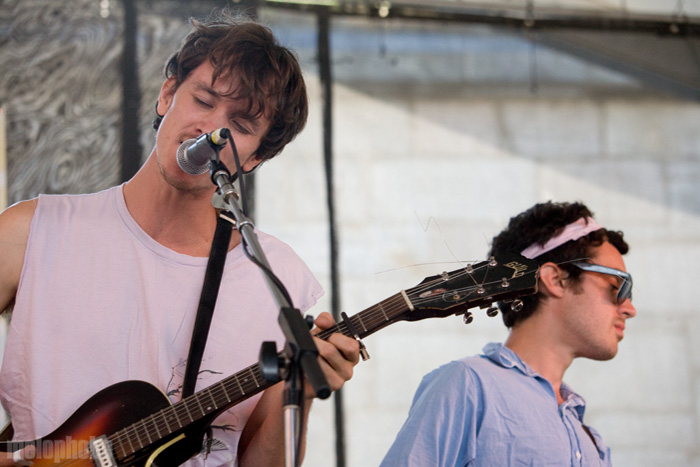
From the moment you walked onto the grass at Fort Adams on Sunday, it was fairly obvious this was not to be an ordinary day of music. Unless, of course, you take into account the history of the Newport Folk Festival, then perhaps it can be considered quite normal.
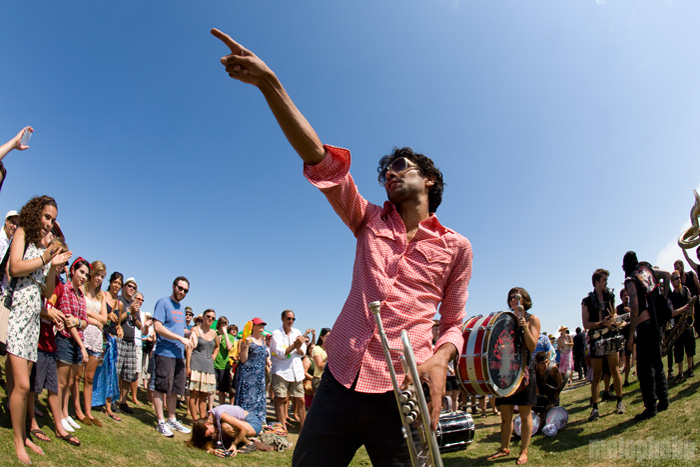
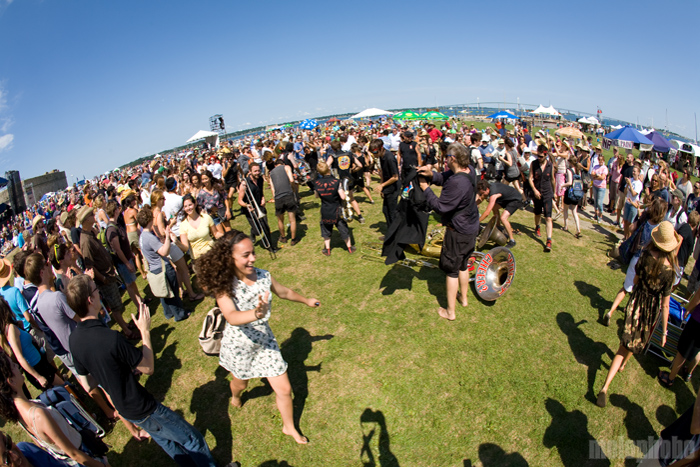
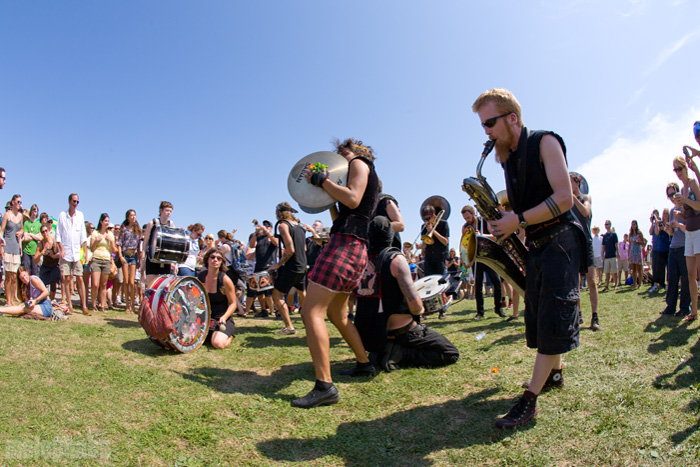
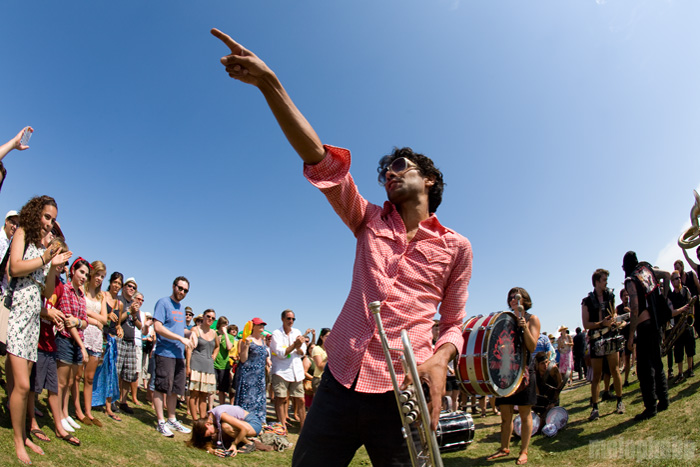
Welcoming attendees and forming dance circles even before most of the bands had piled out of the buses, the Providence street band What Cheer? Brigade instilled in the early-arrivals a feeling that sitting wouldn't be a viable option for the rest of the day. You'll dance, clap, sing, high-five and you'll like it, damn it.
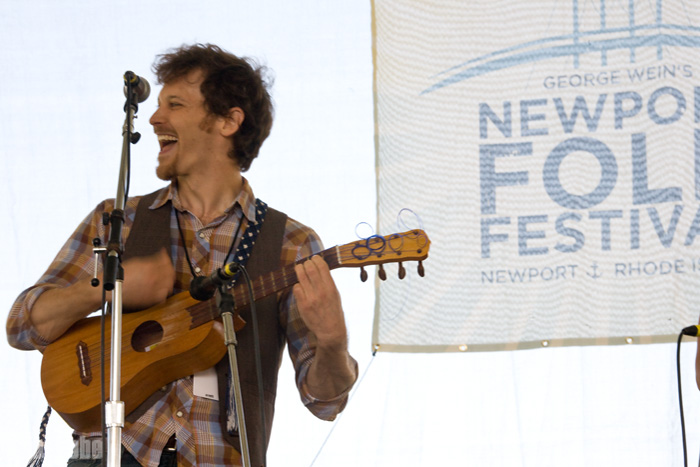
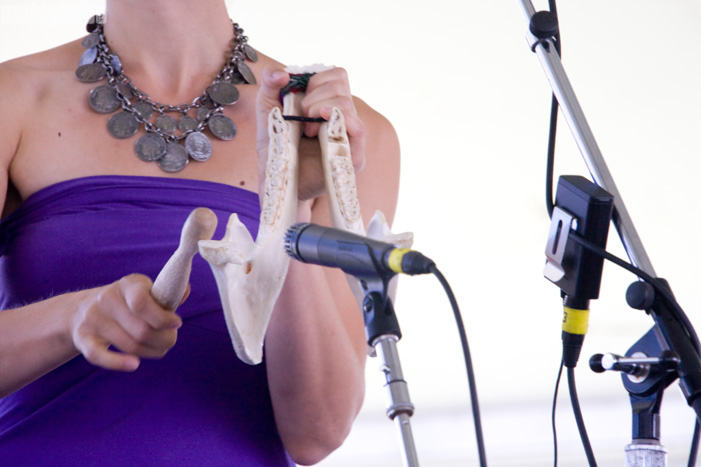
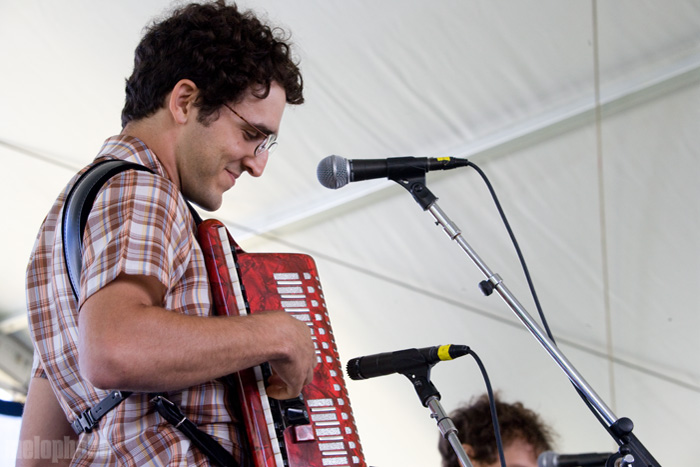
One of the most pleasant surprises of the day turned out to be the performance by David Wax Museum on the Quad stage. The Boston based Mexo-Americana folk act showed that they most certainly deserved their spot on the bill along side all of the days legends. You can bet you'll be hearing more about them on melophobe in the not-to-distant future. Any band that plays a jaw bone is OK in our book.
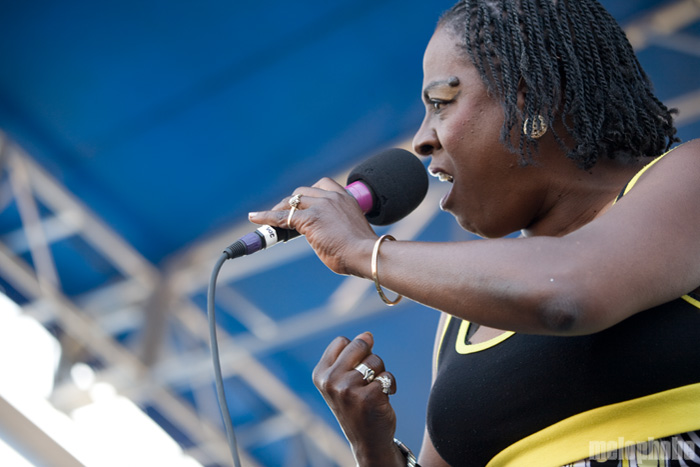
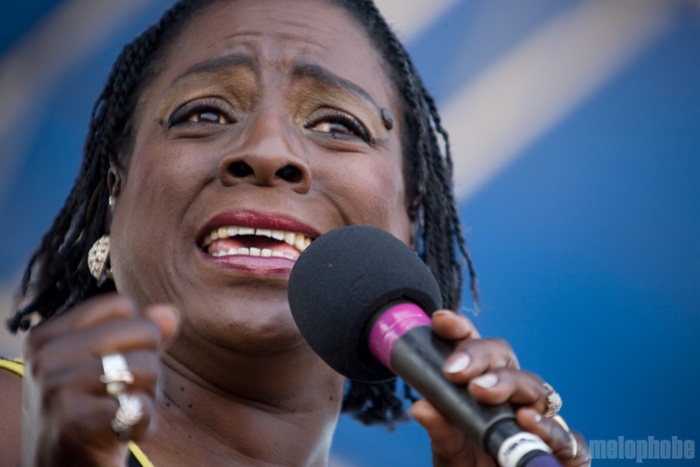
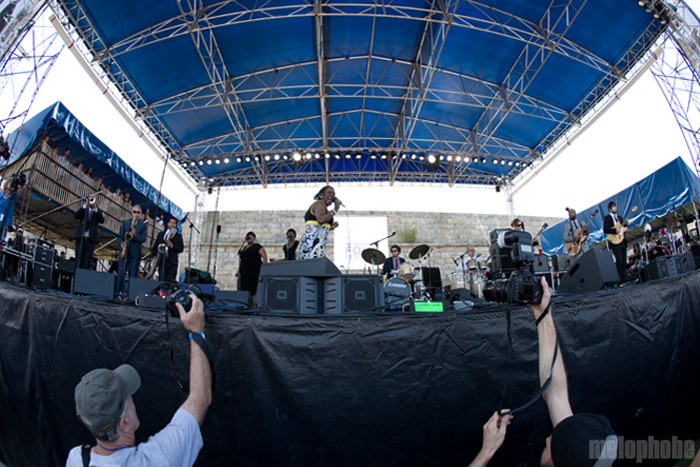
After being knocked over by the first performance, we had a feeling that things would remain at that same level for the rest of the day. Oh wait, Sharon Jones and The Dap-Kings are up next? Perhaps we were wrong. The hardest working woman in the music industry and her stellar band lived up to every bit of the hype surrounding them. Some would argue that Sharon and company are better served playing the Newport Jazz Festival (and at one point even Bosco Mann, the Dap-Kings band leader, mistakenly said they were happy to be at the Newport Jazz Festival), but the energy they brought to the main stage was exactly what was needed to push attendees on into the heat of the afternoon. No one could possibly be expending more energy than Ms. Jones, so get up and dance. Get sweaty. Have fun.
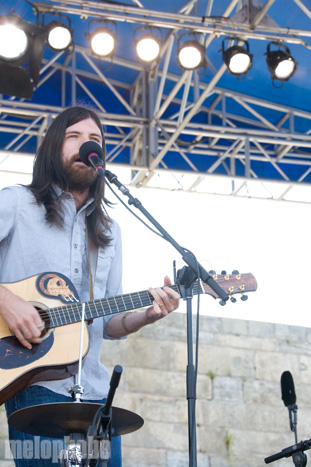
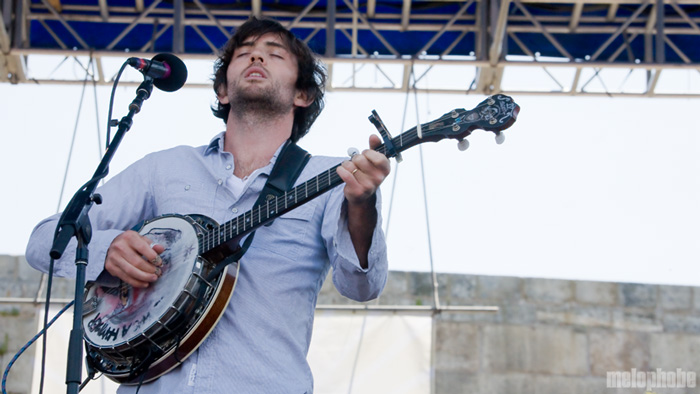
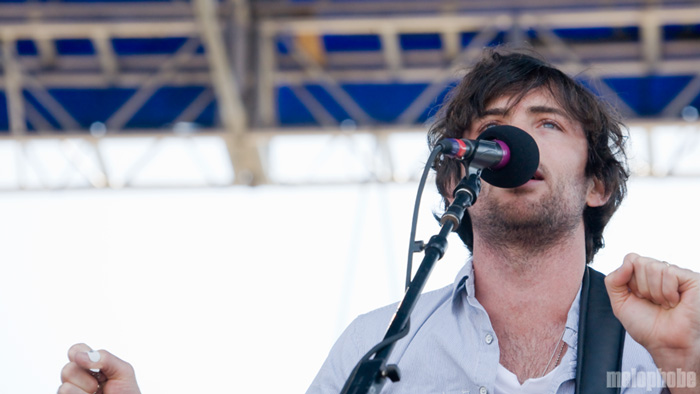
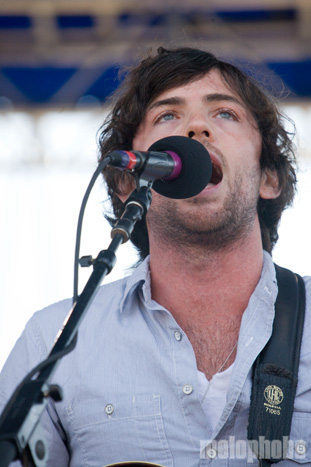
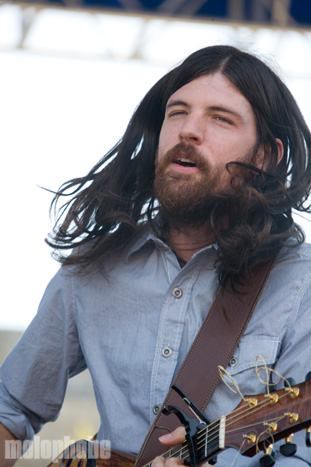
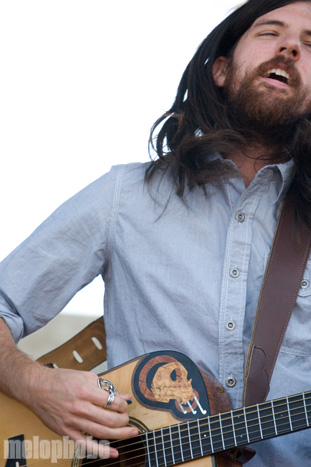
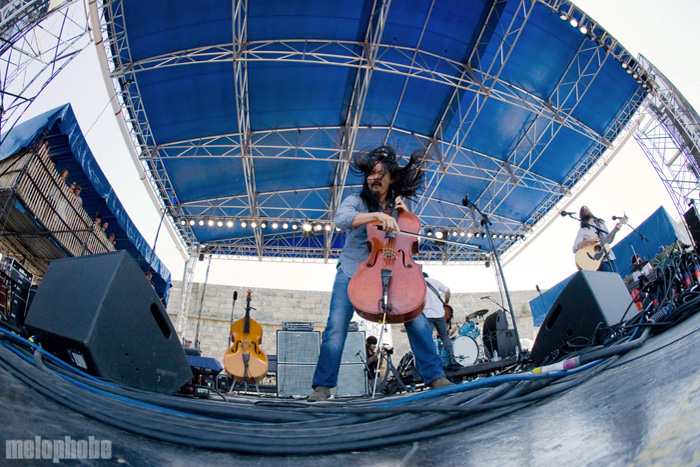
In the past, The Avett Brothers have publicly stated their ambivalence about the side effects of their growing audience. Playing the main Fort Stage, they were at war with the limits of their instruments as though by playing their songs hard enough they might bridge the carefully-policed fire lane between them and their loving audience. The two brothers all but merge as the strumming mounts and the harmonies blur together, and when on “Please Pardon Yourself” Seth Avett sang, “Screaming my lungs out with nothing to say” and then did so, the band’s hyper-romanticism all made sense. Scott Avett’s banjo was perpetually slipping out of tune; “I don’t know why our shit is always broken,” said Seth. “Perhaps because we work it so hard.” Indeed.
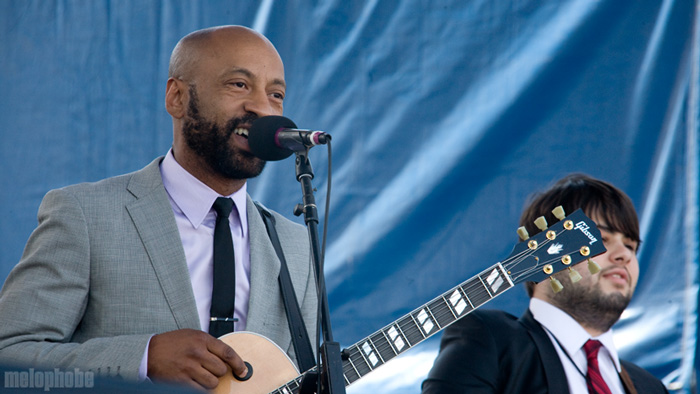
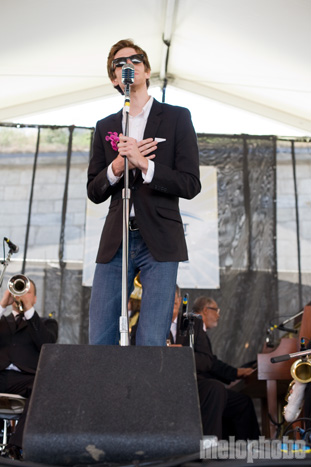
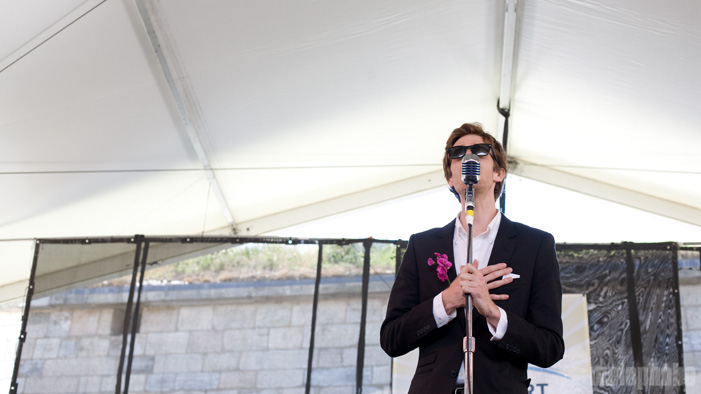
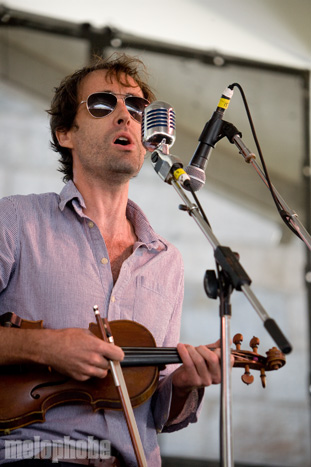
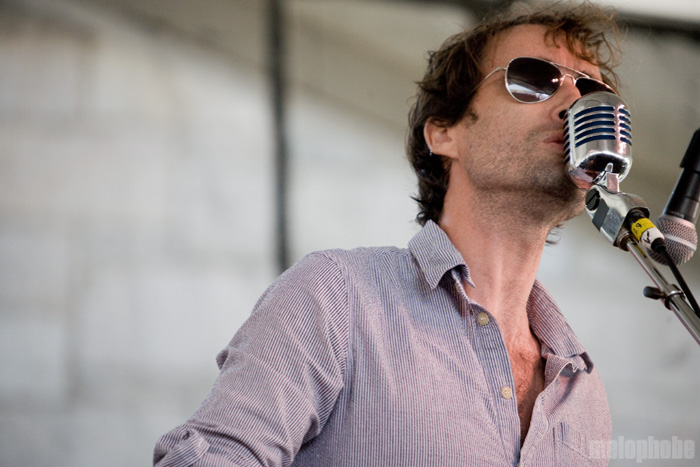
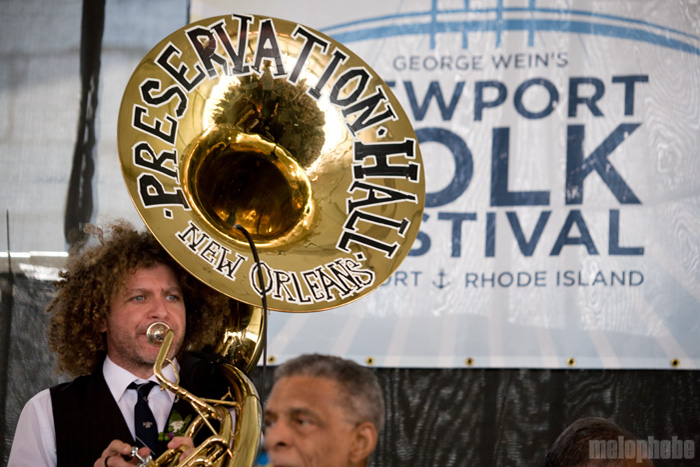
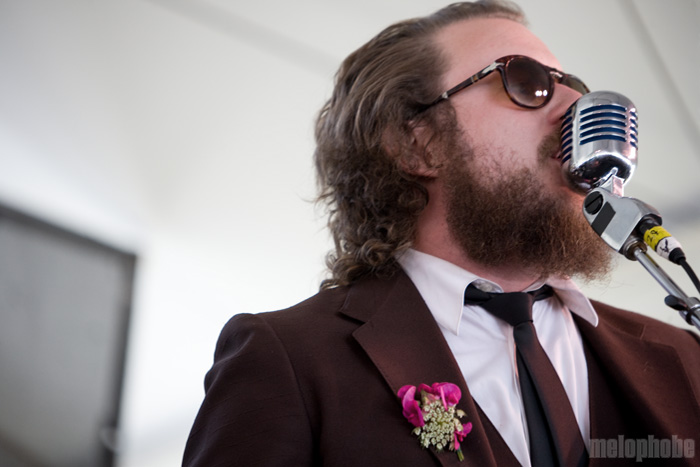
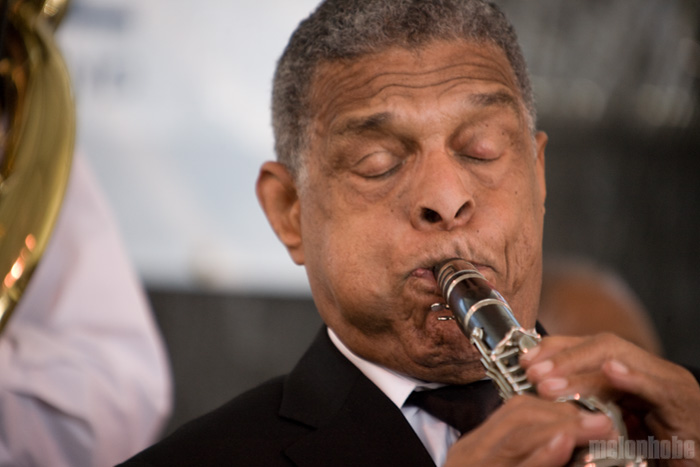
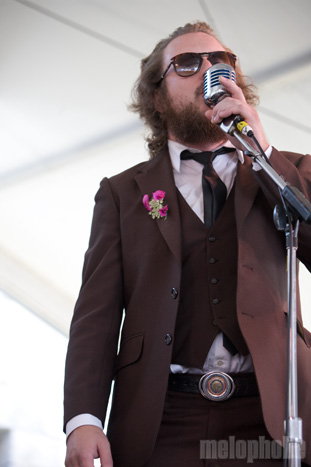
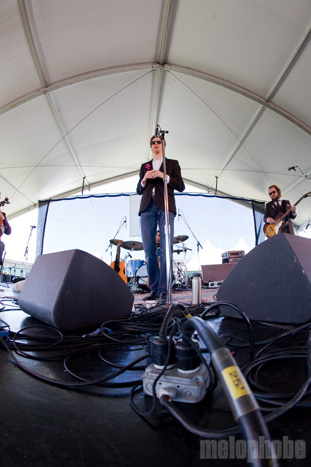
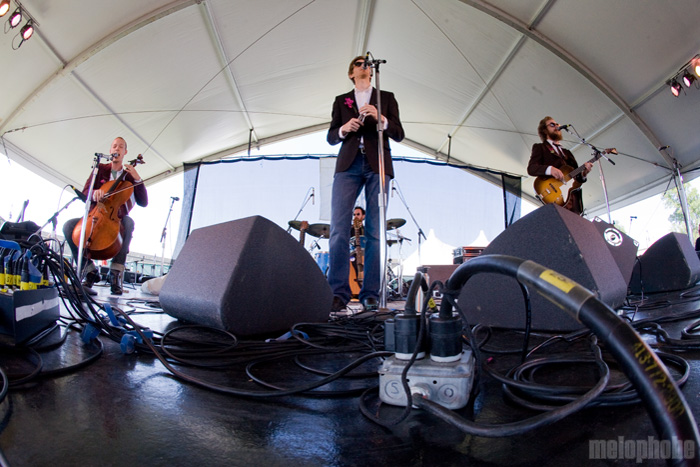
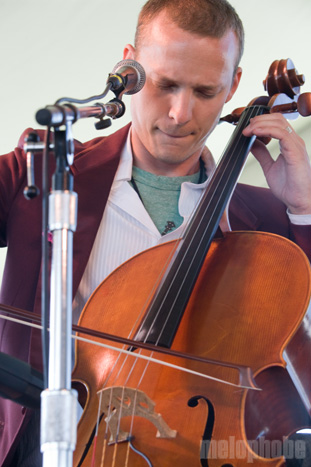
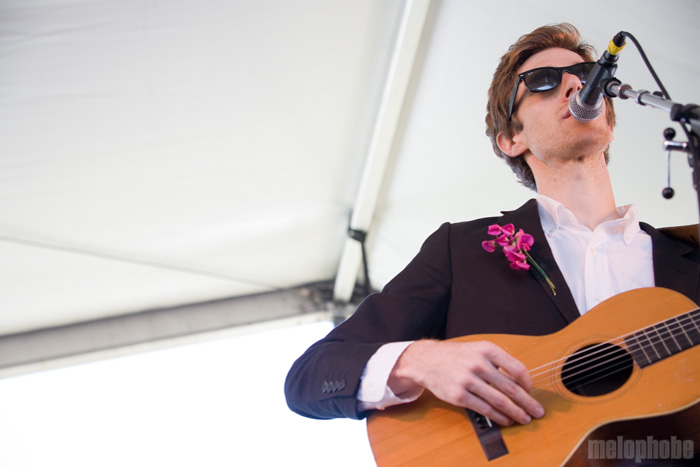
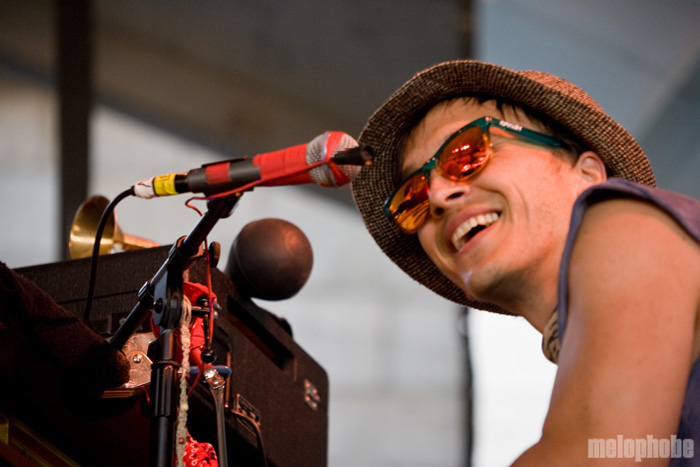
The Preservation Hall Jazz Band were, at least at first, an entirely more sober, restrained affair: musicians in debonair suits singing into ribbon mics, audience in chairs in the shade, venerable songs and arrangements. But despite its archival name, the PHJB has not been sitting still – their most recent album has them backing an all-star roster of vocalists from Tom Waits to Angelique Kidjo. Even better, a bunch of the singers in question were on hand to join the Band, beginning with Daniel Martin Moore, who sweetly sang “The Devil and the Deep Blue Sea” with a boutonniere on one side and his hand over his heart on the other. Corey Chisholm and Andrew Bird followed, and then Jim James took the stage. James generates a greater charge than any of his predecessors, but for “Blue Yodel #9” he kept it mellow, giggling and pacing the shallow stage in a brown suit and sunglasses after each ridiculous whoop. Then came the folk classic “St James Infirmary.” James built the tension slowly, letting the band pace him, the winds gradually gathering force until James let loose that trademark, transfiguring howl, slicked back hair and sunglasses flying who knows where. Tao Rodriguez-Seeger’s rendition of “We Shall Overcome” was worthy and competent, but anything would have been a letdown after hearing James mourn his deceased lover.
We only caught the tail-end of Pokey Lafarge’s set, but that is one of the beauties of a festival – meandering into unfamiliar ground with your ears open. Lafarge and his band the South City Three were perhaps the most deliberately old-timey band we saw all day, looking like a teenage Johnny Cash complete with lacquered ducks’ ass hair.
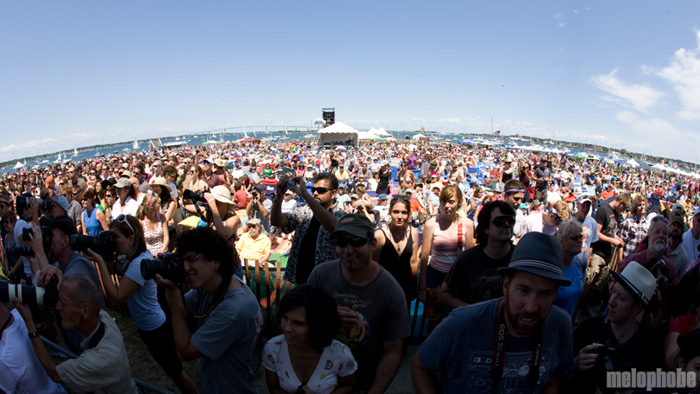
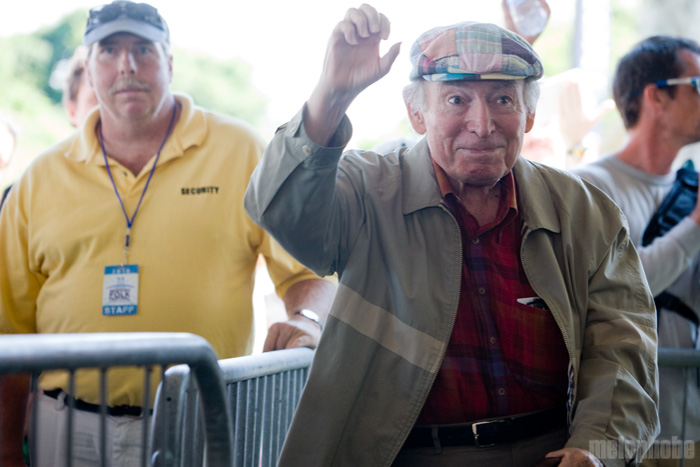
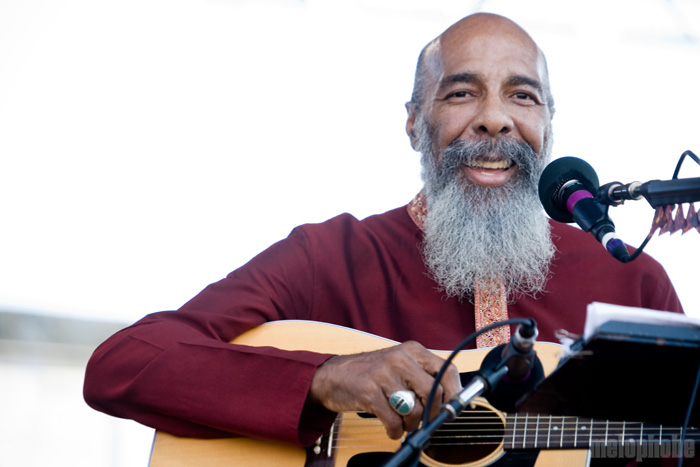
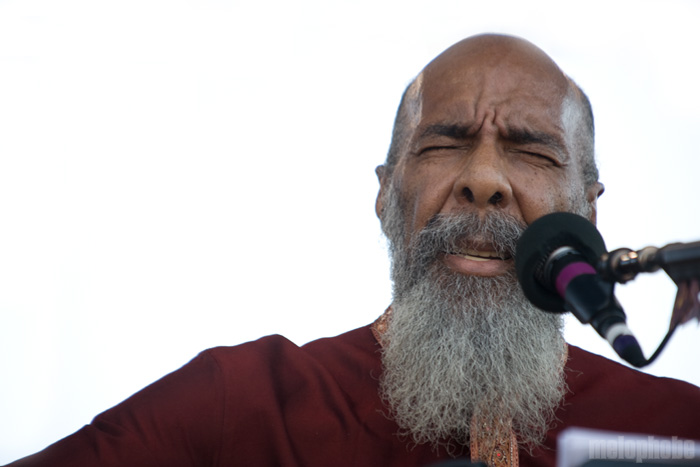
One of the true stars of the Festival is the utterly gorgeous (if ever so slightly tiny) venue – the Fort stage backs onto the 200-year-old walls of Fort Adams and faces Narragansett Bay on the other three sides. The sun poured down, the yachts and jet skis took their turns about the Bay, and there was grass aplenty for the lounging. The distinguished, meandering Richie Havens was the perfect accompaniment for a moment of soaking-it-all-in, followed by a moment of nail-gnashing frustration as Papelbon blew his save of a Buchholz gem, all relayed through the wonder-killing magic of smartphones.
Good that the Felice Brothers were at the Harbor Stage to catch us, wearing their generous sweat patches with the pride. That may be the surest token of folk in this genre-bending age. Underestimating their allotted time, they put their heads together to come up with more songs, but at first seemed to have sold their rhythm section short.
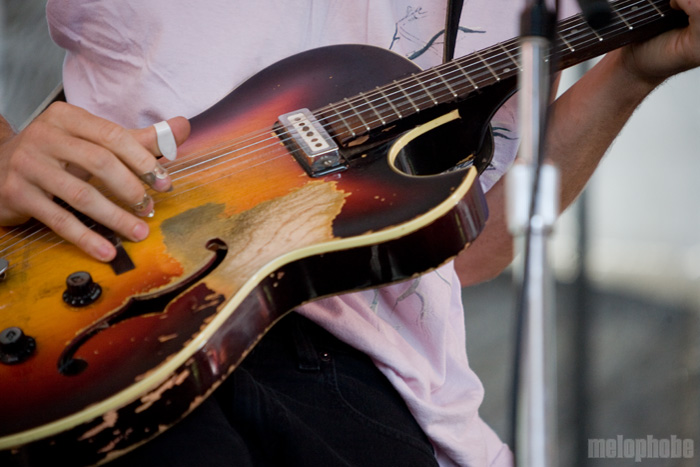
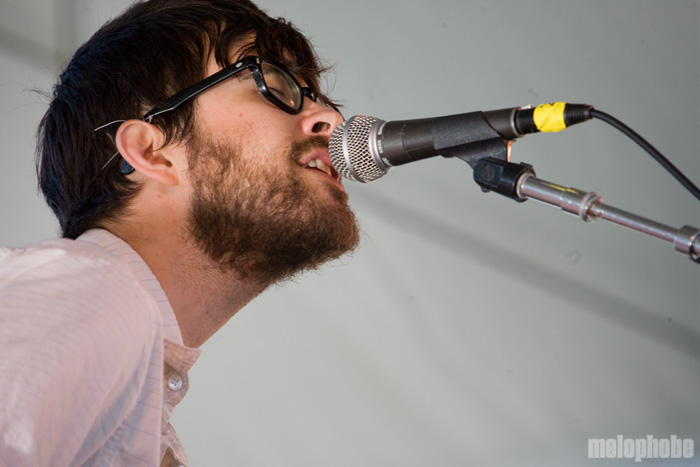
Round the corner back at the Fort Stage, The Swell Season were doing their sensitive-but-strong thing – they are definitely the chickflickingest band we will admit, in public, to liking. But check this out: when frontman Glen Hansard reflectively read off a Dunkin Donuts slogan fluttering from a banner born by a plane overhead and someone shouted “Selling out!” he very quietly dared the shouter to repeat himself. He also refused to let the fire lanes down front (a recurring headache) be cleared. And his guitar’s pickguard is air, worn entirely through, that’s how hardcore he is.
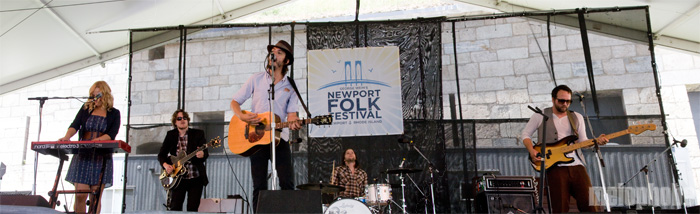
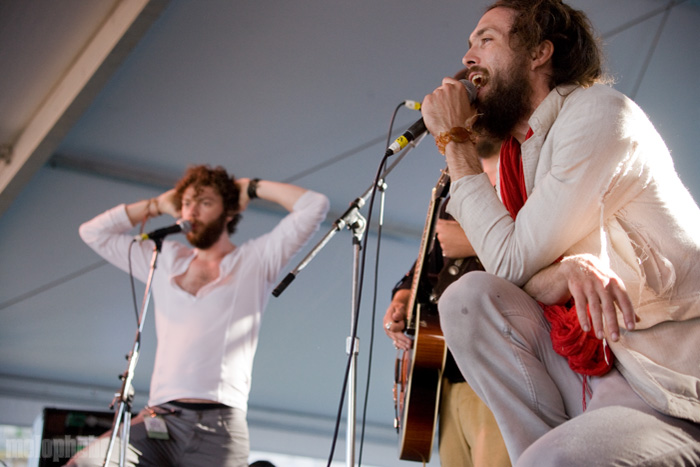
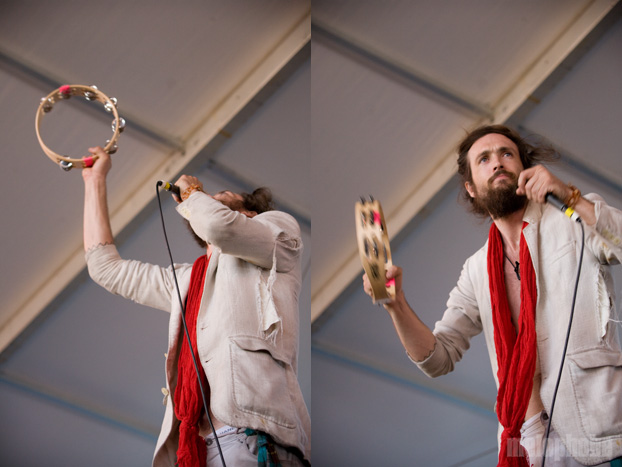
The highlight of my day was the mythically named Edward Sharpe and the Magnetic Zeros. Though the show nearly didn’t happen, the hostage in a standoff between the festival enforcers and audience members who refused to cede their front row spots in favor of the serried chairs. A clash of cultures, with one side chanting “No more chairs” and the other, well, seated. Is it something about Newport?
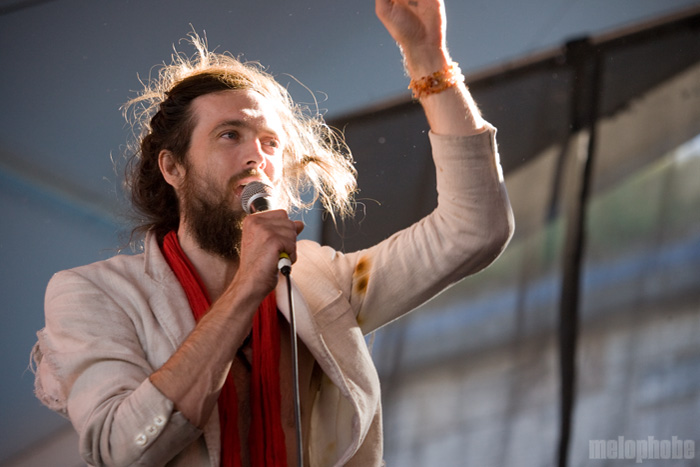
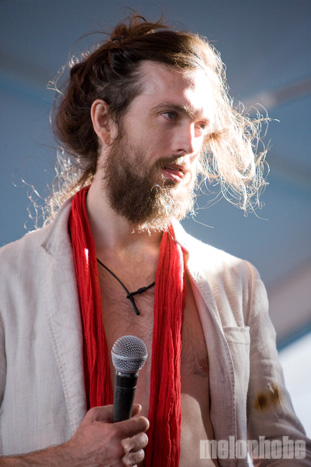
Fortunately, Sharpe and the Zeros were more than capable of transmogrifying any bad vibes into good. Alex Ebert envelopes his lean, perpetual-motion frame in a tattered white suit with what could be a bullet hole perforating one sleeve, set off by a fetching long red scarf. He is every charismatic inch the frontman. He sallies into the midst of the chairs at every opportunity, leading singalongs and dancing like one possessed in the wash of several all-natural smoke machines. No slouch either is his counterpart, and the mutual object of the unabashedly romantic “Home,” Jade Castrinos. We don’t know how long they can keep this up – both the songs and the sheer energy feel too good to be true – but what a show.
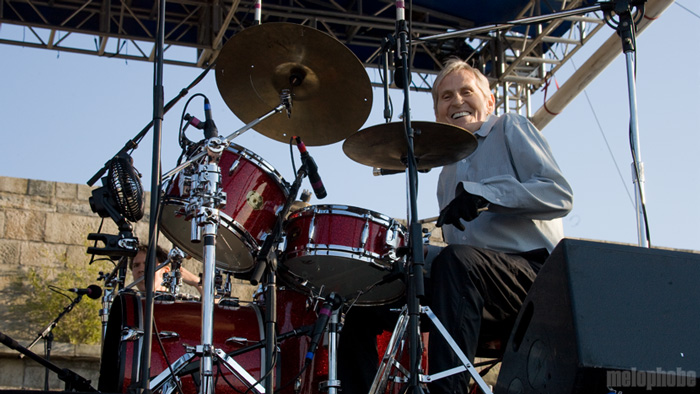
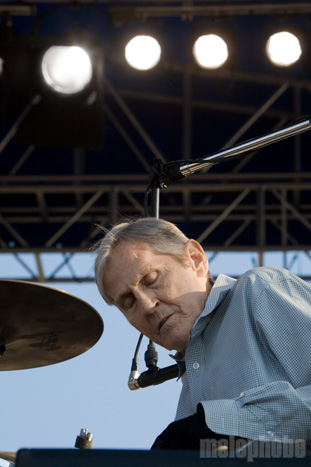
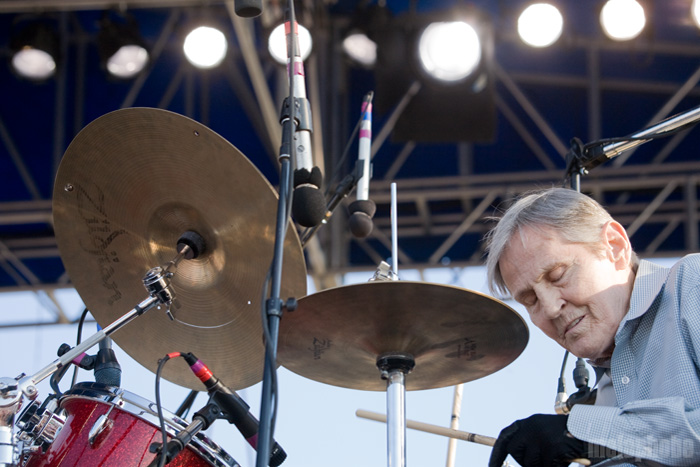
After which the only show in town was elder statesman Levon Helm and his Midnight Ramble Band. An against-the-odds recovery from throat cancer has restored Helm to performing but left him with only the tattered shreds of a voice, which he uses to devastating, if limited, effect. He handily beats his contemporary Dylan for most destroyed voicebox still in active duty.
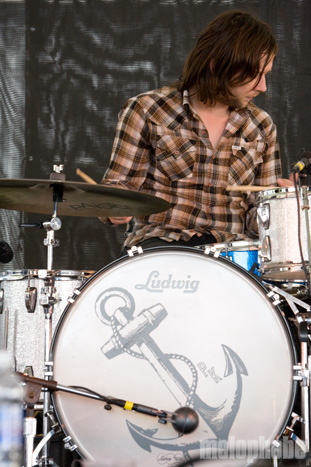
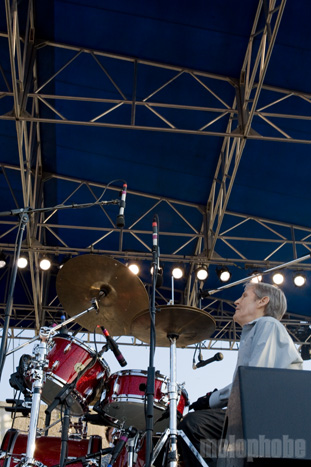
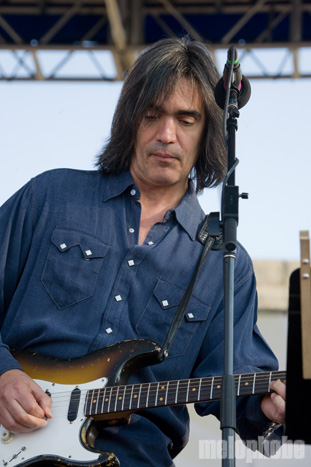
His drumming, however, still has the same immense authority, his snare shot cracking like a bullwhip through the array of Band highlights. Helm was transparently delighted to be performing and to be sharing the stage with his crack band, lead by the redoubtable Larry Campbell and featuring his daughter Amy Helm. Campbell delivered a jaw-dropping rendition of the free-form, “Genetic Method” introduction to “Chest Fever,” then followed it up by singing lead, backed to the hilt by four horns.
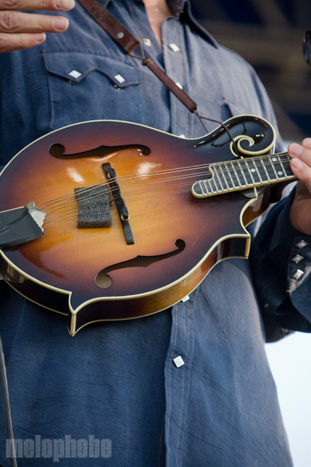
For all the nostalgia, and there was plenty, Helm plays with getting-away-with-it glee, breaking out a rather raunchy dance from his mandolin perch in the midst of “Blind Willie McTell.”
An all-in finale was, perhaps, inevitable, and Helm obliged. He first brought up Richie Havens and Glen Hansard for a rendition of “The Weight,” though both singers seemed a little foxed by the song’s deceptive simplicity, Havens fumbling his way through a verse and Hansard never quite finding the timing of the turnaround refrain.
Finally, almost the entire day’s lineup took the stage, plus a few unexpected extras (including Crooked Still’s Aoife O’Donovan) for “I Shall Be Released.” Helm sang the first verse, and the sound of that ragged, unflagging voice singing “They say everything can be replaced…” was as poignant a moment as we expect to hear this or any other year.
Looking back on the entire weekend and taking into account last year's festivities, it feels safe to say that if the Newport Folk Festival's standing as one of the premiere you-gotta-be-there events of the summer was ever in doubt, it was most likely due to a few misguided actions made to try and keep the festival alive financially. While the official numbers on this years attendance are yet to be released, making the assumption that this year equaled or surpassed the attendance of last year's landmark 50th anniversary weekend isn't a very big stretch. You only had to try to get in to see Edward Sharpe and the Magnetic Zeros to know that for a fact.
The ghosts and memories, or better yet the spirit, that make Newport Folk what it is are alive and well.