If the “indie rock” moniker is notoriously non-descriptive and borderline useless, at least give it this: the breakdown of traditional genre boundaries under that umbrella has served to introduce audiences to a dizzying breadth of music that, in previous decades, may have eluded them for bearing the wrong label. Thus it was that an incredibly diverse audience was able to gather at the Doug Fir Lounge on Friday night for a bill that included a pair of “indie” acts who, if we’re going to get specific, are really a folk singer and a country band, respectively.
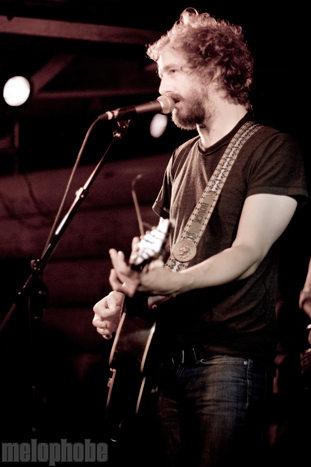
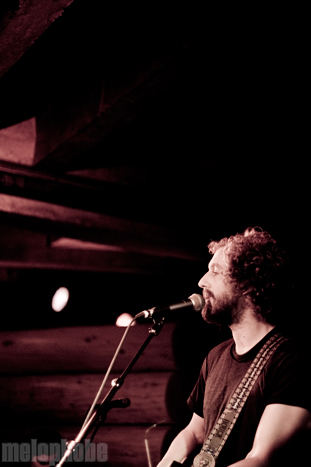
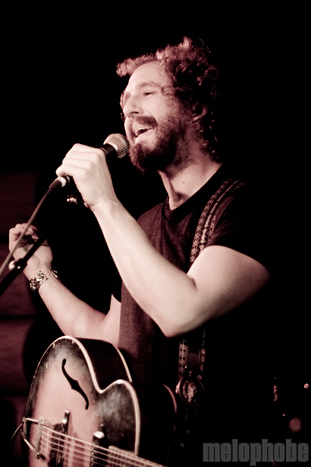
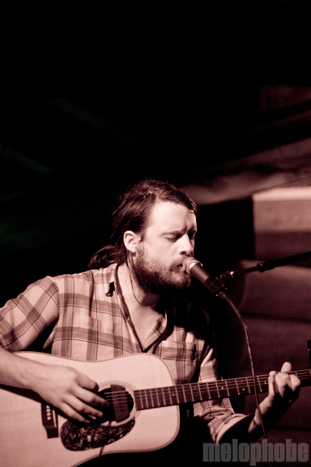
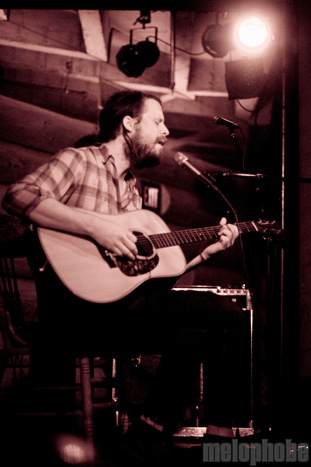
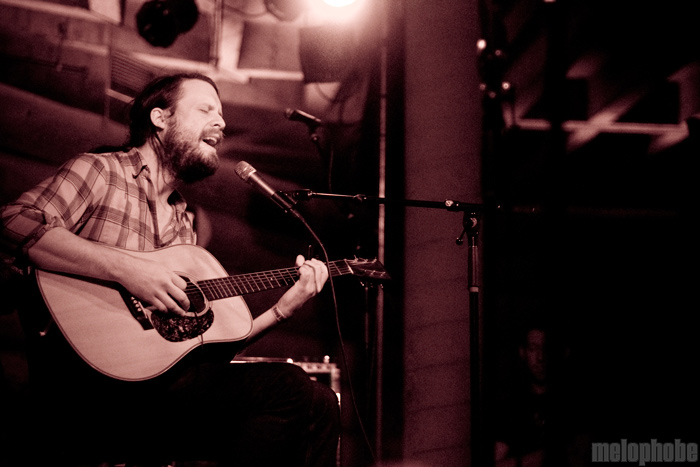
Let’s start with the folk singer. J. Tillman, of Fleet Foxes fame (though he claims a pretty strong catalog of his own), played alone with a guitar, seated on a stool center stage. The Doug Fir can hold its own for noisy, rambunctious shows, but it also lends itself to the kind of intimacy that Tillman’s set required as well. And though Tillman engaged in some self-deprecating humor by referencing the relative obscurity of much of his music, judging by the reception, he had more than a few dedicated fans in the house. But while his stripped down set may have served those fans well, it had little to offer to the uninitiated. Humorous and engaging between songs, Tillman came off as rather stiff in his performance. Granted, this can to an extent be chalked up to the nature of his songs – few are up-tempo, and one wonders what he would have done with himself if, for instance, he’d stood up for the entire set – but his by-the-book renditions, however well they may work on the album, did not lend themselves to a performance aesthetic. Tillman, of course, is not going to appeal to everyone anyway. His work with Fleet Foxes is far more pop-oriented and accessible, and it’s commendable that he has chosen to pursue a different artistic direction in his solo work. Nevertheless, it seemed that his performance on Tuesday may have benefited from a less conservative approach to his own material. Tillman is, when it comes down to it, a folk singer. As laudable as it may be to move beyond the confines of genre labels, those who flippantly dismiss folk music as dull would have not likely have found cause to change their minds here.
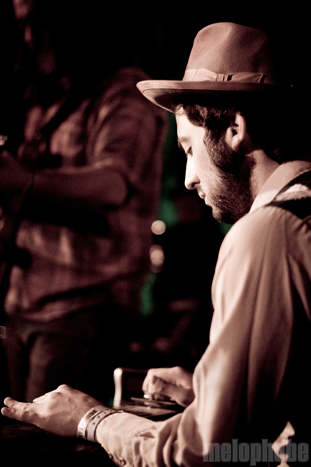
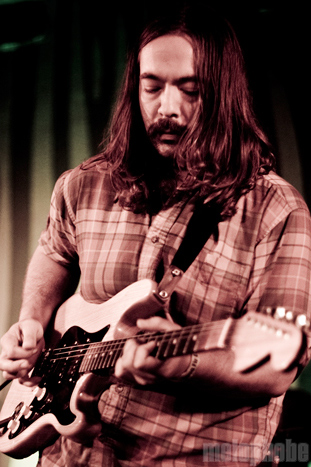
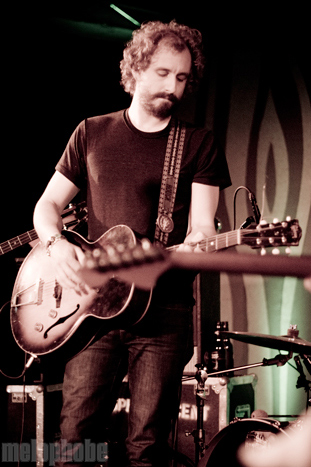
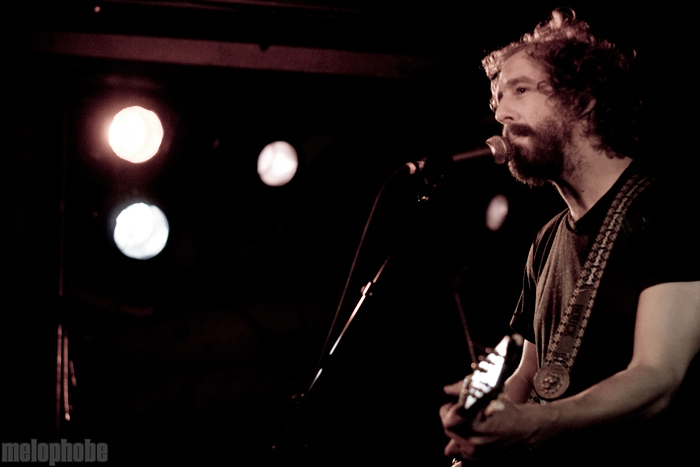
Headliner Phosphorescent, a creative vehicle for vocalist and guitarist Matthew Houck, was a different story entirely. Houck and his ilk have Uncle Tupelo to thank for grabbing them a spot under the indie music umbrella, though Steve Earle and Willie Nelson were playing the crossover game even earlier than that. But the fact remains that Phosphorescent has more in common with Hank Williams than most of what passes for country music these days, and I for one am happy to see them gracing the Doug Fir Lounge rather than CMT. If we have silly labels to thank for that, then more power to them.
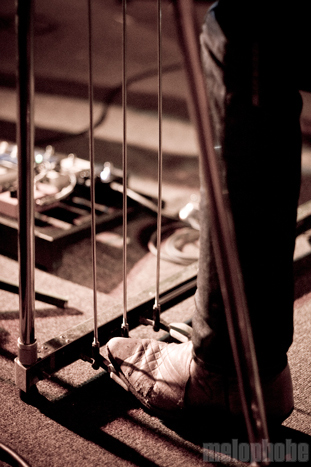
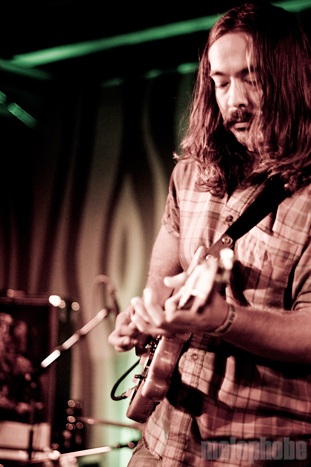
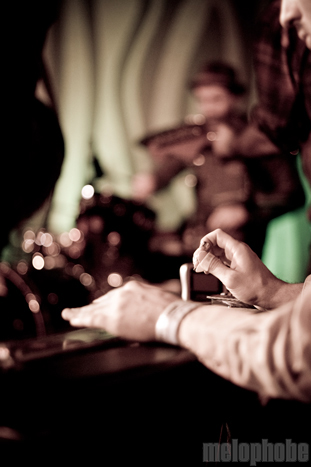
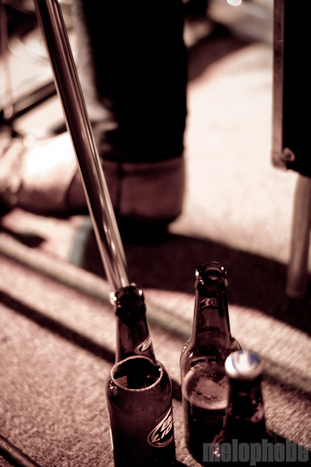
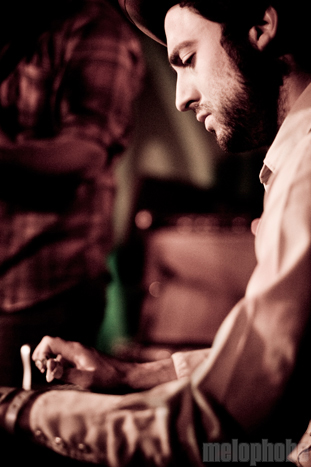
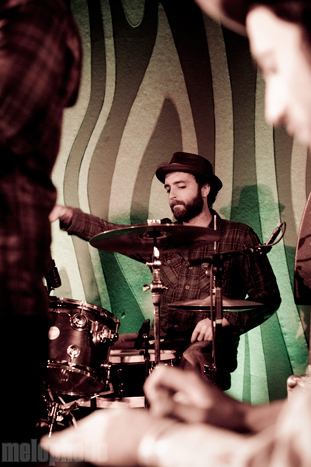
Houck and company opened up with a handful of songs from their latest release, Here’s to Taking it Easy, one of the better releases of the year. The band, sucking down the only Bud Lights I’ve ever seen consumed on these particular premises, seemed to be in their element early, with the crowd absolutely enthralled by Houck’s soulful crooning. Lamentation has always been well represented in country music, and Phosphorescent paid due tribute to that tradition early and often. “The Mermaid Parade” in particular, a tune about a failing marriage, was damn near tear-jerking for the mournful earnestness of Houck’s delivery. Following this, the band played a brilliant rendition of “Cocaine Lights” before moving into more classic material with a pair of Willie Nelson covers from 2009’s To Willie. “Reasons to Quit,” another song that is just classic Willie, drew a huge cheer from the crowd, and was all the more fun for having apparently been suggested by a fan in front of the stage. On “Too Sick to Pray,” a mournful ballad, the band led in slowly, with an exaggerated pause before Houck turned to his band and declared, “Let’s give the people what they want!” With that, the band kicked in, the crowd roared, and the high point of the night had been achieved.
After the Willie tribute, Phosphorescent moved back into some of their older material, but strangely, much of the momentum seemed to have been lost. The crowd began thinning out at that point, and the band seemed to play with less energy. By the time they finally walked off the stage, the previously packed room had dwindled down to around half its capacity, and the audience even seemed unsure whether to expect an encore. They got one, as Houck came back on for a pair of solo tracks that were only slightly marred by a mysterious buzzing emanating from the monitors. Then the full band came back on for another three songs, finishing strongly but with much of their audience already on their way home.
It took a stint in Texas to reveal to me the better face of country music. What I saw on Friday was a wider acceptance of a genre that, in the guise of “alt-country,” seems to be emerging from the doldrums to which the watering down of popularization had committed it. Whatever the case, Phosphorescent and a growing number of acts like them succeed in capturing the heartfelt simplicity that lends country music its power. It seems, for the time being, that it will be necessary to refer to such acts as “alt-country,” which we can then all agree to understand as a sub-genre of indie music, lending an air of legitimacy to the whole thing. It’s an absurd game, but one that is played nevertheless. But insofar as it serves to bring diverse audiences together to hear music that would not otherwise register on their collective radar, well, at least then it is pulling its weight. And that, for one, is something worth raising a Bud Light to.