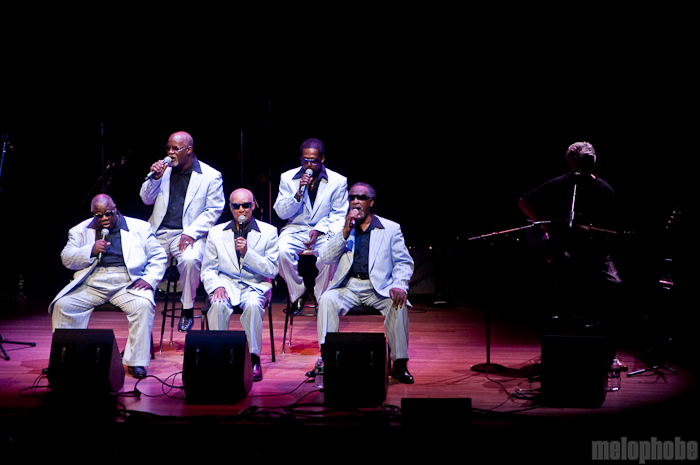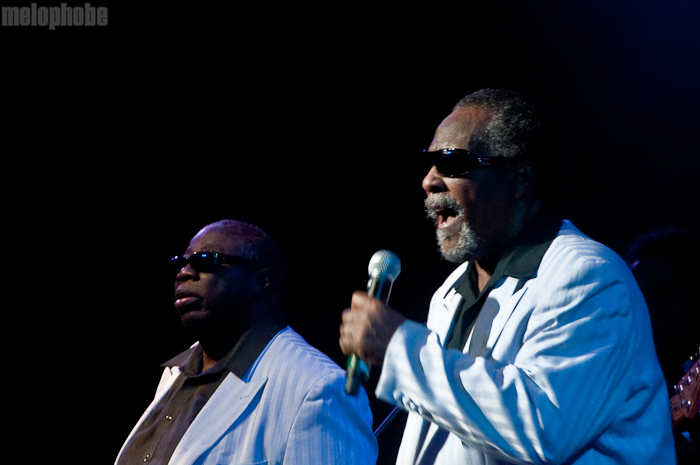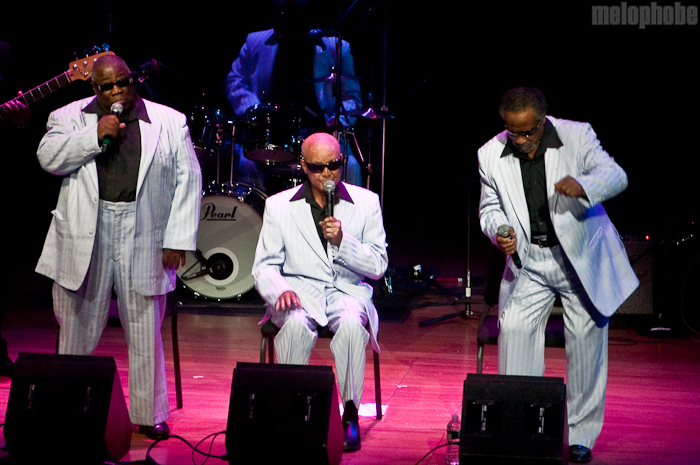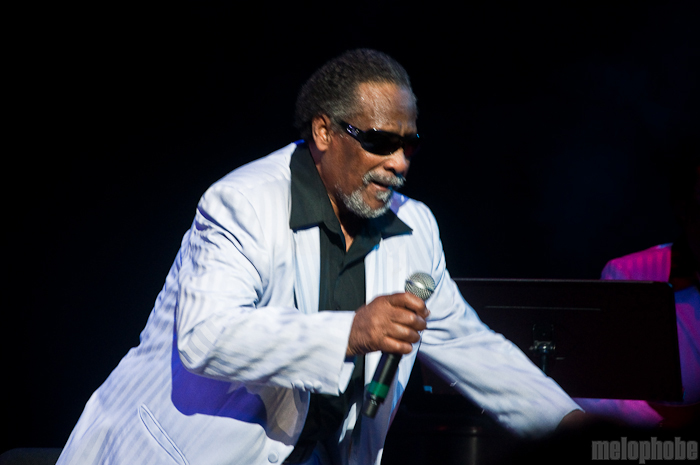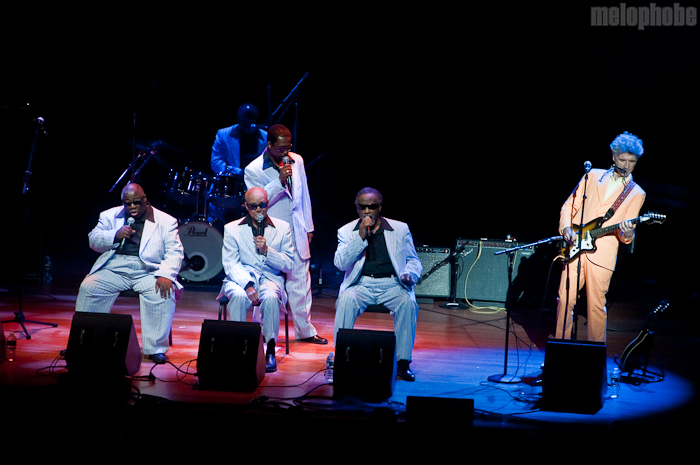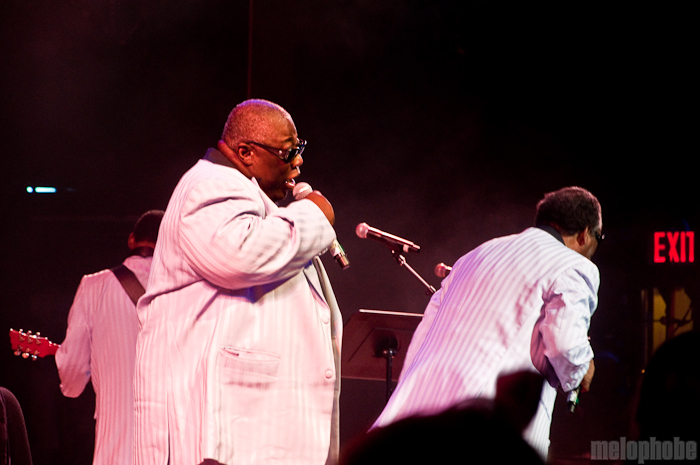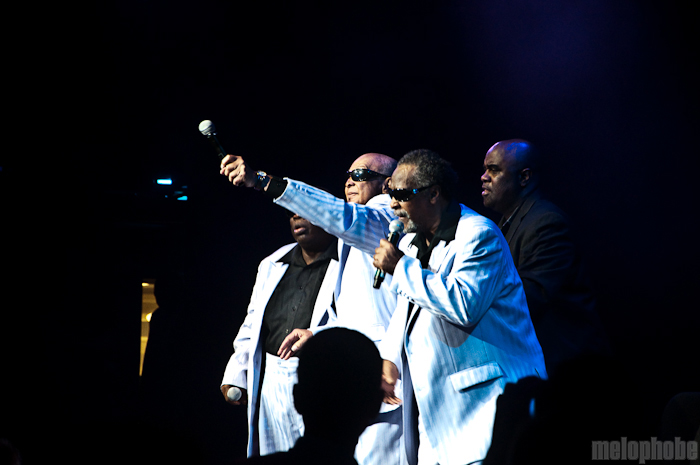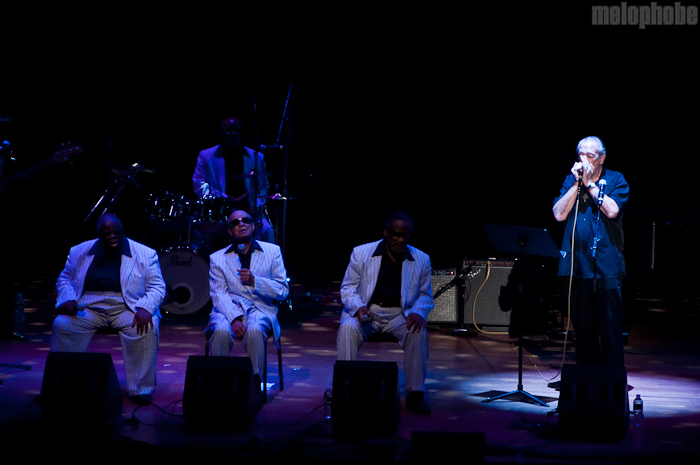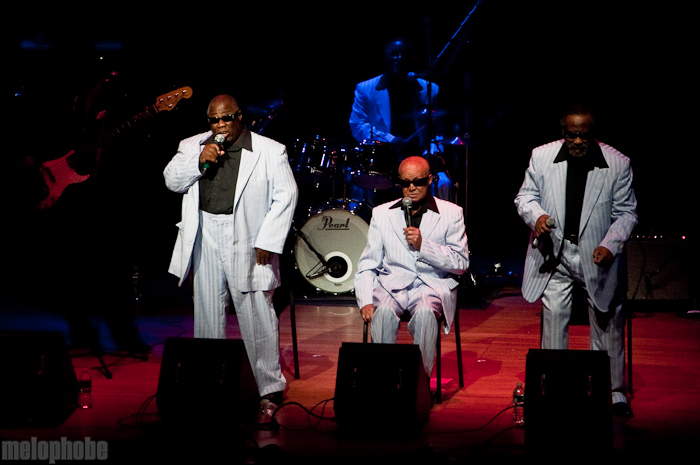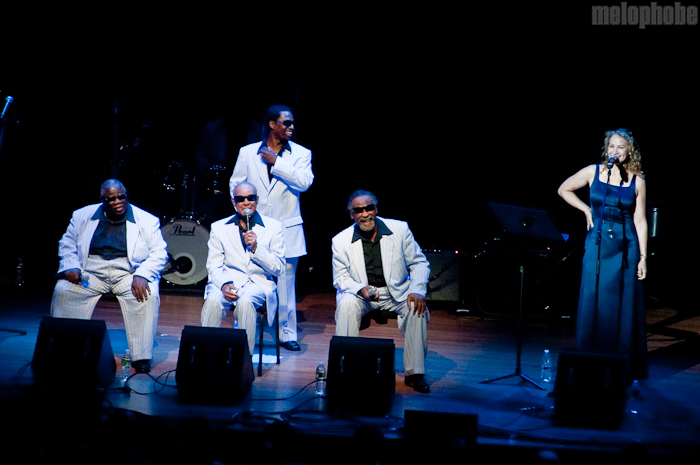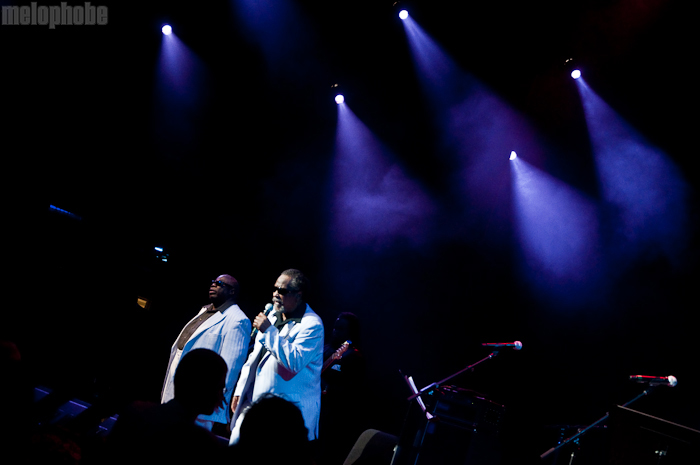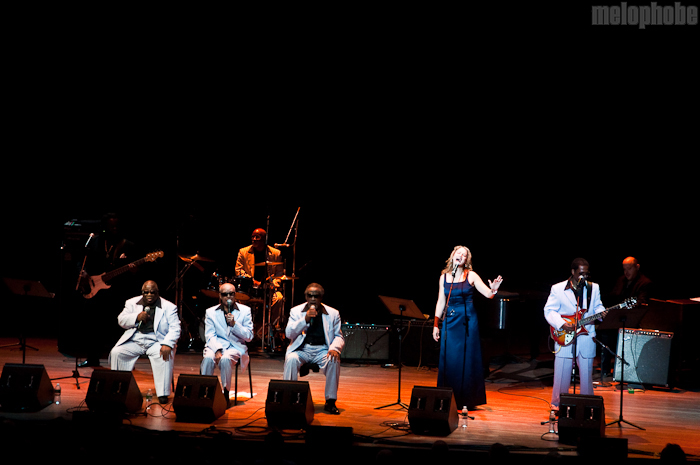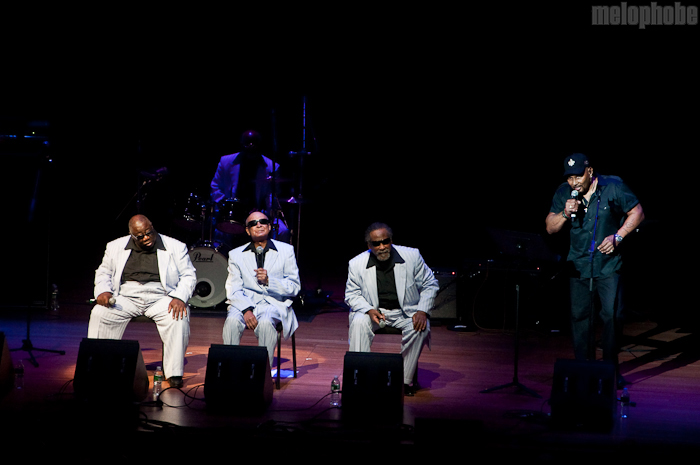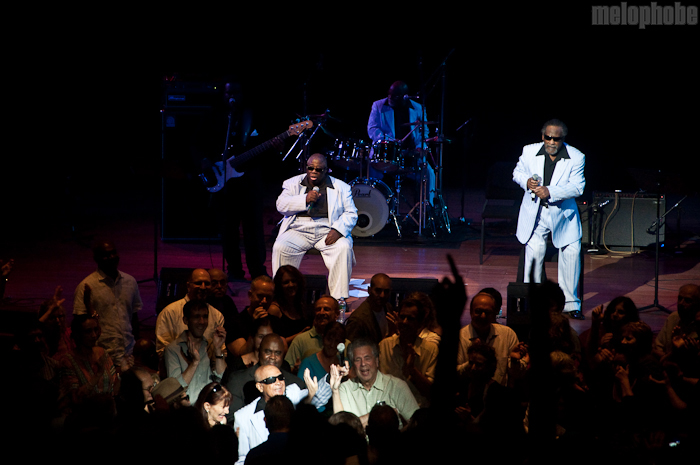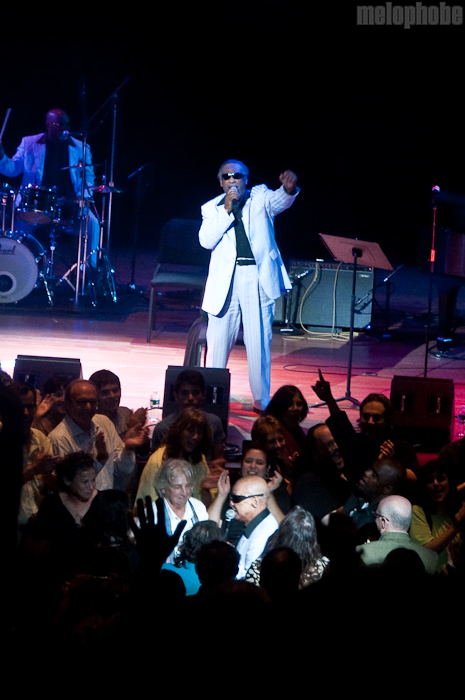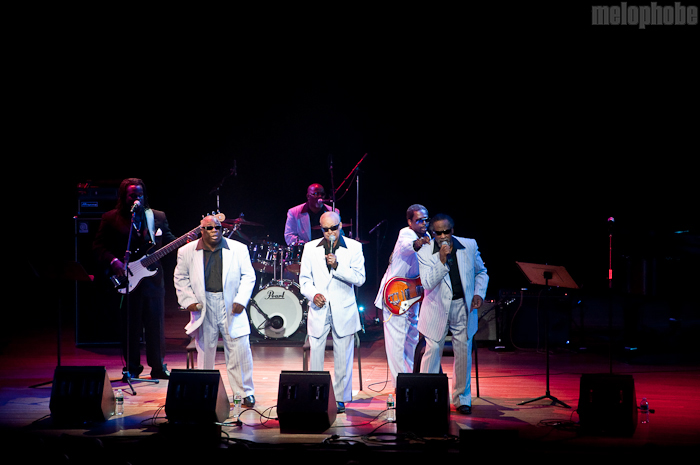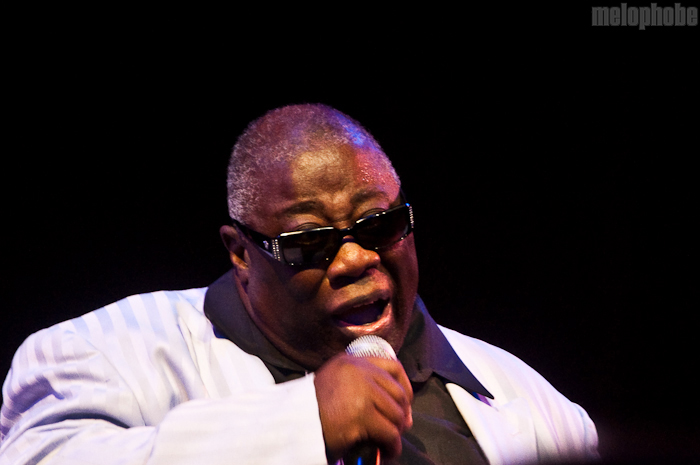
Night one of The Blind Boys of Alabama's series at the Lincoln Center was about its guests. Night three was about the Blind Boys. Of the three men seated center-stage, Jimmy Carter played the colorful emcee with a mischievous streak. The big friendly bulldog that is Bishop Billy Bowers growled like one too, on ferocious riffs up and down the scales. And the smooth baritone of Ben Moore was not to be overlooked; nor were his trademark dance moves, assuredly a measure or two smoother than your grandfather's.
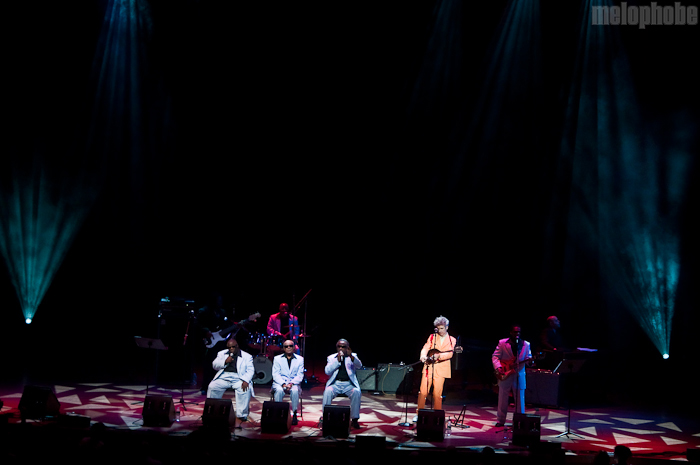
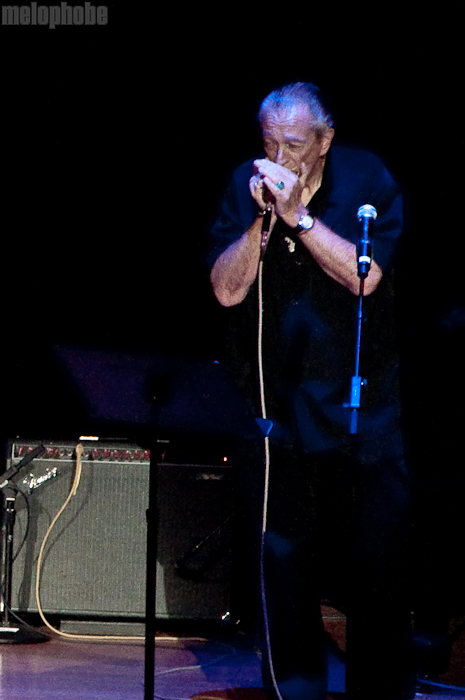
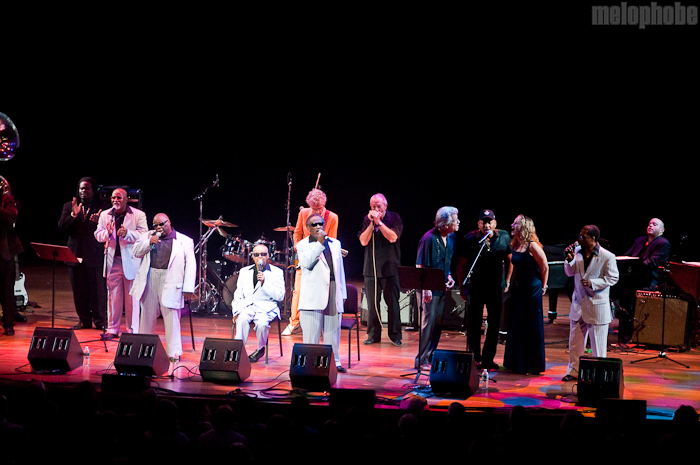
The Blind Boys and their core of bass, guitar, keyboard, and drums would have no trouble selling out venues as they are. But it's never just them. The magic of their live performance is borne of the collaboration with those who haven't necessarily seen commercial success, but who persevere as heavyweights among southern blues musicians. Guitarist John Hammond opened the show, and was soon bolstered by the richness of three and four part harmonies as he transitioned to his slide steel guitar during “Nobody's Fault but Mine.” Then it was Dan Zanes' turn. The Brooklyn bluesman appeared in an orange suit, looking alarmingly like the love child of Steve Martin and Lyle Lovett. He stayed for a pair of tunes, introducing the harmonica to the evening's featured instruments, and opening the door for Charlie Musselwhite, whose stylings through a customized model sounded vaguely like a pack of metallic divas.
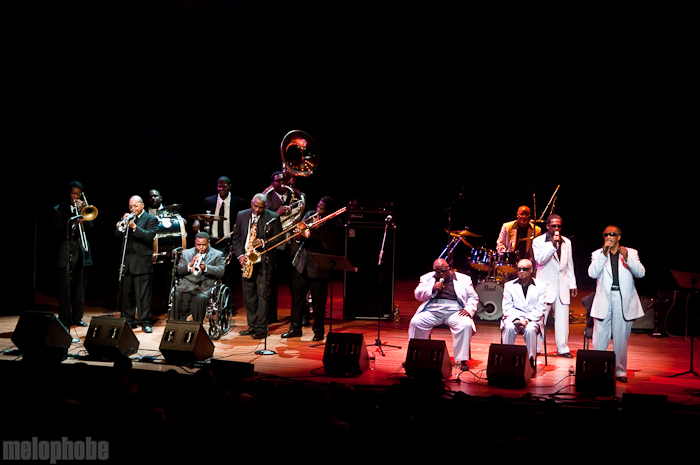
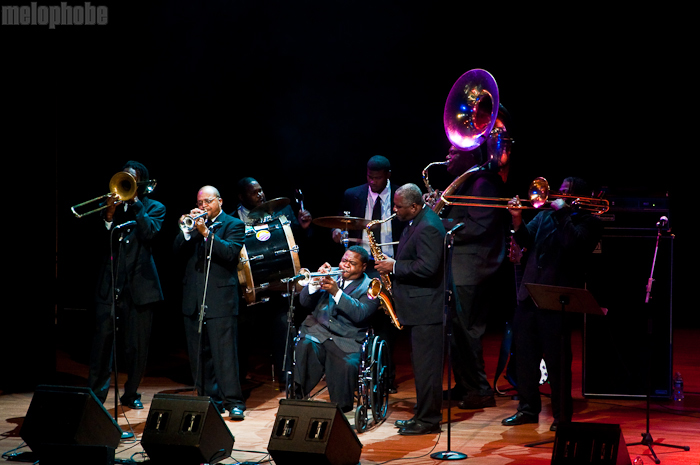
I was still reveling in Musselwhite's harmonica skills when New Orleans' own Hot 8 Brass Band paraded onstage to the tune of “When the Saints go Marching In” with trombones braying and trumpets bleating. They vamped the familiar verse over and over, leaning on the sevenths chords, upping both the volume and the intensity in the room. After supporting the Blind Boys for “I'll Fly Away,” they did, and passed the mic to Joan Osborne, whose philosophical “What if God Was One of Us” came across a little strange, but ultimately, subtlety triumphed in abare-boned rendition that featured Blind Boys harmonies and piano. The slight rasp in Osborne's voice fit the gospel-blues genre accordingly in “Jesus Dropped the Charges,” before the transition to the one and only Aaron Neville. His few songs may have been the least compelling of the night, but there's something to be said for originality. And nobody sounds like Aaron Neville, except all of his impersonators.
But back to The Blind Boys. These guys have incredible on-stage chemistry, though they've never seen each other. One gag stands out in particular, wherein one or two of the Boys will get swept up in the moment, and rise to their feet. When they do, the lead guitarist shakes his head and gives them a little push on the shoulder to sit them down, only to find them popped back up again in a matter of seconds, usually to laughs and applause. Frontman Jimmy Carter's puerile sensibility is one of their selling points, too. He waxed poetic about Osborne and her good looks, and then when she took the stage she asked, “How do you know I'm attractive?” Carter responded with a smirk, “Oh, that's a secret.”
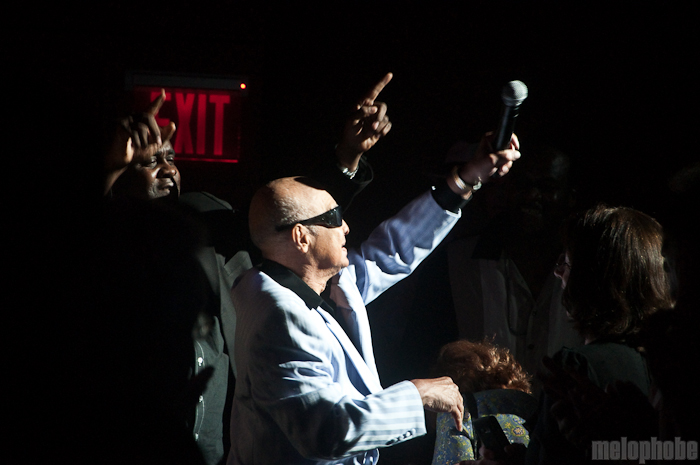
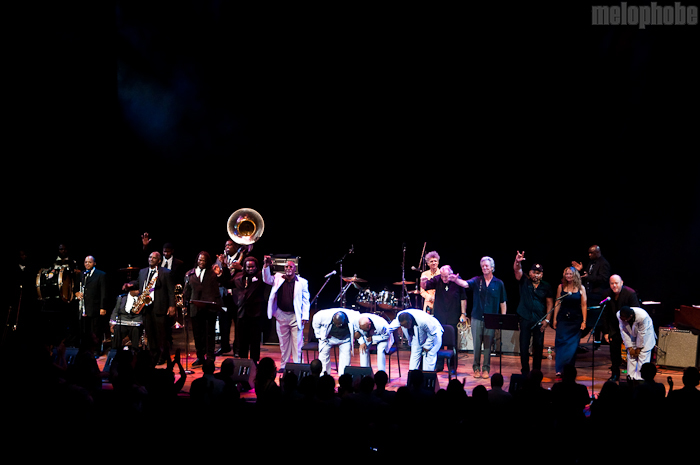
The beauty of reinventing great music alongside a wide range of artists is that it never gets old. There was a sense of authenticity that hovered in the auditorium throughout the evening, so it was no surprise when at the end Carter took to the aisles, bringing the audience to its feet and the spirit of the Apollo to the Lincoln Center. Before they said goodnight for good, the Blind Boys rallied the troops, and the whole lot of them ran through the gospel favorite “Down by the Riverside.” Charlie Musselwhite put it best when he described playing with the Blind Boys after all these years: “It always feels like coming home.”