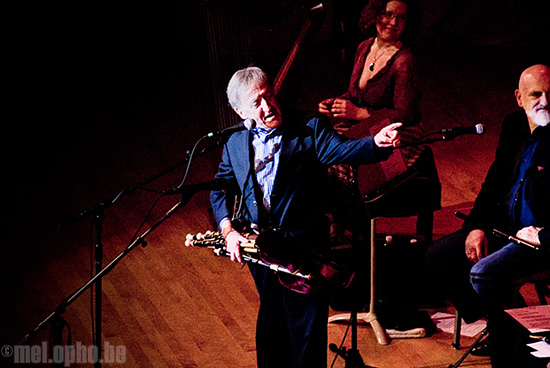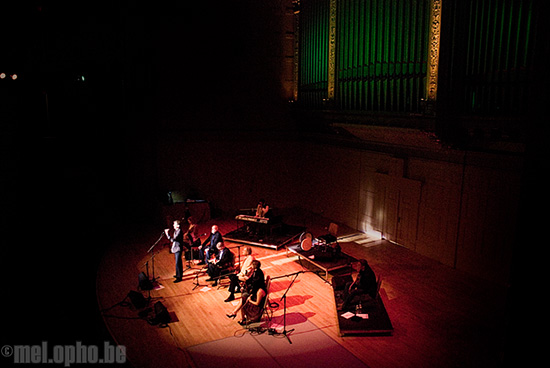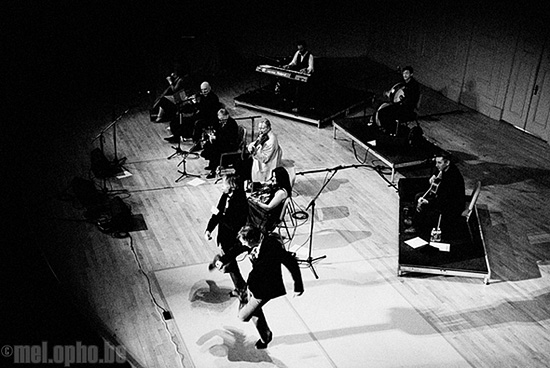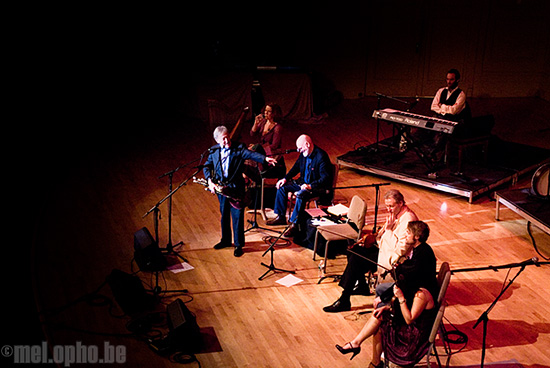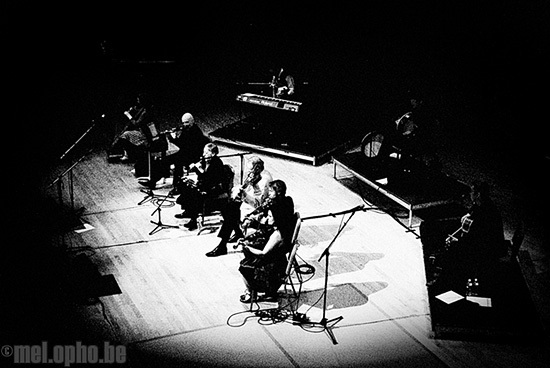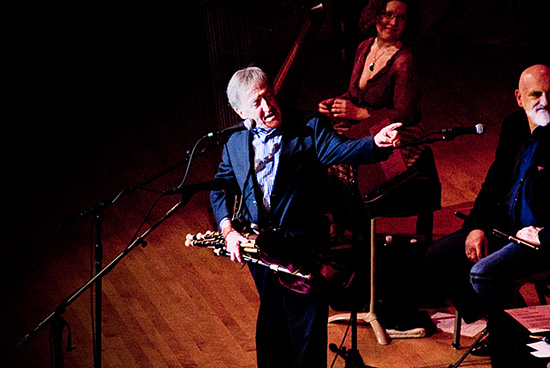
How do you know a show was fun? How about when it begins with Gaelic introductions (by Chieftains founder Paddy Moloney), ends with over 30 people on stage (including six bagpipers, eight fiddlers and what seemed like a dozen step dancers), and has a surprise birthday cake brought out mid-song (to guitarist Jonny Hardie) in between? For the Chieftains last night at Boston’s Symphony hall, those were certainly good indicators.
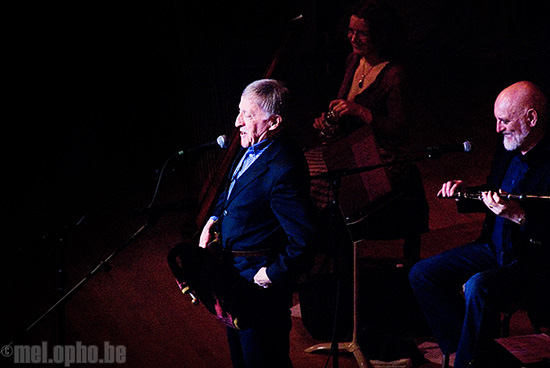
I myself have heard very little Celtic music, and the only thing I knew by the Chieftains going into this show was their recording of “Have I Told You Lately That I Love You” with Van Morrison. But even for those well-versed in this music from Scotland and the Emerald Ilse, I imagine this night was full of surprises. Maloney held court throughout, introducing each song, telling jokes and stories, applauding solo performances by each of the band members, and introducing a dizzying array of guest artists. The music was also surprisingly diverse; when you’re new to a style of music, songs can tend to sound the same, but here this was certainly not the case.
The format was different from traditional rock and jazz shows, in that about half of the songs were true “solo” performances, beginning with a single musician coming to front of the stage, starting with a slow tune, then building to a dizzying speed and culminating with the full band joining in (though only for the last few bars of the song). This presented a marvelous opportunity to show off the band members' virtuosic talents. The clear standouts were fiddler Seán Keane (Chieftains member since 1968), harpist Triona Marshall (who had the night’s bring-down-the-house moment), fiddler and step dancer Jon Pilatzke (shockingly young for his multiple talents), and fiddler and vocalist Maureen Fahy (immensely skilled in both disciplines).
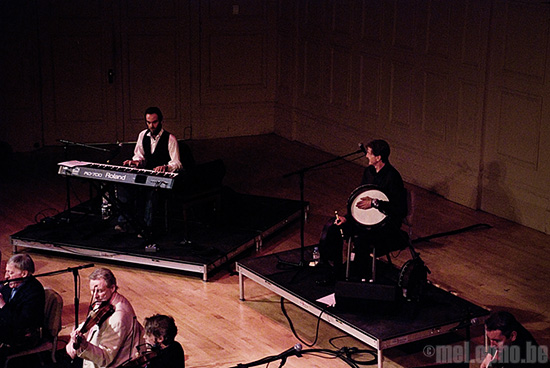
It’s hard to relate the substance of the music; at times the nine-piece band sounded like Rodeo’s "Hoedown" (the song from the “Beef, it’s what’s for dinner” commercials), bodhrán player Kevin Conneff’s solo vocal performance sounded like something from Lord of the Rings (when Pippen sings to Denethor as his son Faramir goes to battle . . . yes, I’m serious), and some of the female vocal songs (especially those featuring Scottish guest singer Alyth McCormack) were reminiscent of Loreena McKennitt. One thing that’s certain is that this is folk music: music of, by, and for ordinary people. One couldn’t help but envision endless green meadows, sheep grazing, and serene country life. There was also an extremely emotional element to the music, and I don’t mean the lyrics (as about half were in Gaelic). Keane began his solo performance, eyes closed, and the slow, lilting fiddle lines brought me to a quiet, sleepy village on a rainy day, they kind of day you’d waste reading or telling stories by the fireside. The notes gently slid up into pitch as he played, almost as if too lazy to get into tune, destined to remain lackadaisically flat. As the pace picked up and Keane began to fluidly put more notes in a bar than I thought possible, the crowd spontaneously began stomping and clapping in time, and we were taken from the fireside to an Irish pub, the patrons wildly dancing, laughing, and cheering the night away. Keane’s serene, calm face was unchanged as he furiously yet effortlessly shot out a string of lines practically too crowded with notes to believe.
Marshall’s solo came later in the night, and her number sounded like a Celtic-influenced baroque harp concerto. To this point, she’d been off to the side of the stage, almost eschewing the spotlight, giving off an air of shyness. Just like the other soloists, she began slowly and sweetly, but the sheer beauty of her playing was already stunning, even at this creeping pace. By the time she sped up and reached full tilt, the audience was clearly awed; watching her play with all 10 fingers at top speed and listening to a symphony of strings coming from this one instrument was almost too much to believe. At the finish, the audience gave their loudest applause of the night, and Marshall was literally incapable of suppressing a huge smile, much as she tried. She was glowing, and rightly so, as this was the moment of the night.
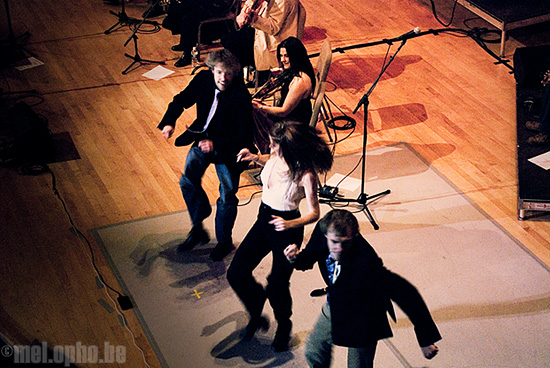
Step dancers would frequently come on stage to accompany the band or for solo performances of their own (notably Canadian fiddler/step dancer John Pilatzke and his brother Nathan). An important note is that this is NOT Riverdance, choreographed and self-indulgent. These are phenomenally talented dancers, and the complex rhythms they beat out with their feet were intense, fast, and very tasteful. In other words, it wasn’t just for show; they were another instrument playing with the rest of the band, and far from an added curiosity. The only disappointment was the acoustics of Symphony Hall; the step dancing was nearly inaudible from the orchestra seating, and could only be heard and truly appreciated from the balconies.
The plentiful guest artists (including a group of local musicians who play Gaelic music at Davis Square’s The Burren in booths most weekend nights) kept the evening interesting. Vocalist McCormack was the most special of these, joining the band for five or so songs and lending her beautifully lush voice to the mix. One number she called “mouth music,” adding “you’ll understand what that means once I get going” (it was essentially a lyrical tongue-twister sung in Gaelic, thoroughly enjoyable). The only low point of the evening was guest guitarist/vocalist Siobhán O’Brien, whose style simply didn’t fit with the rest of the band's. Despite her lofty credentials (playing with Bob Dylan, Donovan, and Henry McCullough of Wings, among many others), hers was standard singer/songwriter fare, and seemed utterly ordinary sandwiched between the exotic and gratifying variety of Celtic music being played.
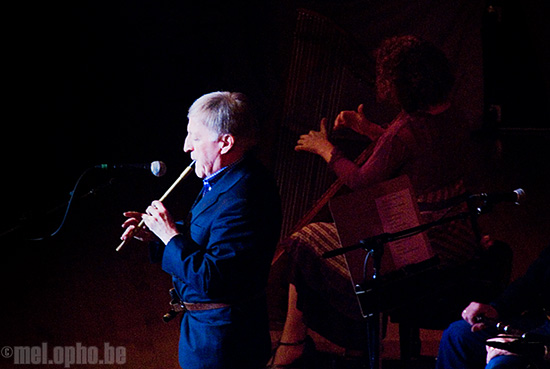
It’s also worth noting that founder Moloney is perhaps the world’s premier uilleann pipes player (the instrument resembles a bagpipe played seated, but the air is controlled by squeezing the bag with your arm, rather than by blowing through a reed). He is by no means a slouch in terms of virtuosity, and it is clear that the rest of the band is playing up to his level, and not the other way around.
The Chieftains of old rightly have the reputation for bringing and popularizing Celtic music to the world. Unquestionably, the current incarnation proudly and deservedly carries the appellation.