A rare two-act lineup at the Doug Fir on Sunday night paired Sweden’s The Radio Dept., newly in demand after everyone and their mother fell in love with 2010’s Clinging to a Scheme, and San Francisco’s Young Prisms, a shoegazy outfit only superficially complementary to the headliner’s more nuanced sound. There is, of course, a potential trap in a lineup leaning too strongly toward the shoegaze/dreampop end of the spectrum, a monotony in tempo and texture that breeds restlessness. That unfortunate outcome was, thankfully, largely averted by the clear stylistic differences between the acts, the relative brevity of the show, and the skill with which The Radio Dept. executed their task: namely, proving that they were deserving of all the love being heaped on them from the get-go.
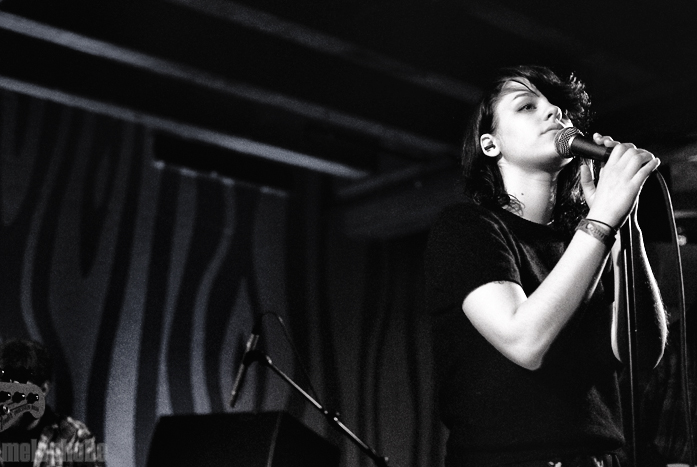
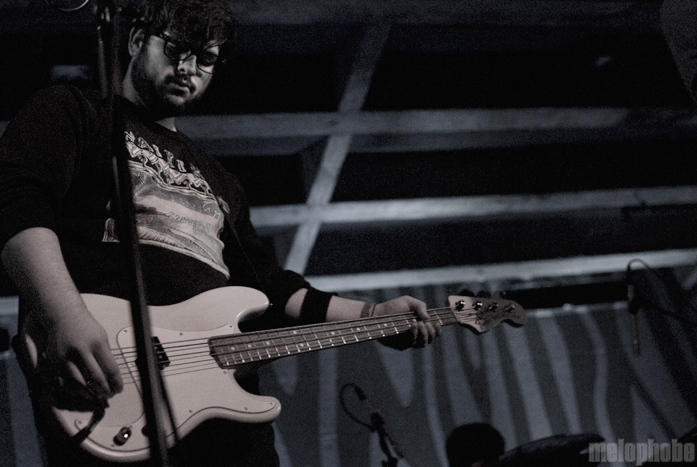
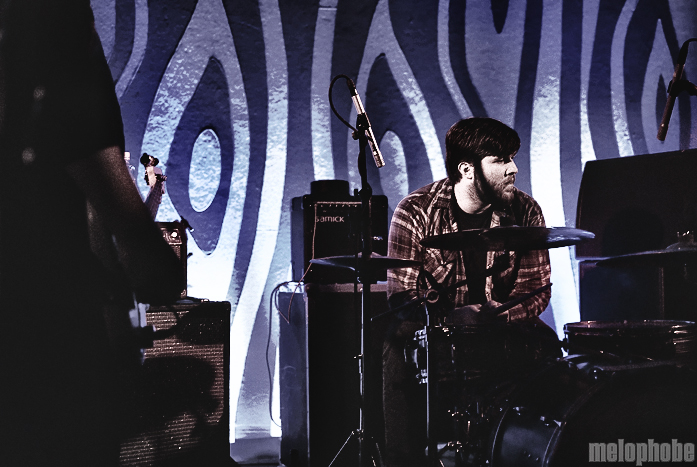
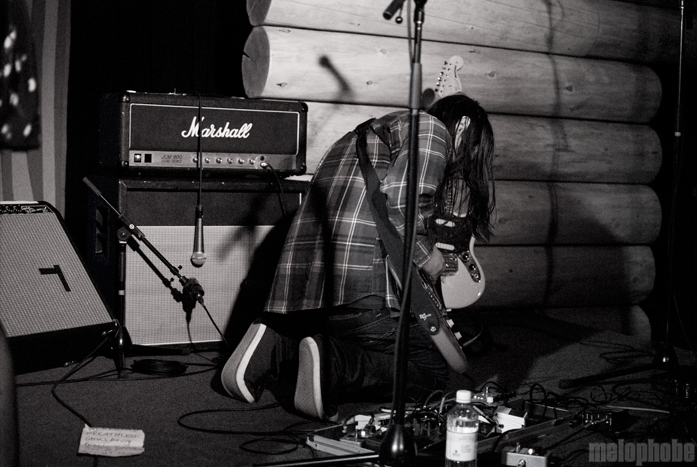
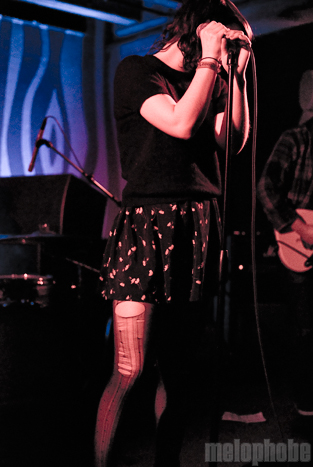
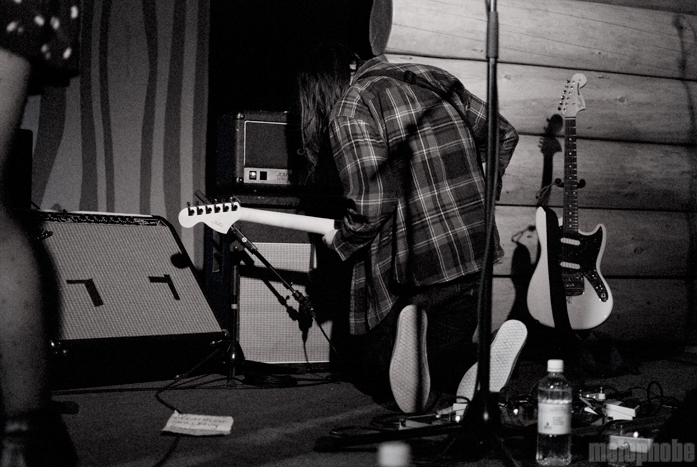
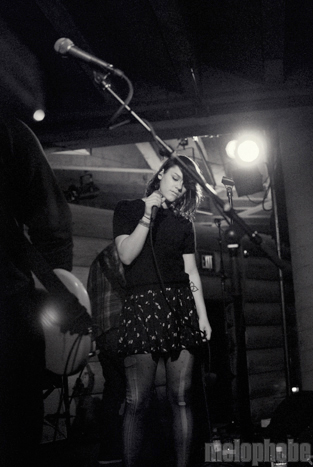
Young Prisms came out with plenty of confidence, a virtue in itself given the desirability of that particular opening slot and the sizable audience it offered them. Their set began with an onslaught of fuzz, ambient and pleasing, but rather poorly defined. Vocalist Stefanie Hodapp, sipping from a microbrew and putting on a practiced air of nonchalance, was almost entirely lost in the mix, lending her stage presence but unfortunately not her voice to the band’s output. The second track made more of an impression, employing a driving drum beat in the cultivation of a nice sense of tension, suggesting a crescendo that would, in fact, never quite arrive. But while the resulting sound was enjoyable in principle, it seemed mired in monotony, as the next song comprised essentially the same elements, foregoing all the while the benefit of the vocals that might serve to pull it all together. Finally, four songs in, Hodapp came to the fore, and as anticipated, the effect was entirely positive. Having risen above the quagmire of the mix, her vocals revealed themselves to be, in a sense, the missing piece. Music that had seemed to lack definition found it when placed in juxtaposition to the vocals, rather than muddled together with them. Hodapp’s physical presence became more pronounced as well, and her I-could-give-a-fuck demeanor posed an ironic contrast with her occasionally yearning vocals. Unfortunately, by the band’s final offering she was lost again, undermined by the wall of sound emanating from the other three members. That song, however, was the most musically adventurous that Young Prisms would perform, quickly evolving into a full-on jam as Hodapp stood in the middle of the stage, lightly swaying and nursing her beer until the noise finally faded, and the band departed. The impression, in aftermath, was slight disappointment. The potential was there, and even briefly achieved, but one had the sense that there was something much better in the offing that was never quite realized.
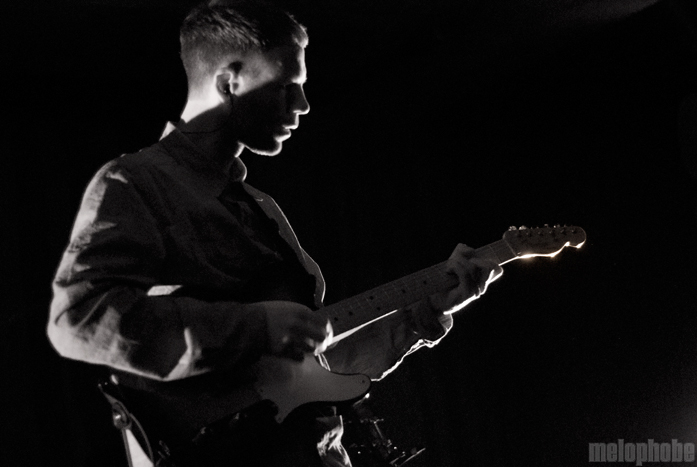
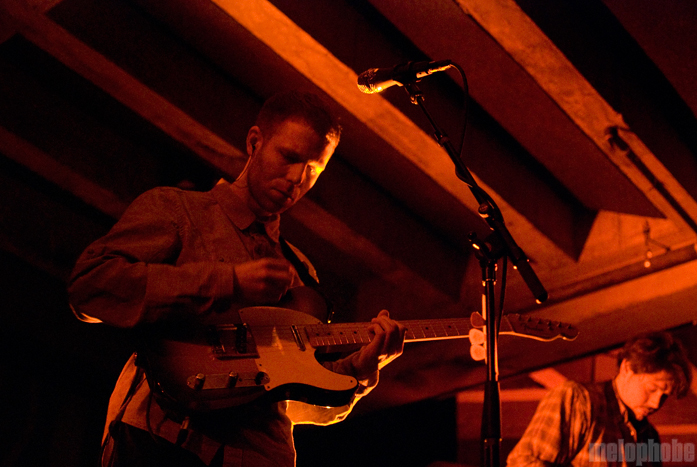
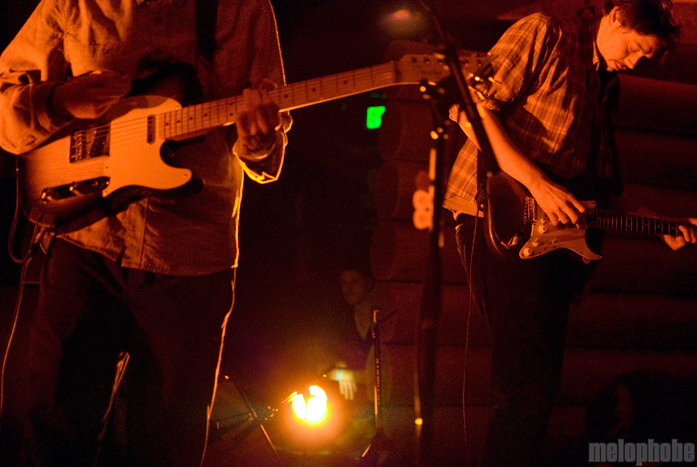
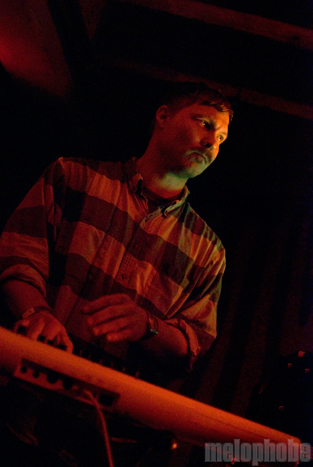
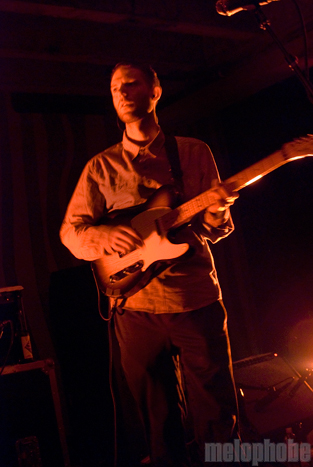
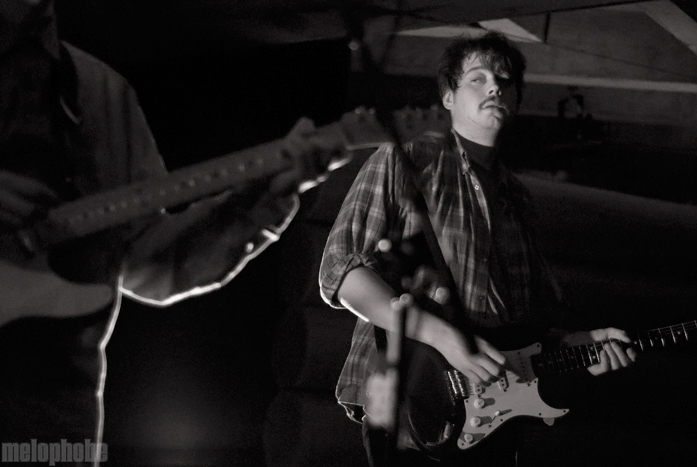
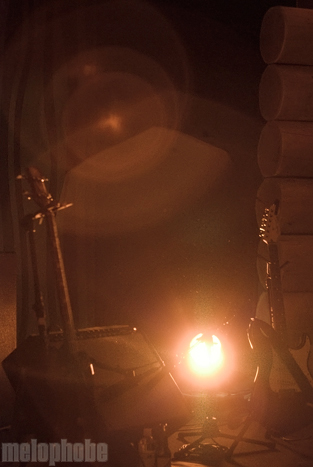
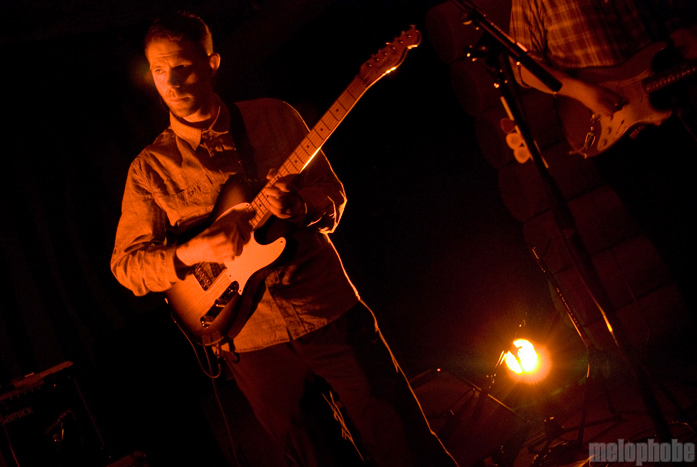
The Radio Dept. made a modest entrance to the stage, belying the anticipation that was evident in the packed room. They somehow looked nothing like a band capable of making such heart-rending music. Nor did they play like it. Efficient and workmanlike, and illuminated only by a pair of red lights positioned on either side of the stage, they were clearly well-rehearsed and ready to go to work. Incredibly, the performance didn’t suffer from that approach. If anything, it seemed to shift the focus all the more thoroughly to the music, pushing the secondary concern of stage presence to the background and bringing to the fore an intricately textured auditory element that did not cease to be stunning. It took no time at all for the band to have the audience hooked. Even focusing on older, probably less familiar material, they had the audience bouncing, bobbing their heads, and, almost universally, smiling! It was reminiscent of the Beta Band scene in "High Fidelity," where the mere act of playing “Dry the Rain” has a visibly intoxicating effect on the unwitting music shoppers. And while you’ve got to love the scene, it’s a rare thing to see it played out in real life. The Radio Dept. managed it easily, and by the time they got to “David,” a hit off Clinging to a Scheme, they already had the audience eating from their hand. The introduction of that song was greeted with howls and cheers, and as the heavy synth intro cut through the room, the positive vibes became almost contagious. Later, a powerful run that started with “Why Won’t You Talk About It?” and proceeded to a trifecta of tracks from Clinging to a Scheme, climaxing with an upbeat rendition of “Heaven’s on Fire” pushed the crowd even deeper into their groove. After “The Worst Taste in Music,” a song of anthemic properties for young men of a certain (embittered) disposition, Johan Duncanson took a swig of beer, set his bottle down roughly on a speaker, and walked away as it overflowed in a foamy eruption. Though cheesy, it seemed metaphorically apt. An overflow is exactly what I was witnessing, and was a part of.
At first glance, it looked like The Radio Dept. intended to conclude their set as modestly as they had begun it. Mid-song, Duncanson raised his beer to the crowd, then abruptly walked off the stage, followed in short order by his bandmates, leaving only a fuzzed out, catchy loop that slowly degenerated into something akin to carnival music. They could have easily let it be at that point, and I waited for the houselights to come on. Instead, they stayed down, and the carnival music continued to play for what would be a surprisingly long encore break. Then the band returned for one last song, “The City Limit.” Though the song is something of a rarity, it was undeniably the climactic point of the night. The music was arguably louder than it had been at any point in the set, and the sound was incredible—rich, melodic, and deep. Much of the audience seemed to be in a trance—the thick clouds of pungent smoke hanging under the ceiling beams probably having contributed to that mood—and the feeling as the music died out and the band departed for good was almost surreal. In the moment, I could come up with nothing more than understatement to express my impressions, and even having slept on it can do little better. It was an outstanding show, in some ways transcendental in that it took studio material and elevated it to new heights, without any particular emphasis or reliance on performance. Asked beforehand, I would have said that sounds like a recipe for disappointment. I couldn’t be more wrong.