Post-rock, Tortoise's formally allocated genre, is defined by what it eschews: vocals, most of the time; the predictability of verse-chorus structure; the straight, 4/4 rhythm that is the foundation of most rock (and, for that matter, pre-rock). Stars of the Lid, whom I adore, also get stuffed in the post-rock bin via a similarly negative taxonomy, but the Lid's records sound nothing at all like Tortoise's - spare where Tortoise is intensely, overweaningly busy; near-static, where Tortoise sounds like a perpetual motion machine running off the rails. On Tortoise's records, there is sparingly little to latch on to in the dense, willfully complex thought experiments - no major themes, or riffs, or distinct solos.
But while the records are off-putting, I nursed a sneaking suspicion, a hunch, about the live show. The records reminded me of BLK JKS, another favorite whose records don't hold a candle to their epic performances. Then again, maybe there was no anticipating the blistering, organic onslaught that overflowed from Paradise's little stage, fresh from the All Tomorrow's Parties festival in New York.
Tortoise inverts several rock paradigms - these inversions are what is really meant by the post- label - chief among them the relationships between rhythm and harmony. The band began as a "rhythm section for hire," doubling its membership from the initial pairing of Doug McCombs on bass and John Herndon on drums not to add melody but simply to add even more rhythm section.
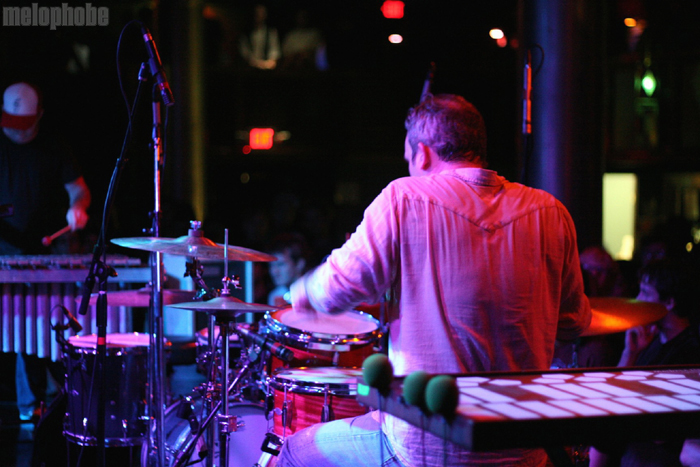
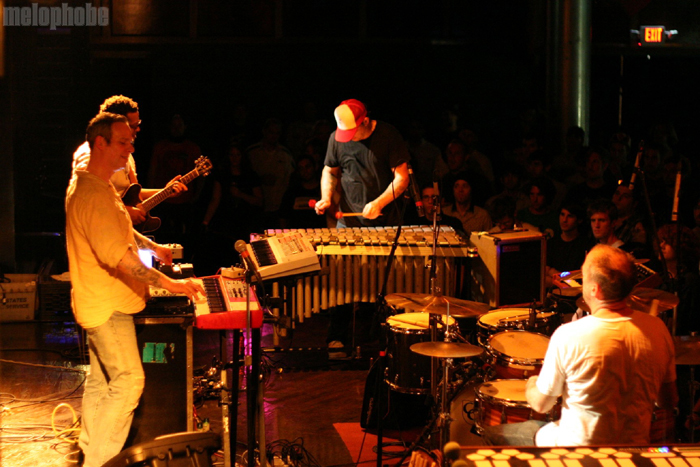
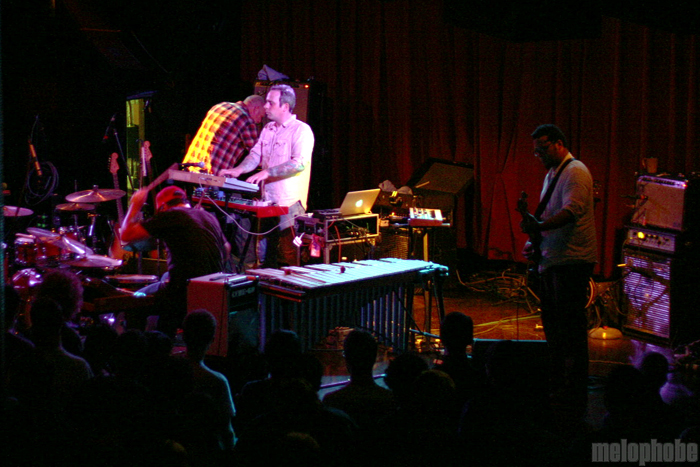
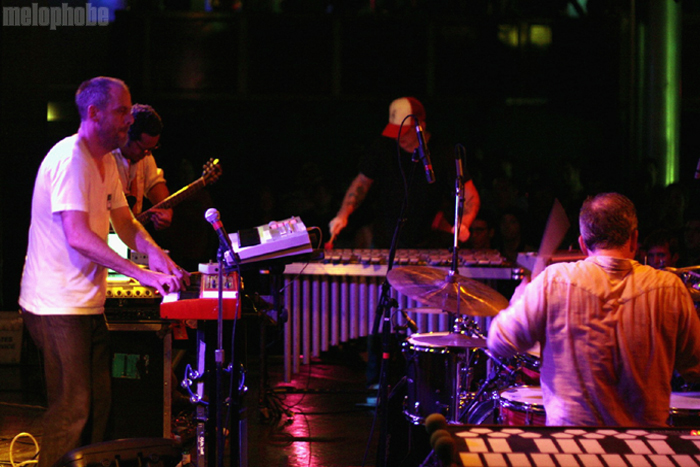
So, rather than stuffing a drum kit in back, heard but not seen, Tortoise puts two kits literally front and center, facing off so that the two drummers could probably hit each other with their sticks if they chose. Given the bandmembers' penchant for squeezing every drop of rhythm from any and every source, I wouldn't exclude the possibility.
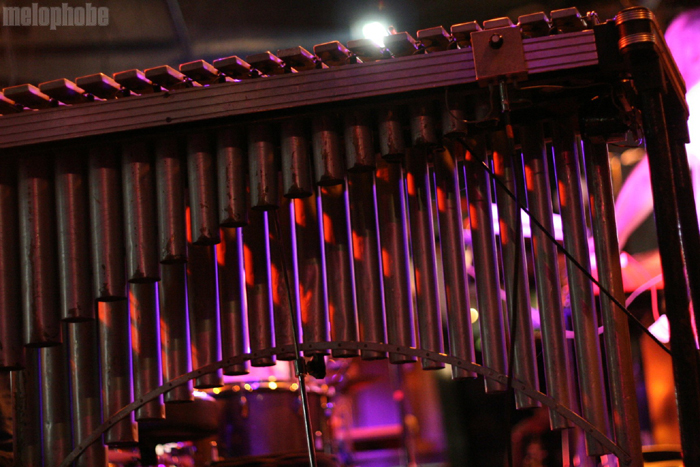
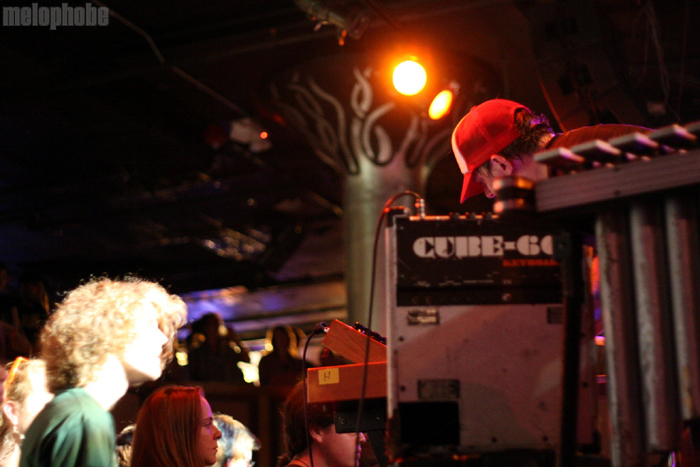
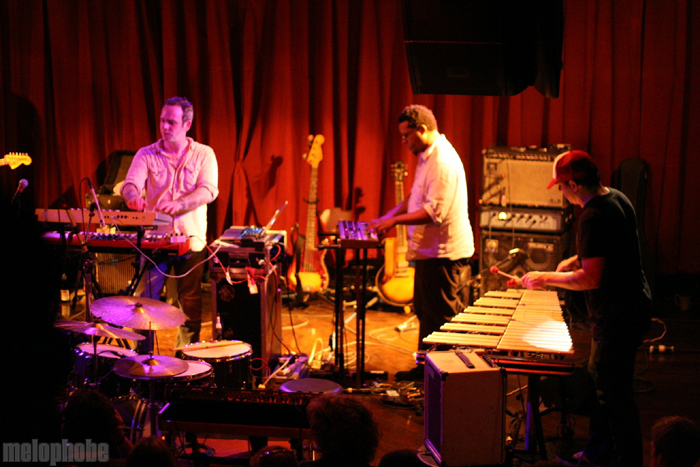
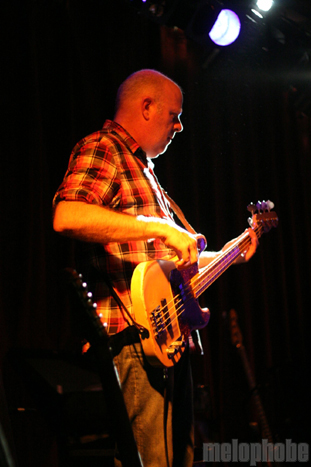
The members shift instruments constantly around the rhythmic core - there seems to be a standing rule that only two of the five get to hold on to their instruments between songs, a stricture that must enlivens the musician's curse of playing the same songs night after night. Not that these five need enlivening. That they are exceptional musicians is perhaps unremarkable - a necessary not sufficient condition of the rhythmic smorgasbord on display, a Polyrhythm's Progress to rival Fela, Brown and the other rhythmic Grand Masters. I danced more at Paradise than I have in a year or more, transported by the endless possibilities revealed by five distinct appraisals of meter.
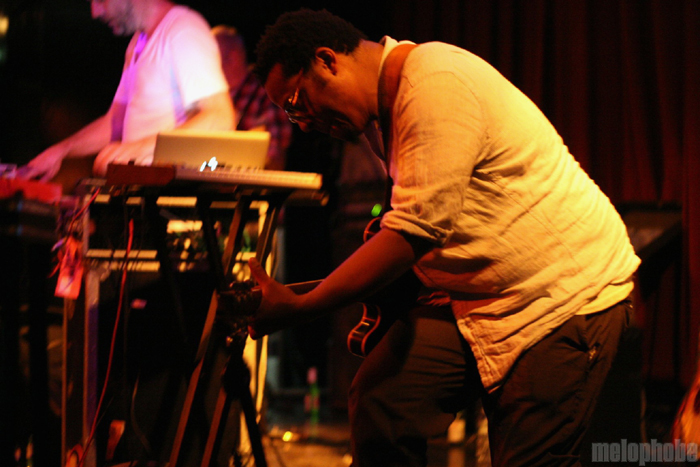
John McEntire, the band's nominal leader, spends a good chunk of time at an elevated central keyboard bank exhibiting the creepily good posture of a starship captain, lips parted, pointing his chin as though it might part the galaxies. One of three drummers, McEntire relishes pounding out emphatic, comparatively straight snare-and-high tattoos, letting his colleagues find their way into the obscure, darker reaches of a purported 4/4. Jeff Parker, the guitarist and one of the two non-drummers in the band, overlays the dense percussion with off-kilter riffs that give way to naive, groping solos, like a child feeling his way through a workshop in the dark, tentative and clattering at the same time.
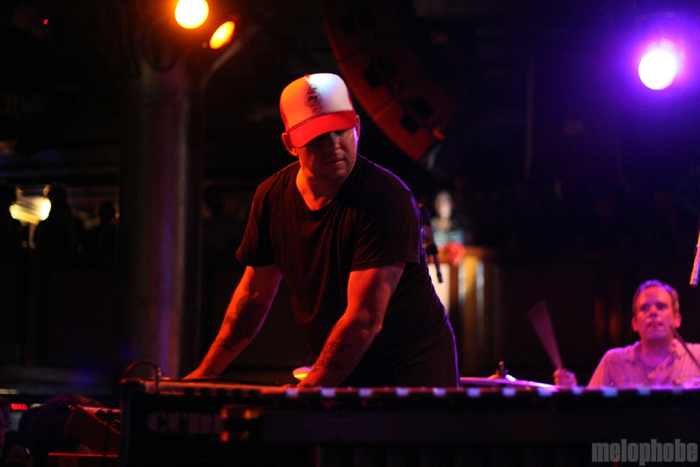
There must be great respect and trust between the five - it's hard to see how anyone would dare to sit at a kit in the aftermath of John Herndon's brutalist assaults, let alone sit in a kit within reach of his. I'd be petrified. Herndon, lurking beneath a trucker's cap featuring a toilet-stall pinup doodle, beat seventeen kinds of shit out of his kit, thrashing his cymbals like they might get away, as if fighting his way through an entire video game's worth of flying saucers.
But as often as Tortoise overwhelmed us by firing on five distinct rhythmic cylinders, they doubled up on drums and bass, turning five pieces into three or even two, but with twice the gut-punch impact. Closing a second encore, Dan Bitney set down whatever his last instrument had been (vibes, tambourine, guitar, who knows) and lead the crowd in a rapid fire clapping accompaniment, inciting hundreds of elaborations, variations, improvisations. Steadily, the rest of the band joined him until we were all clapping in careening, colliding, collusive collaboration. We were still clapping as they walked off stage, and all that remained was to turn percussion into applause.