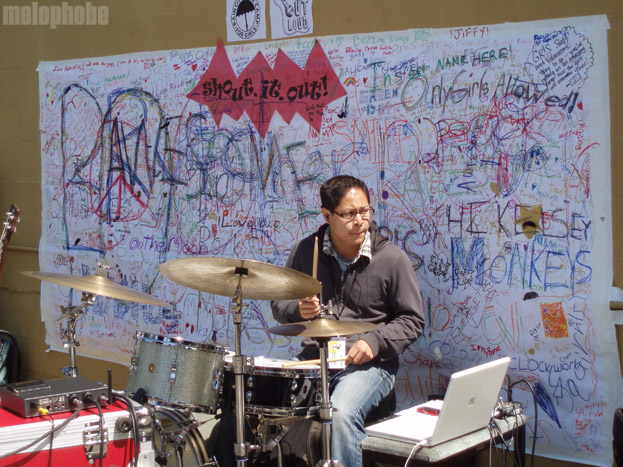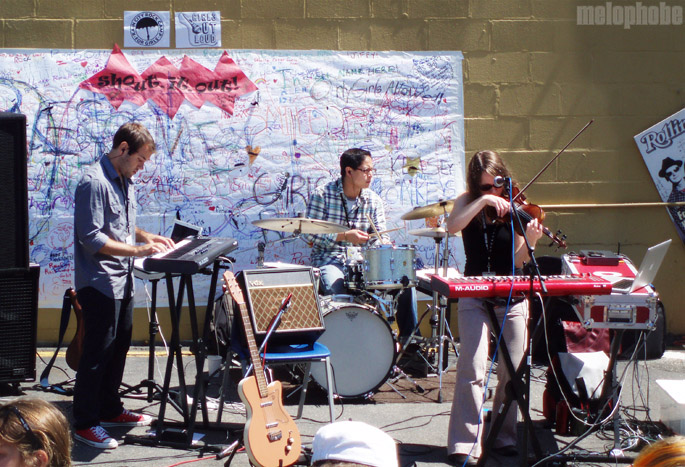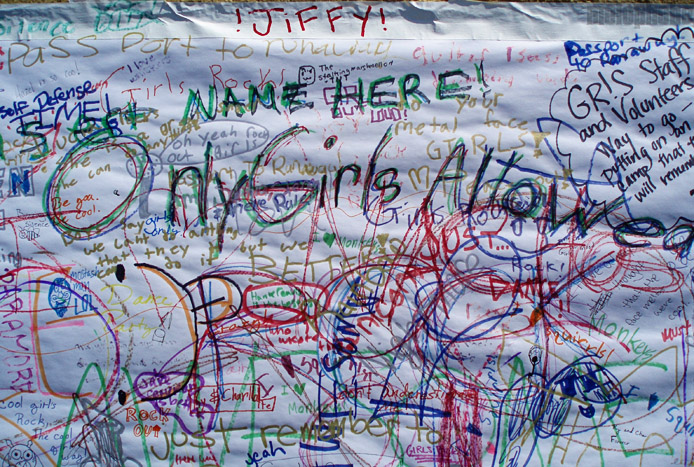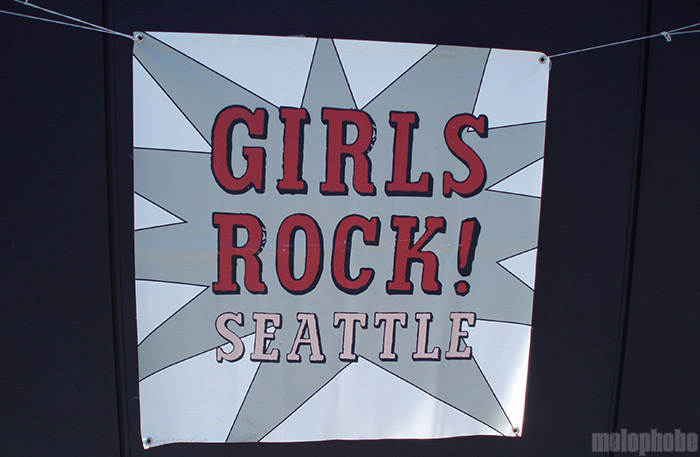
“I am beautiful, I will rock the stage, I can do this no matter what!” Normally kids get in trouble for sprawling messages on school property, but for six days in July, Billings Middle School in Greenlake is being commandeered by fledgling rock goddesses participating in the second Girls Rock! Seattle camp. Other messages like “Only Girls Allowed” and “I love rock!” are criss-crossed in Sharpie over a vast paper graffiti wall that the campers have continually added to throughout the week so that by today, the last day of camp, it’s difficult to decipher the many layered self-empowerment affirmations.
Girls Rock! began in Portland nine years ago, a natural progression of the riot grrrl movement, in an effort to promote self-esteem and confidence in young girls through music. Inspired by the success of the Portland camps, Girls Rock! programs have spread throughout the country, and the Seattle camp is in its second year, increasing the number of campers from forty last year to over eighty enrolled in this session. By offering workshops in everything from zine making to self defense, the camp is about more than just learning guitar chords. But since rock is the vehicle guiding the pervasive message of empowerment, the girls also attend instrument classes, songwriting workshops and afternoon band practices. The girls form their own bands – coming up with a band name, creating a logo, collectively writing a song, and finally performing together on stage at Neumos during the band showcase at the end of the week.
Without co-founders Natalie Walker, Holly Houser, Jenn Johnson and a team of volunteers, Girls Rock! Seattle wouldn’t be possible. Many of the women behind the scenes, coaching the bands and teaching workshops, are taking their vacation time to be here during the camp session. Natalie sat down with us to discuss their mission and what direction the camp may go in the future.
melophobe: What does the camp application involve, and as more girls become interested, how do you determine who is wait listed?
Natalie: We have multiple parts of the application asking basic information and instrument choice. They choose between bass, vocals, guitar, or percussion giving them a ranking. And then the other part of the application is called an “express yourself” piece, and they can write us a letter, a poem, they can submit a story or a song. Just something that tells us about why they want to come to camp or something about them. So the first thing we look at if we need to wait list someone is if they turned that in, if it is a complete application. That tells us if the girl really wants to come to camp. It isn’t based on one submission being better than another. Also, did they turn the application in on time? Then we have to look at instrument choice. This year we had an over abundance of eight- to nine-year-olds who wanted vocals, and in some cases they didn’t rank any other instruments. If vocals were full already and they crossed out everything else, then we had to wait list them. It turned out to be forty girls who were wait listed who turned the application in on time.
melophobe: How do you go about promoting the camp so that the largest audience of girls can find out about it?
Natalie: We have a board of directors, and one of the committees is community outreach, so they spend their entire year bringing us volunteers and campers. They do presentations in schools; we went to the Bush School this year where they had a camp day. We do farmers markets. For volunteers, we go to shows; we had a table at Sasquatch. We also got a lot of campers this year through word of mouth from campers who attended last year.
melophobe: One thing you offer is conflict resolution, which I don’t think many other programs include.
Natalie: I think one of the things that separates our camp is that we aren’t a music camp; we are more of a self esteem camp. It’s about teaching the girls how to treat each other. That’s why having camp counselors is so important, because the girls are learning new things, learning how to collaborate, so there is conflict. Having people in those positions helps facilitate those conversations, helps prevent any bullying or rumors being spread, all that stuff that maybe if we were just about teaching girls how to play guitar and that stuff were happening, it wouldn’t be resolved.
melophobe: One very cool aspect of Girls Rock! is that the girls don’t need to have any previous training or a certain level of musicianship. But how do you balance the girls who are picking up an instrument for the first time with those that have some experience already?
Natalie: It’s all about presenting to the girls in this short amount of time things that we feel in the real world they aren’t really exposed to as girls. Like the workshop that Toby (Anomie Belle) taught. Where else are they going to see a woman teaching audio engineering? We sort of offer a crash course in women doing all of these things. It’s not so much about honing in the skill level, but I think that in the future that is a challenge we’re going to face. We’ll have to address what to do with girls who have been here two years. After one year, we didn’t need an advance camper track, but now going into three years we’ll need to figure out how to involve the girls who are at a higher level and still keep them interested. Also encourage them to take it further. Instead of saying “oh it doesn’t matter if you’re good or bad”--well, if they are super talented I don’t want to discount that. Maybe we will channel them into a different organization or program, or have a program within Girls Rock! that focuses on that. We don’t want to have to say “oh you’ve been playing guitar for five years, maybe you should play drums at camp this year.” It’s a little more fun if you aren’t an expert at what you’re doing, because if you get paired with a beginner musician you may not get as much out of it.
* * *
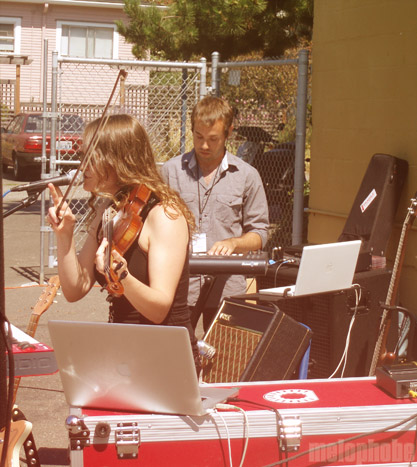
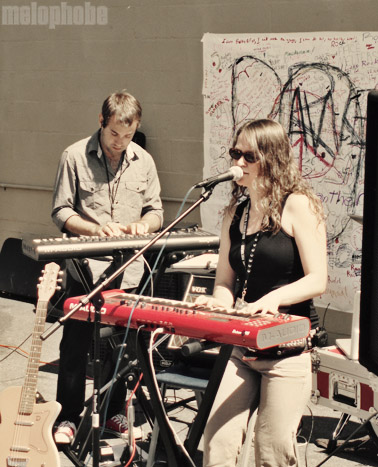
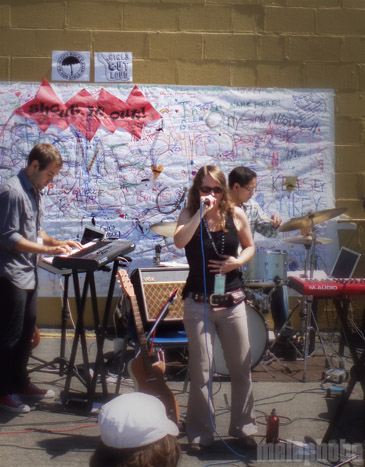
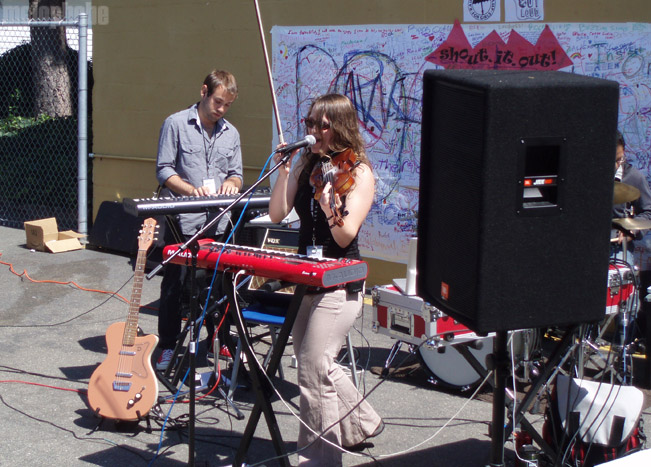
Girls Rock! relies on women volunteers from the local music community to serve as coaches and mentors to the campers. Portland native Toby Campbell began playing violin at eight and started on her first album at ten. Since then she has added guitar and keyboards to her list of instruments and picked up a heavy dose of audio engineering and production training along the way. Did I mention she also sings and writes her own songs? Upon moving to Seattle she adopted the moniker Anomie Belle and continued recording her complex, layered, electronic influenced music. Along with teaching a workshop, she is acting as a band coach and giving a lunchtime performance today. Melophobe was able to catch up with her after the show to chat about her music and the joys of camping.
melophobe: Did you approach Girls Rock or do they go out into the local music community and identify women that would be interested in coaching or teaching a workshop?
Toby: I think they did do a lot of outreach. I actually initially contacted them because I worked with the Portland Rock Camp. When they were starting I was teaching workshops but also doing grant writing. Then when I moved up here and was asking around to see if there was a camp, a friend of mine who is a co-director over at the Vera project, told me about this group of women who were going to be starting one. So I was grant writing for them before they had their first camp which was last summer. So actually I have been involved behind the scenes before they started doing camps here but I think for most people they do go out and find them.
melophobe: Do the camp organizers break the girls into bands before they arrive or is it based on their interests?
Toby: On the first day they got to know other girls in their age group and they got to express their desire for whom they would like to be in a band with. And then ultimately the directors went through those papers and tried to match them up as best they could but keeping in mind how many instruments we have.
melophobe: What age group are you coaching?
Toby: Mine are all twelve and thirteen, going into eighth grade. I think there are going to be twenty bands at the showcase.
melophobe: Do they decide on what style they are going with?
Toby: Yeah, on the first day they sit down and talk about what type of music they like and what type of thing they might want to write. For my band, none of the girls have played their instruments before this week so there is that kind of situation where you have to figure out what you can put together. They write the material.
melophobe: Is that part of what you do as a coach, being yourself so versatile in terms of knowing different instruments, helping them learn their instrument or is that mostly in the classroom?
Toby: Whatever seems appropriate. I am more of a facilitator of the band. I try to make sure that they are able to complete a song and play it from start to finish. I am guiding them but not giving too much instruction; I think that is more empowering.
melophobe: When they are working on the songwriting, do you help out on that?
Toby: Yes, my band had two different ideas, and I guide them with what a typical song looks like with choruses and verses, things like that. Not as much on the actual content – they attend workshops everyday and songwriting is one of those. All the girls attend every workshop.
melophobe: You taught the Recording and Production Workshop.
Toby: Yes, my workshop I specifically wanted to teach because less than five percent of audio engineers and production people are women. I think it is very important to encourage young women to get involved in that kind of stuff.
melophobe: Next year do you think you’ll teach the same workshop or bring in something new?
Toby: I have been wanting to do something with film scoring, because I do that as well. I have been talking to Reel Grrls. This class I taught this year was supported by the Office of Arts and Cultural Affairs. I got a grant to teach it, so that was also part of why I decided to do it.
melophobe: You’ve traveled extensively in Europe doing production and engineering work. Do you think there is more of an opportunity for that type or work over there as opposed to in the U.S.? Are there more women working in the industry over there?
Toby: In a lot of countries they provide subsidies to artists and musicians, so if you record a certain amount of music and play in clubs enough you can get a small stipend to live on. That’s nice because here you just basically have to find a way to make a living in a commercial market and it’s limiting and complicated and difficult to do. I don’t know about more women working as engineers over there or there being more opportunities exactly. I pretty much learned everything I know about engineering from men. Here there are a few women live sound engineers working at Neumos and the Showbox; I always make a point of speaking to them when I play a show, and there are women sound engineers. I just happened to have found this stuff really interesting because I play different instruments and I like to write really layered music and recording it in this day and age makes more sense to do it myself than to write out a bunch of music. And because this was my interest I just ended up figuring out where to take classes and where to intern. But I pretty much learned most of it from men and then got involved in this kind of stuff like Girls Rock! because I realized that there really weren’t a lot of women doing this. I’m sorry that I don’t have a more sophisticated analysis of why there aren’t more women involved in audio engineering, but I do know that most people assume that I don’t know how to do that stuff and are really surprised when I do know how when I am out recording. It will be nice when that changes.
melophobe: After your performance today, one of the girls asked what inspired you to be a musician and you mentioned your dad.
Toby: Yeah, he sings in a barbershop quartet and when I was really young when he was putting me to bed, instead of telling stories we would sing intervals and I thought it was a game. He would say “OK, I am going to sing a note, sing major third above that note, now a fourth above that note.” I thought it was really fun but it was awesome because basically I was getting ear training as a child but I thought it was a game. It was great to have that at such a young age; like learning a language, it is helpful to start it when you are really young. That was a kind of inspiration and in my family we sing a lot of four part harmony stuff because everyone in my family sings. There was also always piano and guitar in the house.
melophobe: Was the violin your idea or something your parents forced on you?
Toby: No, I was a really stubborn kid and if they had wanted me to do something I definitely wouldn’t have done it. I had to beg them for over a year. I think my mom was like, “Oh that is going to sound horrible.” I was really motivated and they never told me to practice; it was all self-motivated. I was kind of a weirdly self-motivated kid.
melophobe: Being more of a classically trained musician, when did you start bringing in the electronic sounds and layering your music?
Toby: My parents gave me a karaoke machine when I was eight and it had two tapes. I was immediately bored with the pre-set tapes that you get but I realized that if I recorded something like myself playing a keyboard part I could put that tape in the other slot and put a new tape in the first one and record myself playing a bass line over it. So I started doing that and layering violins and little percussion, anything I could really stack, so I was basically multi-tracking. The sound quality was kind of poor but I was interested in stacking and layering right away. When I was in college, I started taking engineering classes, and I knew I wanted to make slower down-tempo music. After college I had a fellowship and spent time abroad interning and working in different studios – when I was in the Netherlands I was working at an electronic label specifically. They were doing computer based but it was a mix with live bass, turntables, live percussion. So I learned a lot about how to incorporate that sound into performance. And everyone I’ve toured with do that as well – Tricky, Album Leaf and I try to observe them and see what they are doing.
* * *
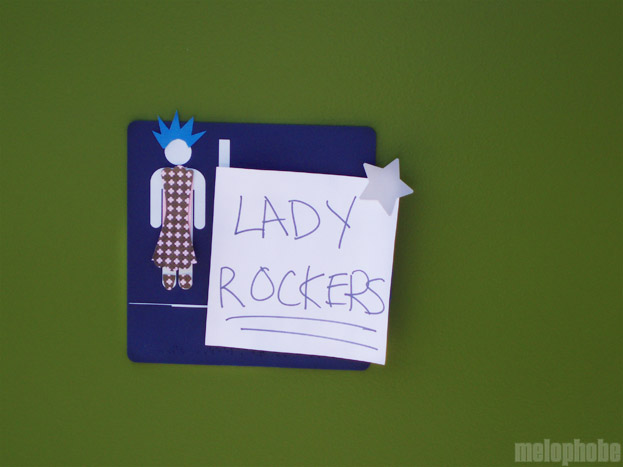
Our interview concludes when we are asked to serve as audience to the band practicing in the Joan Jett classroom (the practice rooms are identified by names of lady rockers). All four girls have adopted their own rocker style – a few in funky striped leggings, one with a camp t-shirt personalized "Flashdance" style with the neck cut out, another in neon Wayfarer-style sunglasses. The drummer counts off and they eagerly start in gaining volume and stage presence as the song progresses, ending in crashing cymbals and mashed guitar as they fall to ground or slump over their instruments. It’s probably a good thing there isn’t gasoline available, because, doesn’t every rock star deep down want to light up their guitar at least once? They all lay there in silence for a moment before jumping up laughing and shouting, “Let’s do it again. We can work on the chorus.” I just want to give them all a high five for putting themselves out there and proving that yes, girls do rock. Because, remember boys: you can put on tight pants, sneer, snarl, strut and even wear eyeliner – but you ain’t ever gonna be Joan Jett.