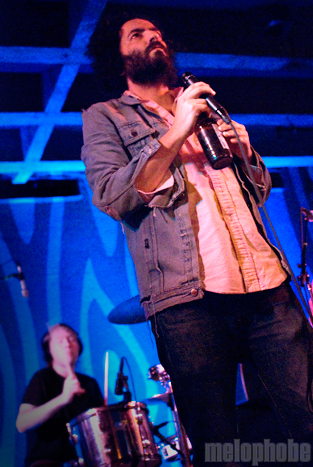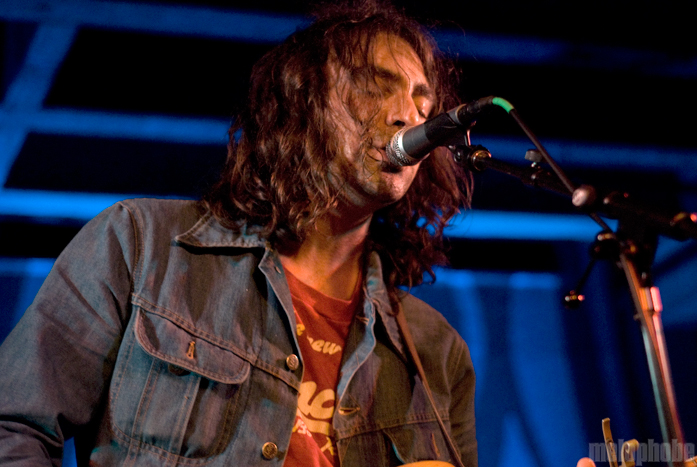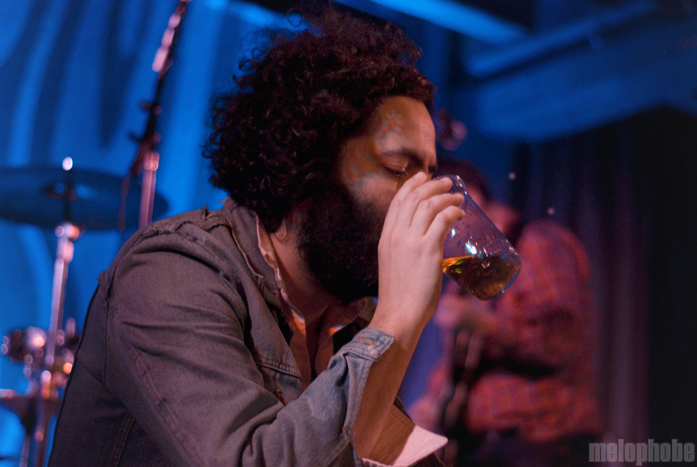
“Listen, I’ve been drinking.” The confessional note on which Dan Bejar opened the final song of his set had a certain resonance in the context of the evening. It’s the kind of sentiment that belies the speaker’s intentions – a need for redemption, a misguided attempt at an apology, an endeavor doomed to failure or worse thanks to the poor counsel of the aforementioned libations. That theme, as it turns out, is so prevalent in Bejar’s music that one wonders if it really is autobiographical, or merely a literary preoccupation. This much was autobiographical, however: Bejar had in fact been drinking, if not prolifically at least with an appreciable sense of determination. If redemption was a theme he was determined to explore, though, there certainly was no notion in the audience that the man had any need to be redeemed.
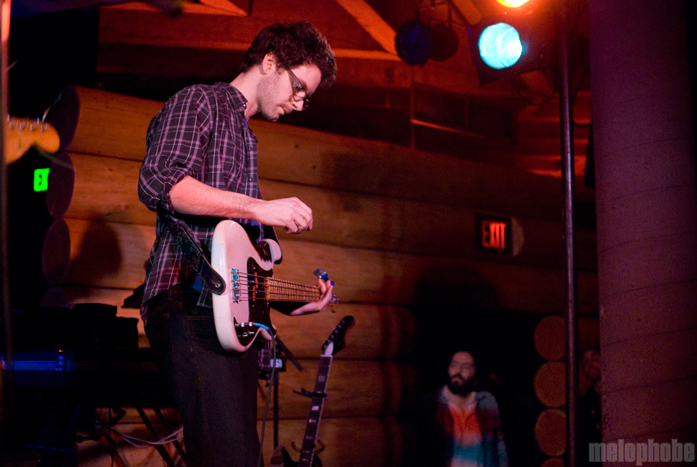
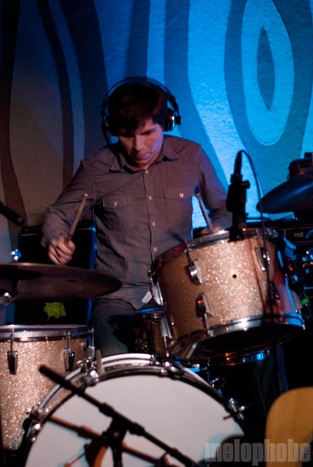
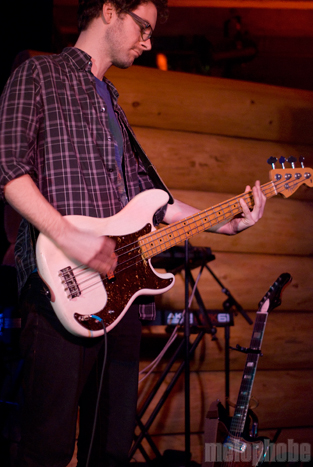
Philadelphia’s The War on Drugs opened the evening, and the notion of redemption had some currency here as well. If there is a point of similarity between The War on Drugs and Bejar’s Destroyer, it is in their respective lyrical preoccupations, because musically the two are miles apart. On their albums, The War on Drugs are never quite Dylan-esque, but the shades of Springsteen and Petty are overt. Their sound, though it would be unfair to call it derivative, evokes a warm sense of familiarity, like sitting on the living room floor and flipping through your dad’s record collection. Live, that translates to an old-school brand of rock ‘n’ roll that is often mimicked, but rarely executed in the spirit that the music demands. My first live experience with the band, which occurred not long after the excellent Wagonwheel Blues was released, tended more toward the former. The music was fine, but the performance seemed to lack enthusiasm, and the crowd, whether as cause or effect of that fact, never quite managed to get into it. It was, then, a small amount of redemption that I hoped for on Saturday night at the Doug Fir. All in all, I was not disappointed.
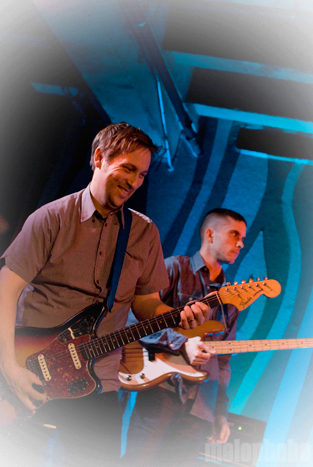
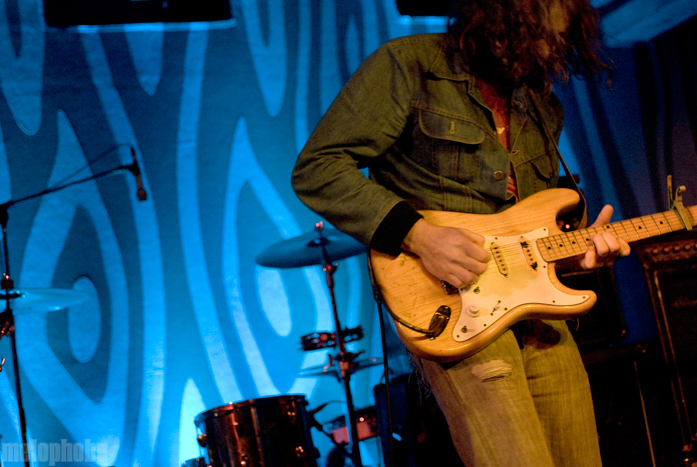
The band’s set, though rather short, maintained a constant level of energy. Tempo never fluctuated significantly, and the enthusiasm in the capacity crowd, though not climaxing until near the end of the set, never seemed to lag. Drawing heavily on Wagonwheel Blues and last year’s Future Weather EP, The War on Drugs were decidedly engaging, not bursting with charisma, but not entirely lacking in it, either. Given the strength of the band’s songs, that comes out just about right. The only trifling downside was the sound, which frequently bordered on cacophonous. The result was an invigorating sense of rawness at some times, but at others, particularly on the otherwise outstanding “Taking the Farm,” the exaggerated clash of cymbals and reverb from the guitars managed to drown out Adam Granduciel’s wistful vocals and thoroughly obscure the lyrical content of the song. That was a shame, but not nearly enough to outweigh the positive elements of the performance, and I had to conclude that, on this occasion, the band had lived up to the high standards they had set with their recorded material.
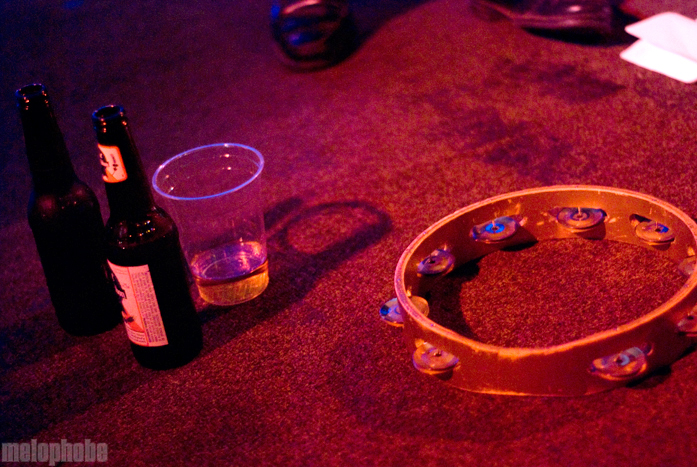
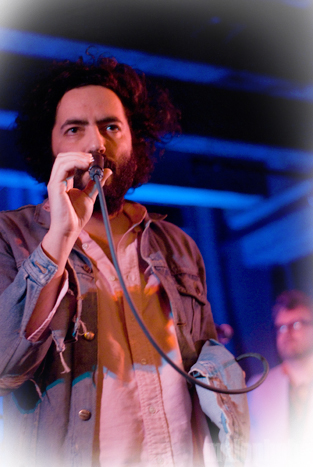
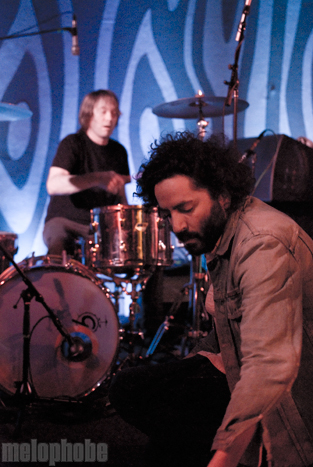
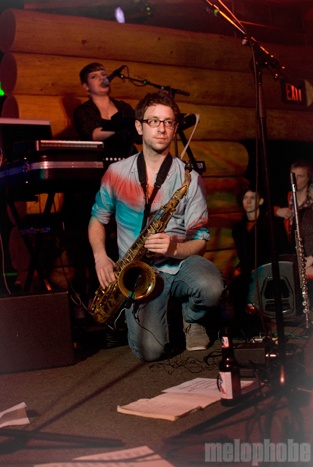
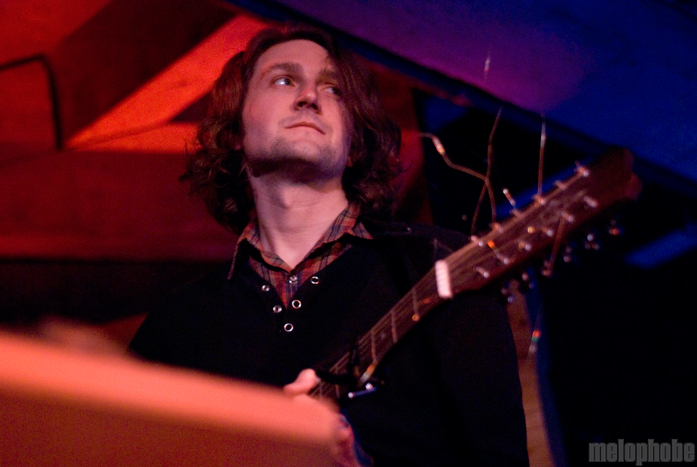
Looming in the background and teasing the audience as The War on Drugs played was the massive complex of instruments that would be employed for the Destroyer set. All told, Bejar took the stage with eight accompanists, befitting the musical richness inherent to Kaputt, the band’s stellar 2011 release. The setlist was almost entirely built around that album, and appropriately began with “Chinatown,” its opening track. Bejar, unassuming apart from his signature mane of hair, stood at the center of the stage, holding the mic in his hand with a picturesque array of necessities at his feet: a tambourine, two bottles of PBR, and a plastic cup containing a modest pour of whiskey. The tambourine, it turned out, would be largely neglected. The beverages would suffer no such fate, being diligently attended to between songs by Bejar, who would occasionally hold a bottle up to his eyes and squint at it as if to ascertain whether it was this one or the other that he had already emptied of its contents.
In keeping with the album, Destroyer followed with “Blue Eyes,” then departed entirely with “It’s Gonna Take an Airplane.” With its robust instrumentation and exaggerated Dire Straits riffs – only hinted at on the studio version – this rendition sounded as if it were pulled directly from the Knopfler-influenced Kaputt rather than the comparatively stripped down Your Blues, the 2004 album on which the song appears. Following this impressively seamless interlude, Bejar returned to Kaputt with the sultry “Downtown,” “Savage Night at the Opera,” and “Kaputt,” the latter opening, in all its ‘80’s glory, like the soundtrack to some steamy Hollywood sex scene featuring the likes of Goldie Hawn and Kurt Russell. It emerges as one of Bejar’s great strengths that he is able to take such a clichéd palette and produce, with no hint of irony, music with its own, entirely unique emotional depth.
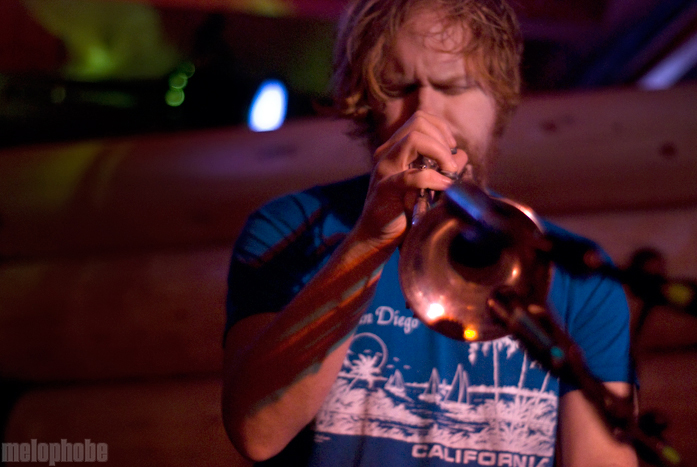
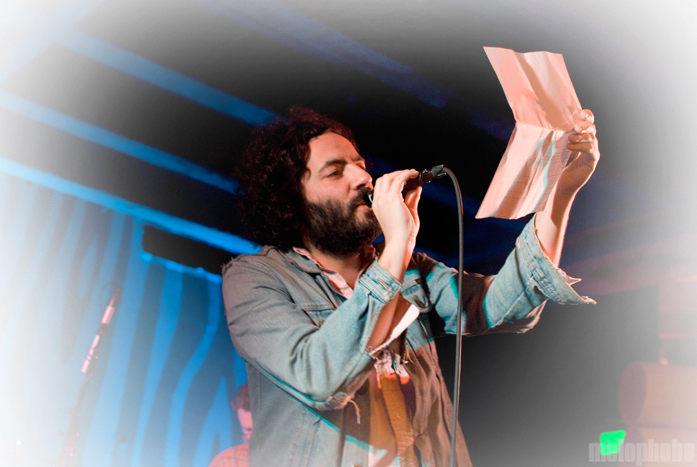
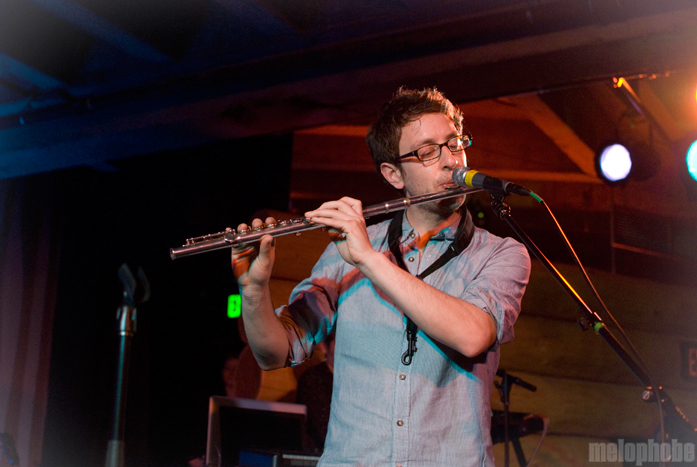
Bejar wasn’t all emotion, though. On “3000 Flowers,” the most up-tempo, reckless number of the night, he unabashedly read the lyrics from a sheet printed off the internet as he sang. On “Painter in Your Pocket,” a hefty bass line took preeminence over the lyrics, lending the song an uncharacteristic groove. The next track, “Suicide Demo for Kara Walker,” likewise de-emphasized the lyrics, in this case making way for the horn section that is so integral to Kaputt’s distinctive sound. They followed up with an incredible rendition of “Song for America,” which served as a stunning exposition of musical possibilities. With saxophone and trumpet dueling with one another from opposite sides of the stage, whammy bars being cranked to the breaking point, and a deep bass line providing an underlying structure to the audial chaos, the effect was such that it seemed you should be able to see the sound gathering in whirlpools around you.
With that climactic outburst still reverberating in the room, Bejar and company took leave of the stage. Amidst the cheers, calls could be heard for “Bay of Pigs,” the epic 11-minute number that closes out Kaputt. Returning after a very brief break, accompanied by only three of his eight bandmates, Bejar acquiesced to the request. As the first warm notes of “Bay of Pigs” emerged from the keyboards, a cheer erupted from the audience, and the rest of the band gradually returned to the stage. With lyric sheet once again in hand, Bejar took up the mic and sang, softly, the loaded first line of the song: “Listen, I’ve been drinking.”
Setlist:
Chinatown
Blue Eyes
It's Gonna Take An Airplane
Downtown
Savage Night At The Opera
Kaputt
3000 Flowers
Painter In Your Pocket
Suicide Demo for Kara Walker
Song for America
Encore:
Bay of Pigs