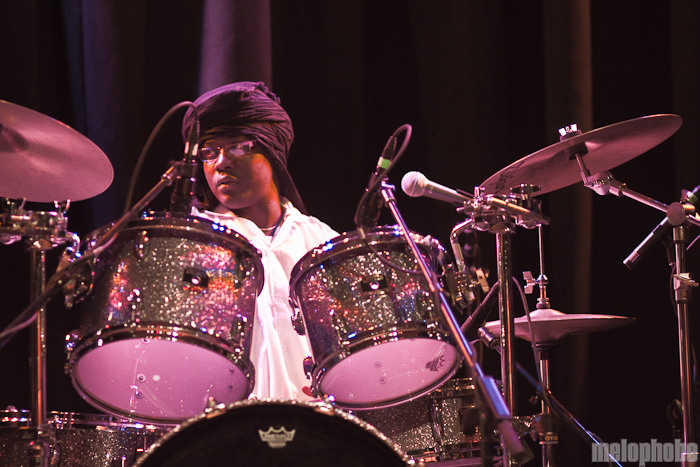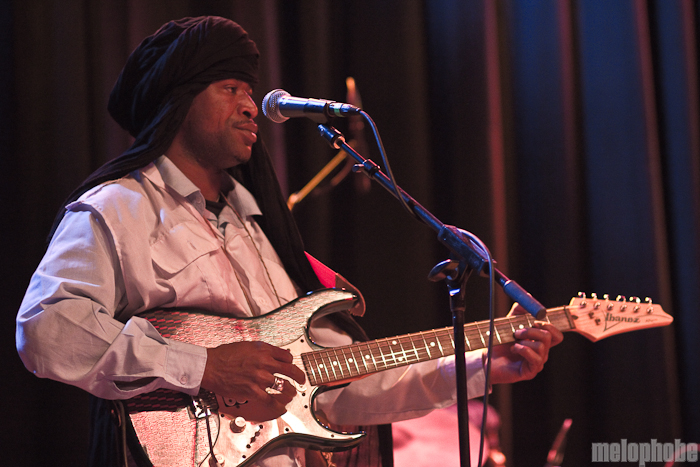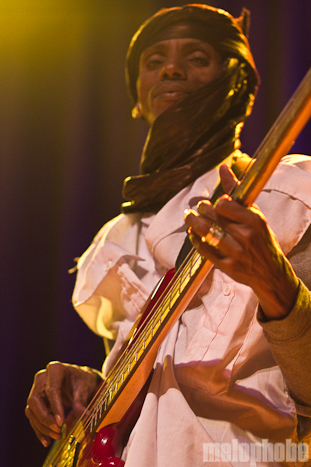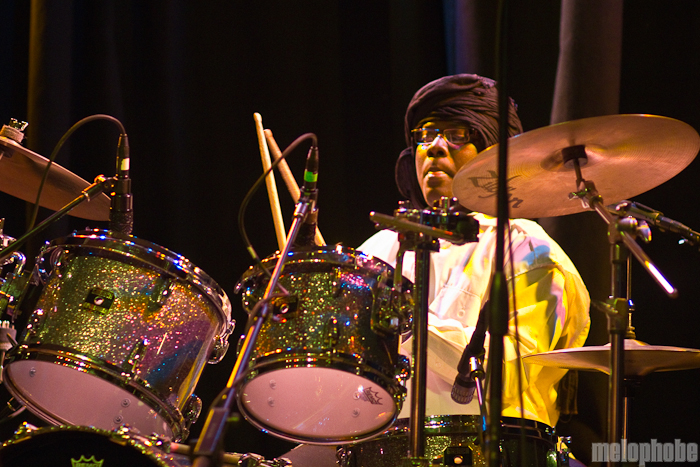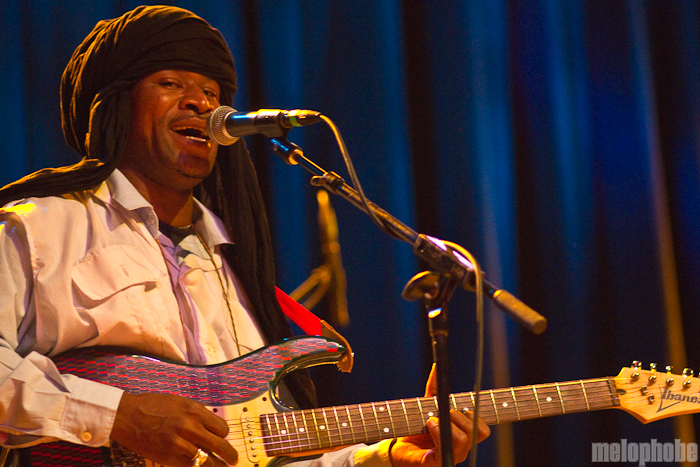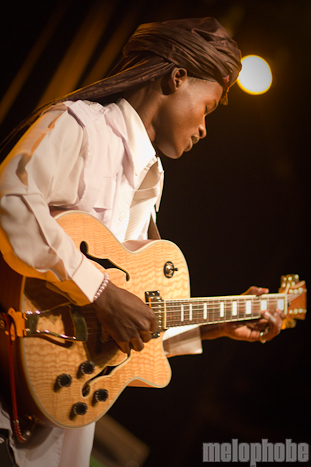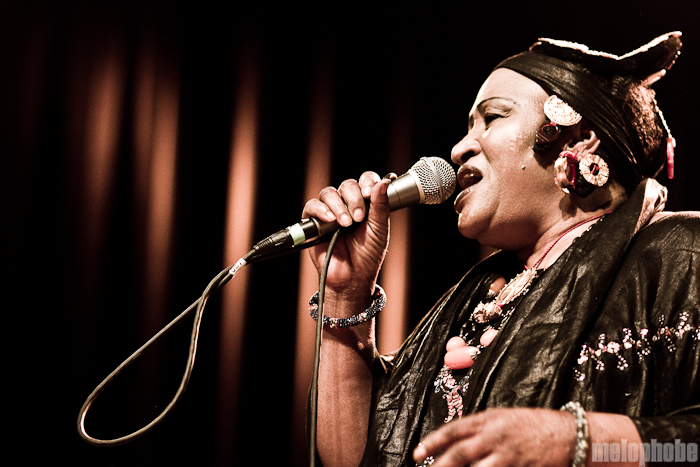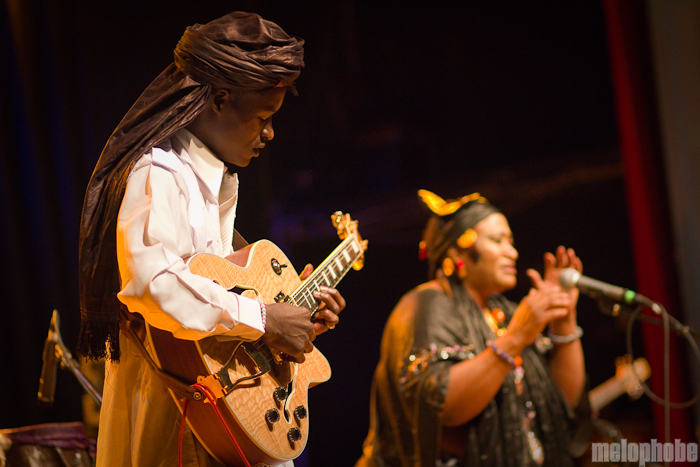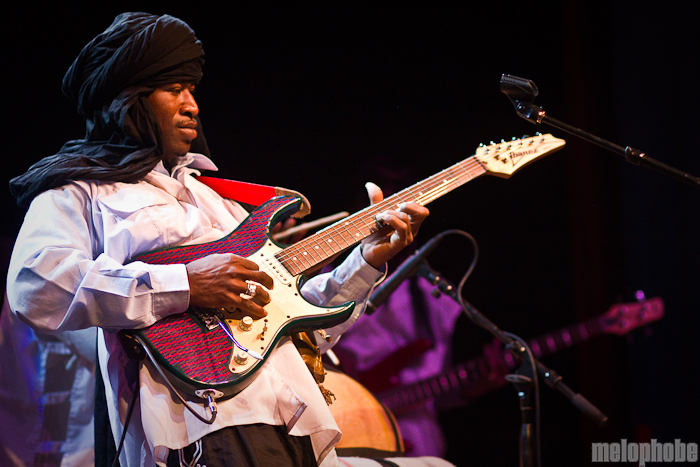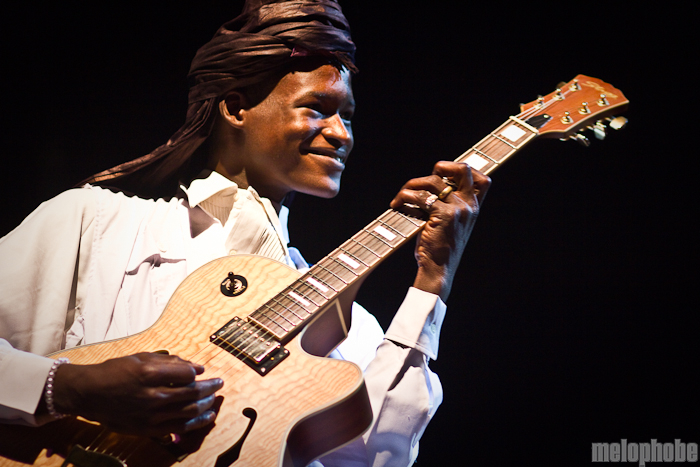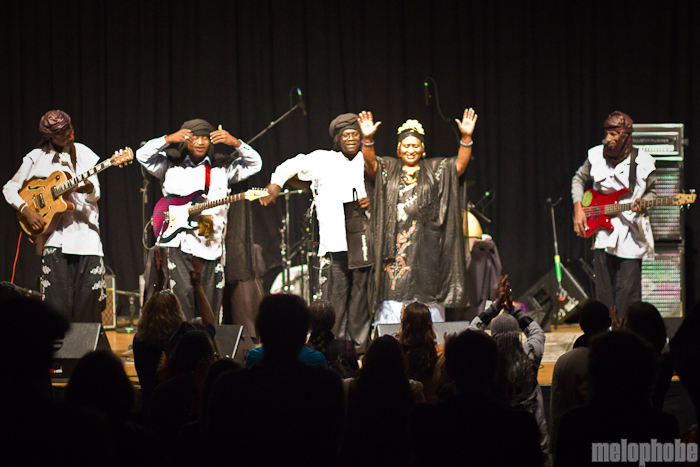
Khaira Arby sings in three different Malian dialects: Sonrhai (her regional language), Tamashek (the Tuareg language) and Bambara (Mali’s national language), plus Arabic and French. Ali Farka Touré - perhaps the most famous Malian musician worldwide, who married into Arby's family when she was young, was her musical mentor since her family was devoid of musicians and her father forbade her to sing. For 20 years she practiced and performed in the ancient city of Timbuktu where her followers regard her as the “Nightingale of the North.” Her recordings have only circulated via cassette tape in that region, until recently. She now has a digitally recorded album and has embarked on a US tour. Khaira’s dialects and rhythms come from a long history of Saharan caravan trade, herding, and mining. With electric guitar, hand durms, and string instruments, the sound reflects ancient Malian culture framed in rock and blues. Rarely touring outside her home country, her current band includes mostly family members. The bassist is her cousin, the drummer is her nephew, and the younger guitarist is the son of a previous guitarist who pursued other projects with Oumou Sangaré.
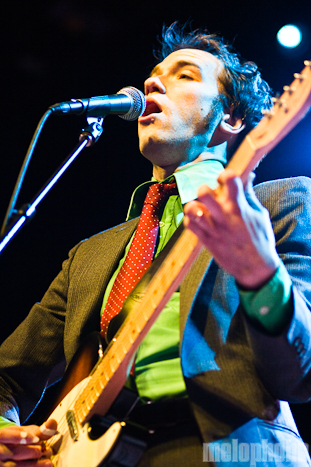
Singer and lead guitarist of Brooklyn’s The Sway Machinery, Jeremiah Lockwood (also of Balkan Beat Box), met Khaira Arby in Mali during the Festival Au Desert - a yearly music festival started in 2003, primarily celebrating Malian music but recently has invited groups from around the world to play. They connected on their shared affinity for familial legacy and paying cultural homage through music and decided to collaborate on both recorded songs and an international tour.
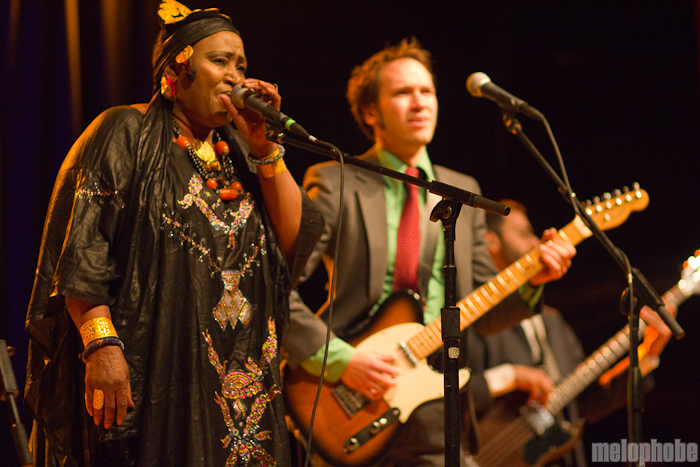
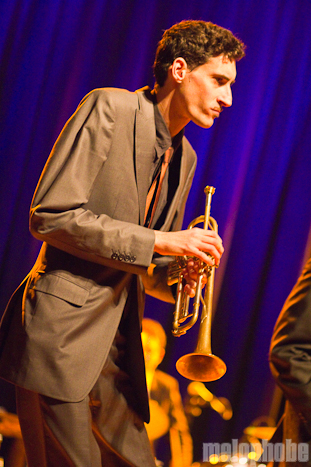
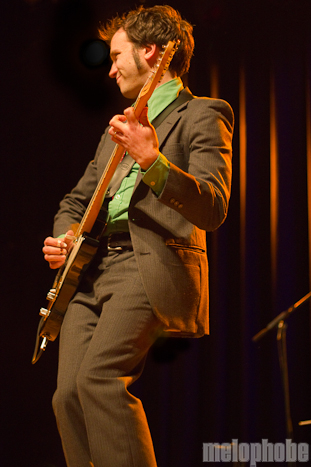
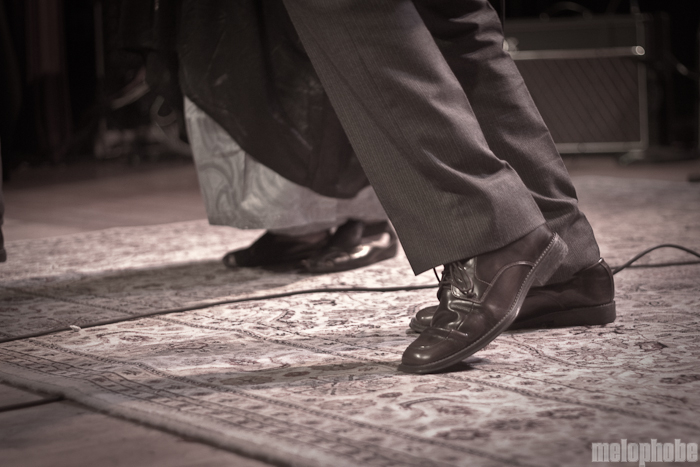
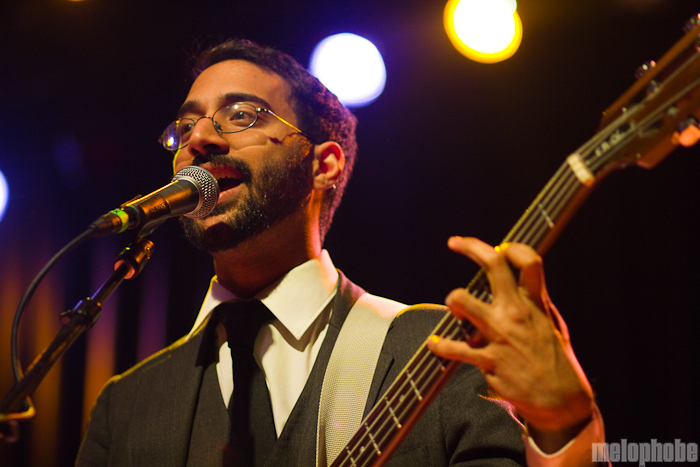
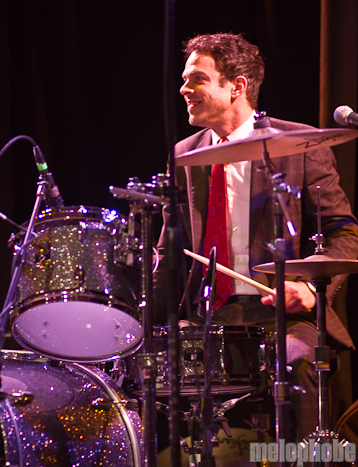
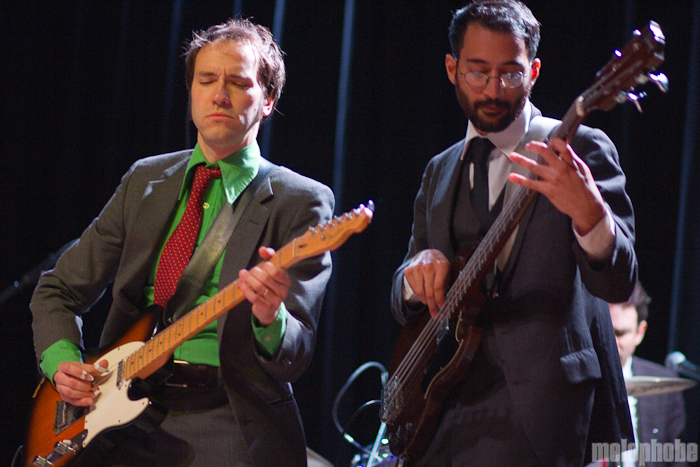
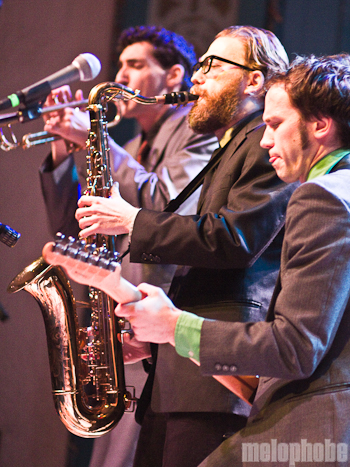
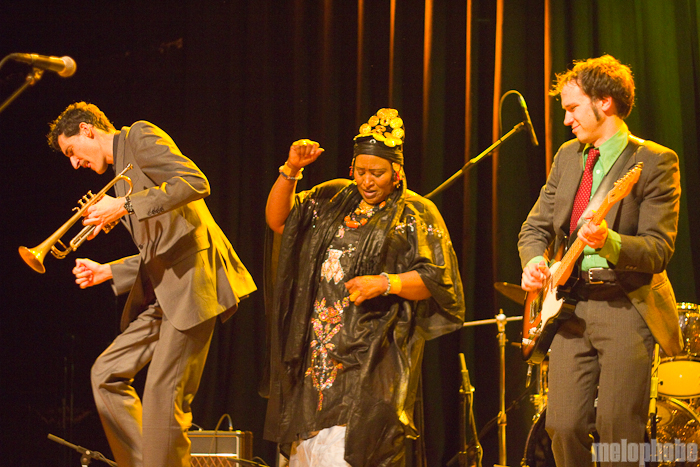
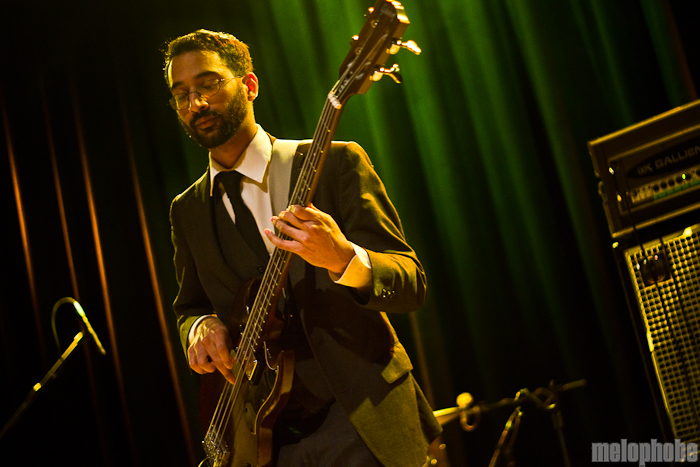
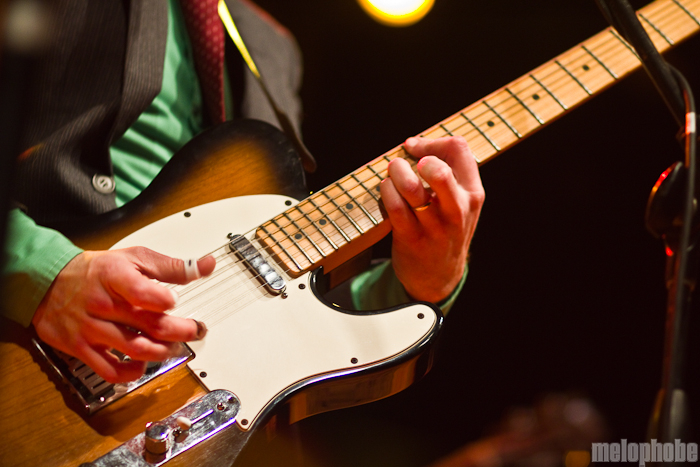
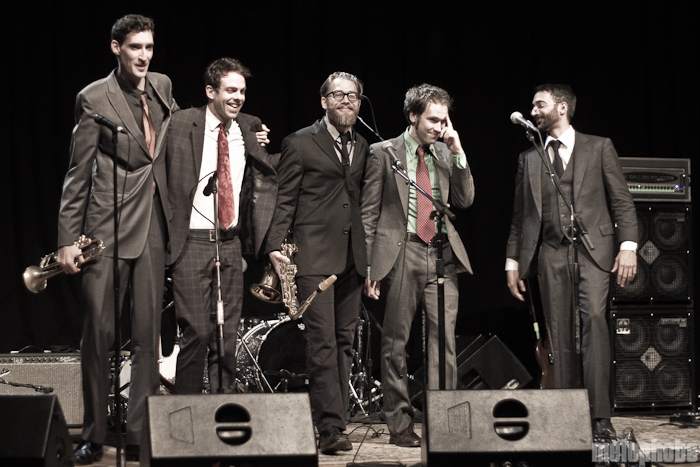
The Sway Machinery dress the ancient meditative prayer chants of Jewish cantors in swanky rhythms and danceable beats to create a sound that nods respectfully to history while presenting itself handsomely on the table of contemporary world music. The Arabic-themed décor rendered the Aladdin Theater a fitting venue for these world-music aesthetes, with the proscenium arch, tapestries, tassels, and fringe richly highlighted with splashes of teal, gold, and red. The audience scattered itself throughout the red velvet theater seating and watched intently as the band, looking dapper in their grey suits and oxfords, played their first two songs alongside Khaira. Lockwood serenaded in Hebrew with a voice and facial expressions of operatic caliber, alternating with Khaira as she juxtaposed a culture rarely heard against one we’ve all heard, yielding an impact unique to her shows outside of Mali.
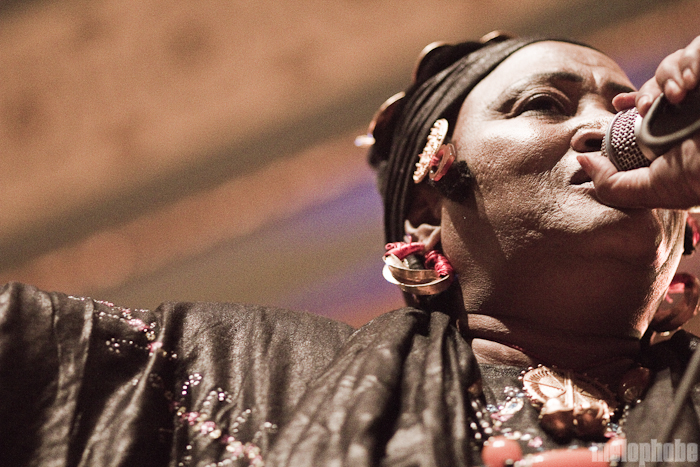
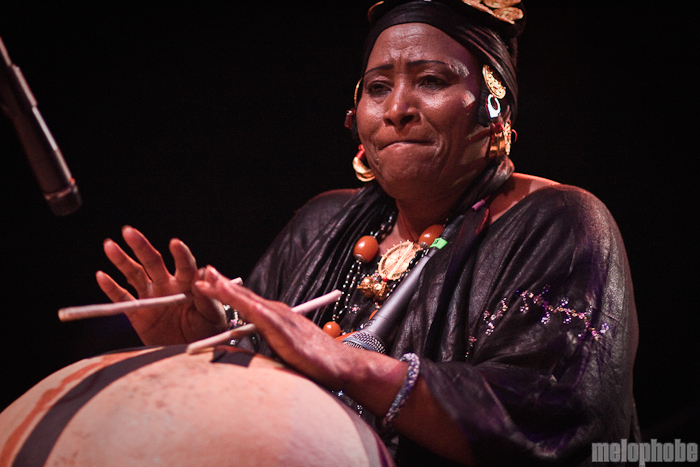
Khaira wore a wispy wide-sleeved black robe decorated with shimmering embroidery, a matching scarf draped across her shoulders, and a headscarf featuring a beautiful mélange of gold coins. We couldn’t understand the words, but her face and voice so adequately expressed the joy and passion inherent in them that we didn’t have to. Middle aged men and women beamed smiles at her, and bounced and danced like children on their slice of dance floor when she sang, returning to their seats when she disappeared backstage.
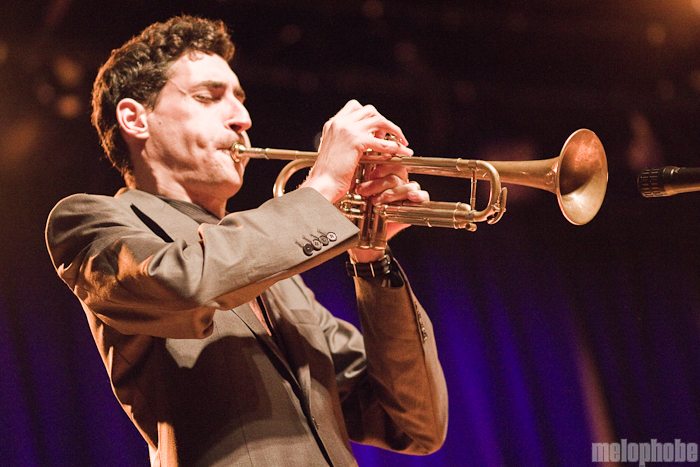
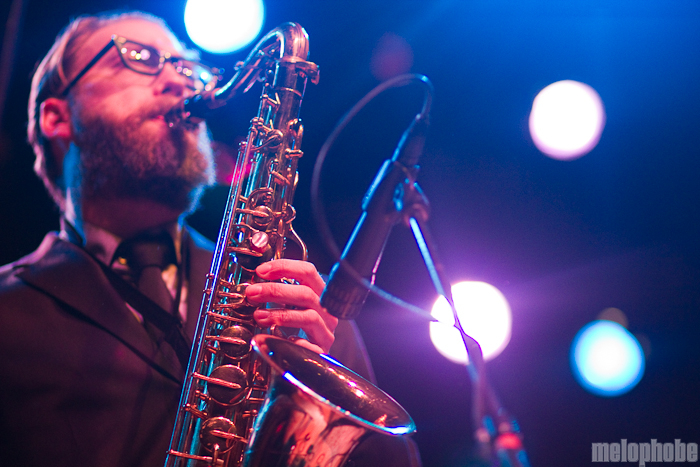
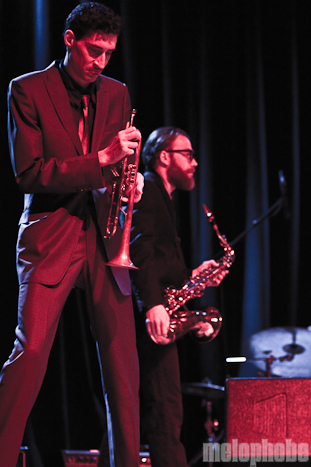
Lockwood began one stand-out song by voice-acting a folk tale of sorts about finding his un-evil twin in a pool of water in the woods “once upon a time when [he] was a highway man and rode the rails…” The story ends once he is tempted with a promise of the innocent twin’s sister and is subsequently “raised up from the dead.” He delivered the story in scratchy sinister drawl, then stepped back from the microphone for a moment, grabbed his guitar and followed the band as it dived abruptly into full, fast, loud instrumentation. The trumpet player and saxophonist stood together stage left, creating an atmosphere of exoticism with their instruments, and remaining animated and self-possessed during interludes. After the last song, Lockwood gave a salutation, “We’re very blessed to be in Portland, Oregon,” and rounded up the band for a traditional theatric bow. They departed amongst applause that segued into a woman running up to stage, waving her hands back at the audience, pleading: “Don’t leave! Don’t leave! Khaira Arby is coming!” Evidently, a number of people were under the impression that Khaira and The Sway Machinery were a single act, and now, since we had seen them both perform, it was time to go. Not so.
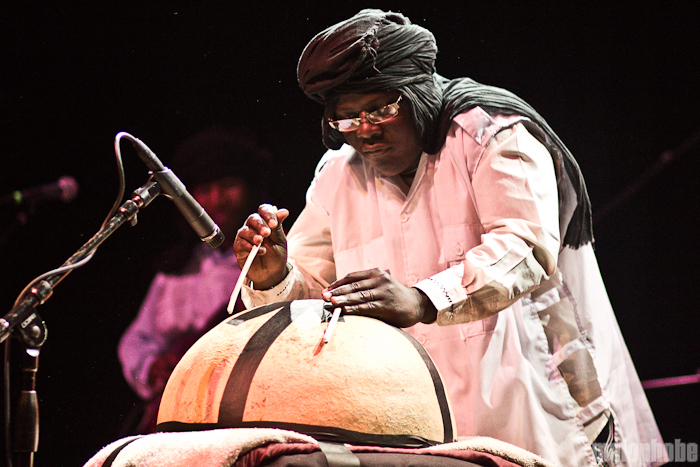
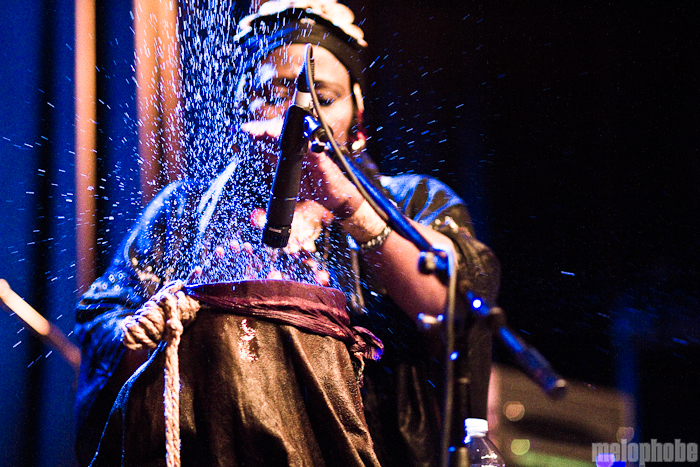
Khaira Arby appeared onstage with her family-band of men in traditional Malian black headscarves, loose-fitting shirts, trousers, and . . . rock-n-roll instruments. The boys’ blues-rock musicianship looked strange but sounded impressive. Led Zeppelin-esque solos spilled from the guitarist as naturally as his breathing, and Khaira sang and played hand drums with a mesmerizing coolness and command of her craft. Occasionally she would pour water on the hand-drum for special effect. The drummer maintained a smooth groovy beat for each song, essentially providing a steady platform for Khaira to improvise and wind her vocals around.
A few avid fans requested songs, offered their hands up for shakes and kisses, and even handed her dollar bills. The experience of these two acts was humbling to say the least. Each of them unearths an ancient culture and mythology through contemporary music with a depth that I can only attempt to wrap meaningful words around. I hope sincerely to hear the world through their music again soon.