Nika Danilova, aka Zola Jesus, is an experience in presence. There is an immediacy to her sound, a certain forcefulness that, if a description must be ventured, evokes the shadow of something ominous looming over your shoulder. To listen to her music is to be enveloped, a feeling at once both comforting and disconcerting. On Thursday night she brought her band to Holocene, following up on an appearance at the same venue a mere eight months earlier.
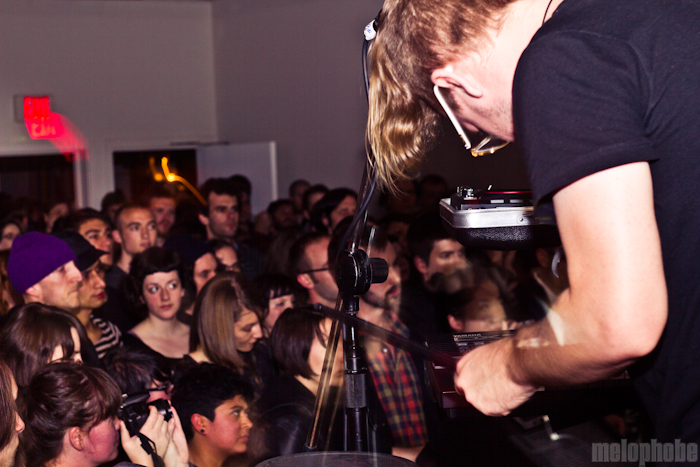
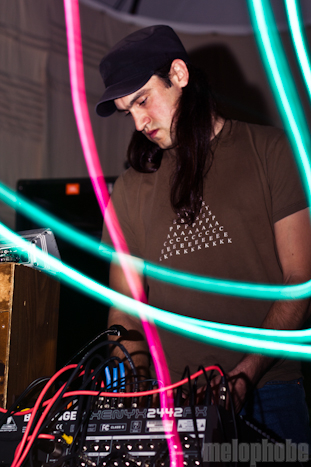
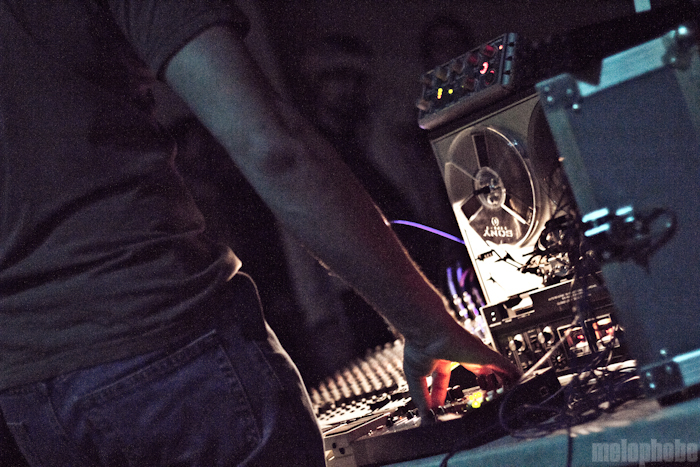
Leading the way to this specter was a pair of more-or-less appropriate opening acts, interspersed with mixing from DJ Nightschool in the lounge. Portland experimentalist Pete Swanson opened things up, setting up his array of equipment on the floor in front of the stage. His performance began unannounced, leaving many to drift in from the lounge area only after it became apparent that the strange noise that had taken over the speakers was most definitely not the house music. His brief performance was similarly unassuming – not dissimilar from watching the sound tech work – but the music was dark and haunting, evoking a sense of the delicate balance between momentum and control, moving forward at a steady pace but constantly threatening to come undone. Indeed, it took no great effort of imagination to picture the composition accompanying a film of a steaming locomotive coming perilously close to derailment, and for all its deconstructivist qualities, there remained a certain kinship to Steve Reich’s Different Trains.
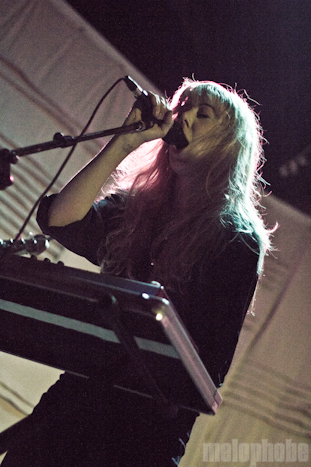
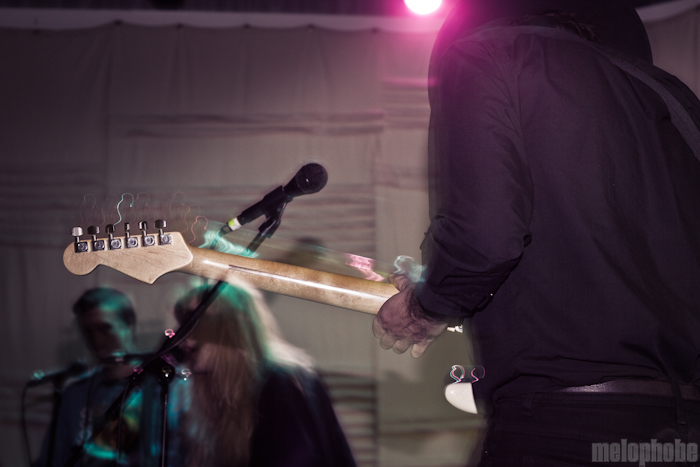
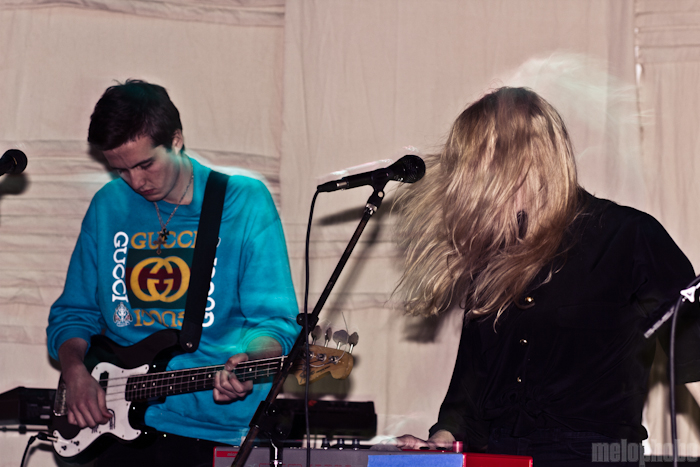
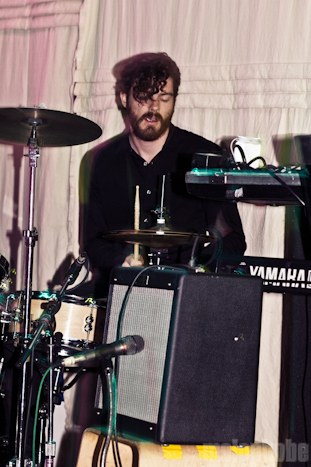
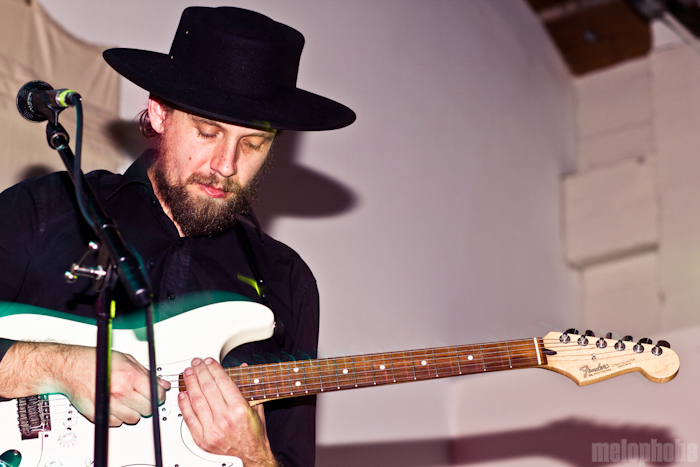
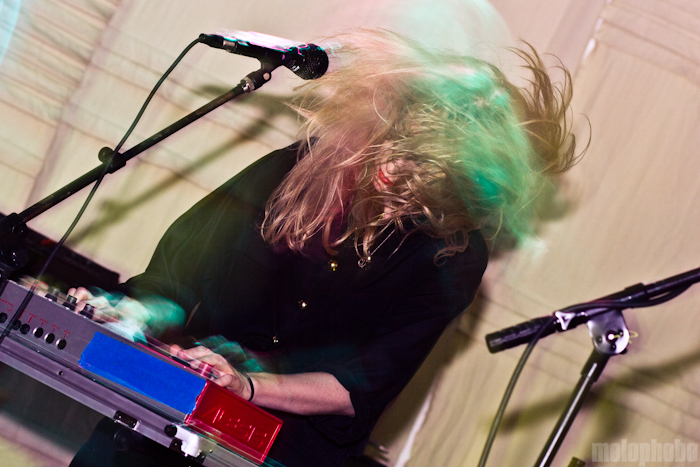
Australians Naked on the Vague followed. Though bearing some stylistic similarities to Zola Jesus’ dark, post-punk tendencies – both display some significant Joy Division influences, for instance – Naked on the Vague was in fact much less in keeping with the spirit of Zola Jesus than Swanson had been. Vocalist and keyboardist Lucy Phelan, who pulled off the blonde-in-black look as if she’d invented it, bounced around at her keyboard table, belting out her lyrics with a fist pumping in the air. The band’s music certainly possessed some basic pop sensibilities, but it was a variety of pop run through psychedelic sludge, giving it an amorphous and occasionally sinister quality. The effect was broadly positive, except that a general imprecision in the sound seemed to shift the balance a bit further toward the sludge end of the spectrum than was probably optimal. Combine that with Phelan’s riot grrrl stage antics, which never quite seemed to fit with the mood of the music, and the general sense of discontinuity made it hard to ascertain exactly where the band was going.
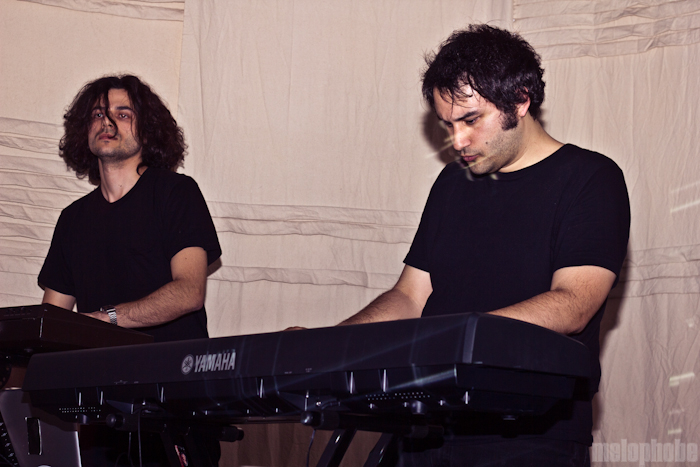
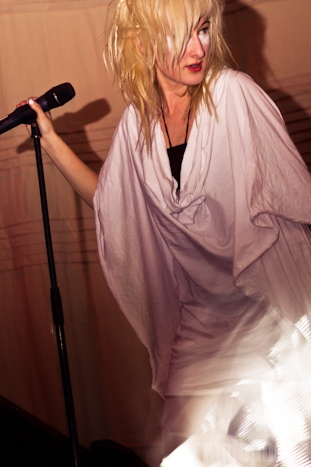
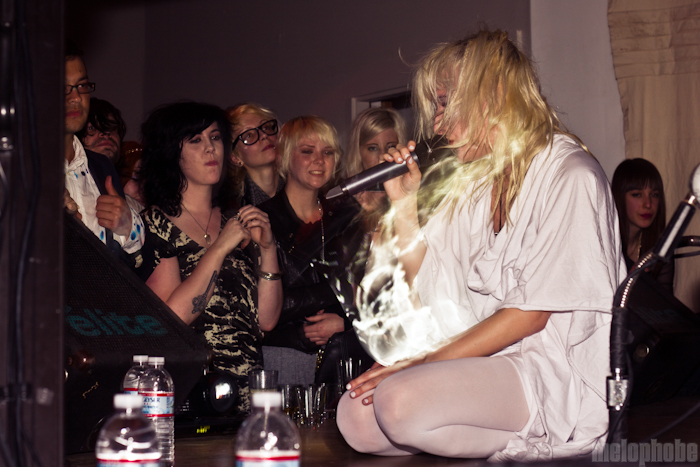
Zola Jesus’ set began with a blast of noise emanating from an empty stage. That the band was coming was not in doubt, but the delay was just long enough to foster a bit of tension in the room before they finally emerged from behind the curtain at the side of the stage. The band took their places first, followed by Danilova, crawling on all fours and clad in something white that looked as if it had recently been pilfered from a hotel bed. In the absence of the main houselights, which remained off for the entire set, the band was on stage in conspicuous darkness. Then a projector at the front of the stage was switched on, bathing Danilova in white light and throwing bizarre light patterns across the wall behind the stage. The first prominent drum beats of “Night” were heard, Danilova rose, and the spectacle began. One’s first impression of Danilova is how petite she is, but the thought is quickly abandoned as her immense stage presence and even bigger voice fill the room. Danilova was a hurricane, arms swinging, body writhing, running around the stage in a flurry of white as the projector flashed blinding rays of light across her legs. In fact, apart from a pair of artless lights at stage right and the occasional camera flashes, the projector was the only thing illuminating the band, giving the performance the unappetizing aura of a shoestring budget basement show. The sound wasn’t great either, submerging the opera-trained Danilova’s vocals too deep in the mix. Somehow, though, the energy of the performance more than made up for these faults. On “Run Me Out,” a relatively staid song from 2010’s Stridulum EP, the band and Danilova were at their best, as she swung her head around in the light of the projector and aggressively wailed the four repeating words of the emotive chorus: “Run…Me…Out…Again…” At that point, it may have been the highlight of the show, but shortly thereafter, on “Manifest Destiny,” Danilova upped the ante again, leading an intense rendition of the song even as she disappeared from sight into the crowd at the front of the stage. The music proceeded, and the vocals continued to dominate the room, but there was no sign of Danilova – until, quite suddenly, the song was over, and she emerged from somewhere toward the back of the room, ran right past me, through the curtain and backstage, quickly followed by her band.
Zola Jesus returned for a one-song encore, but it was anticlimactic, almost an afterthought. There seemed to be some confusion as to whether the band would come out once more, but when they didn’t, the crowd amicably wandered back to the lounge.
It would have been a disappointment but for the intense energy that had already been condensed into the relatively brief set. As the room emptied out, I spied Danilova standing on the floor near the front of the stage. She was barefoot, still wearing her sheet-garment, and even tinier than I had realized. It is probably pointless, and certainly redundant, to dwell on how such a big sound can come from such a diminutive figure. But it is worth reiterating her incredible presence. On stage, she looks and sounds huge. It is an achievement of performance not often matched, and it will continue to be a credit to Zola Jesus. The intimacy of Holocene is always a pleasure, but it seems likely that next time they come to town, it will be in a substantially bigger room.