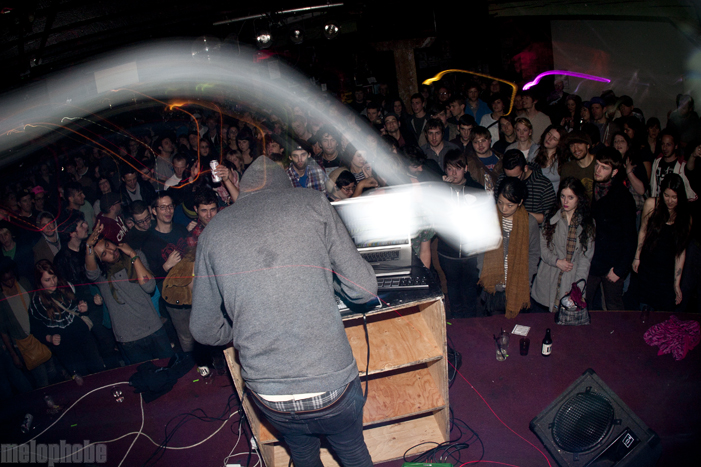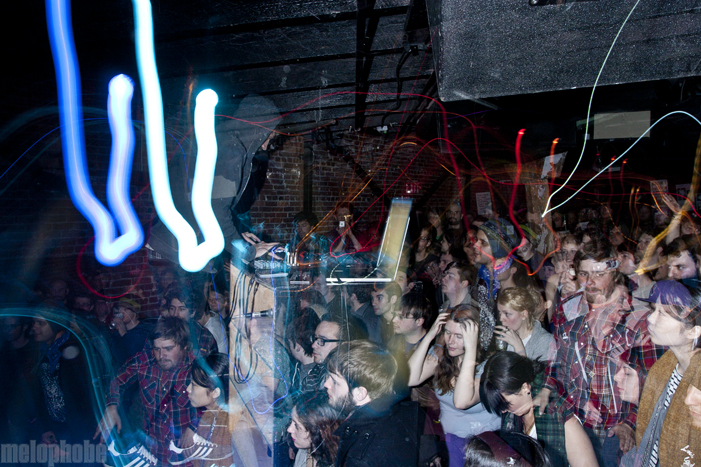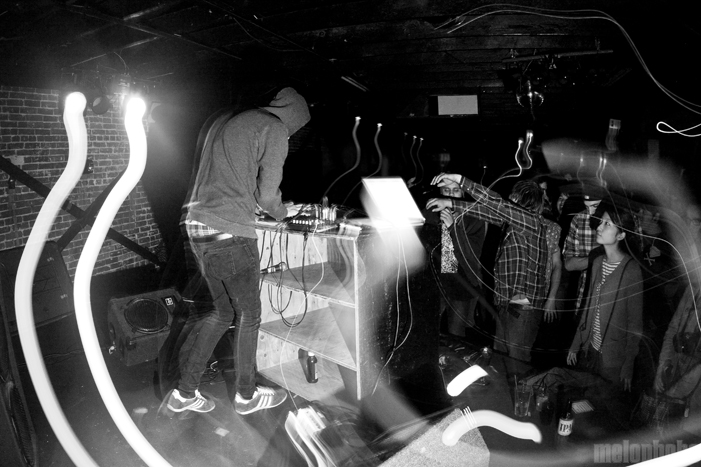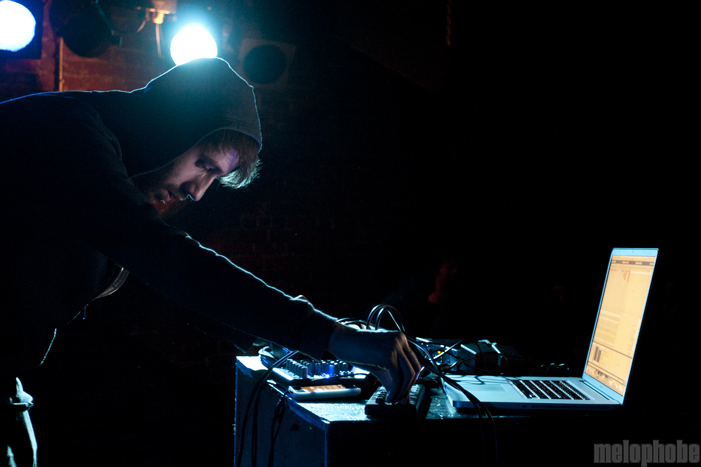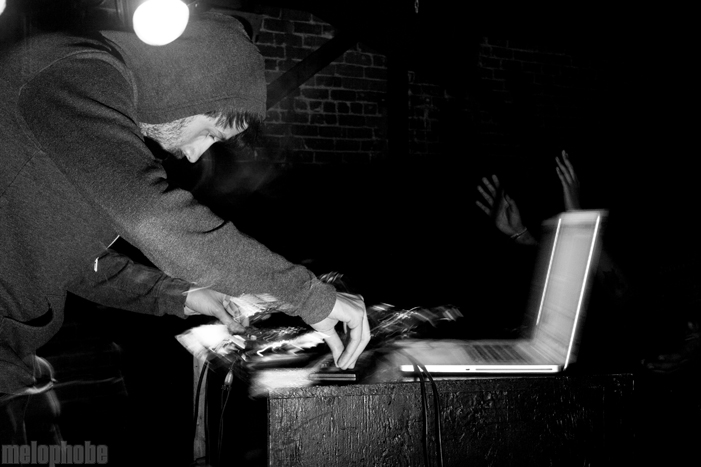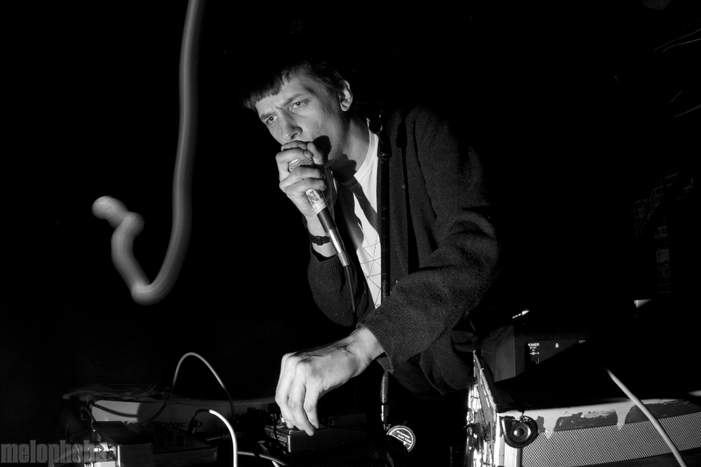
Derwin Panda has spent most of his musical career churning out remixes and EPs – short, attention grabbing numbers – only recently emerging, at the dawn of his fourth decade, as a gifted compositionist in his own right. On his 2010 debut LP, Lucky Shiner, the producer known as Gold Panda undertook a startling shift, crafting a patient, emotionally evocative suite of remarkably cohesive tunes. Without a doubt, the album has its ass-shaking moments, but it clearly shows Gold Panda putting his talents toward another end. This presented a rather curious problem when it comes time for the London-based DJ to perform in Portland, Oregon. The packed house at Rotture surely included some especially savvy electronic music fans, but one has to assume that the indie-press attention garnered by Lucky Shiner accounted for its fair share as well. And frankly, though any self-respecting artist would rightly argue that both facets of his work are equally his own, there is nevertheless a disparity between the two that is problematic for any but the most devoted or open-minded fan.
Any question of what side of the fence Gold Panda was going to come down on seemed largely settled by the night’s opening billings. Portland’s own Graintable played first, taking the stage an hour late, by which time the room had thankfully filled from the conspicuously scant crowd on hand for the scheduled 9pm start. Graintable is a classic dancefloor-oriented DJ, and proved adept at quickly getting the crowd moving. Relying on blasts of synth as much as beats to establish a rhythm, Graintable maintained a high tempo that, though rather repetitive, was clearly to the crowd’s liking. He only seemed to lose them when, on several occasions, he introduced an interruption in the beat that was impossible to anticipate and even more difficult to follow, prompting momentary confusion and briefly forfeiting the momentum he had earned. Whether poorly executed or poorly conceived, such transitions marked the only downside to Graintable’s performance.
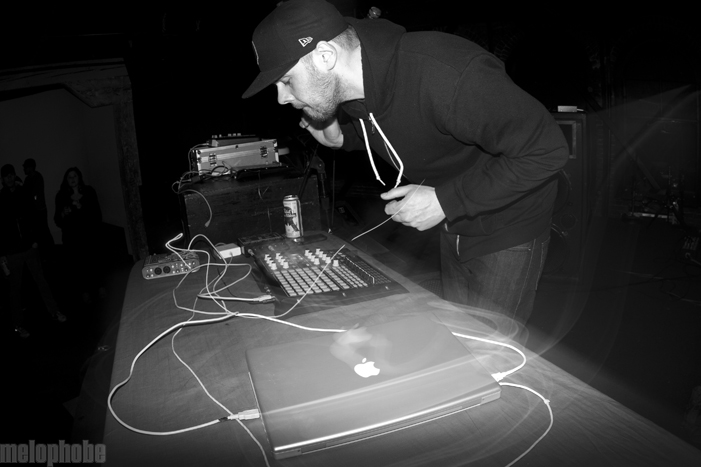
The UK’s Dam Mantle followed, and the set was something of a misfit. By virtue of reputation, his position in the middle of the bill was appropriate, but his relatively brief forty-minute set – Graintable played for nearly an hour – and his markedly less accessible approach would both have worked better in the opening slot. The first impression was not at all disappointing. Dam Mantle immediately distinguished himself with his nuanced beats and experimental tendencies. Coming on the heels of Graintable, though, these artistic sensibilities seemed somewhat out of place, and clearly fell flat on a fair number of the audience. Dam Mantle’s frenetic stage presence – he looked like a professional table tennis player, energetically bouncing around at a seemingly ill-advised distance from the table – was equally out of place, since it did not generally find a counterpart in the movement of the crowd. Finally, on his last song, an uncharacteristically epic number, Dam Mantle managed to bring his audience around, allowing him to end, at least, on a triumphant note.
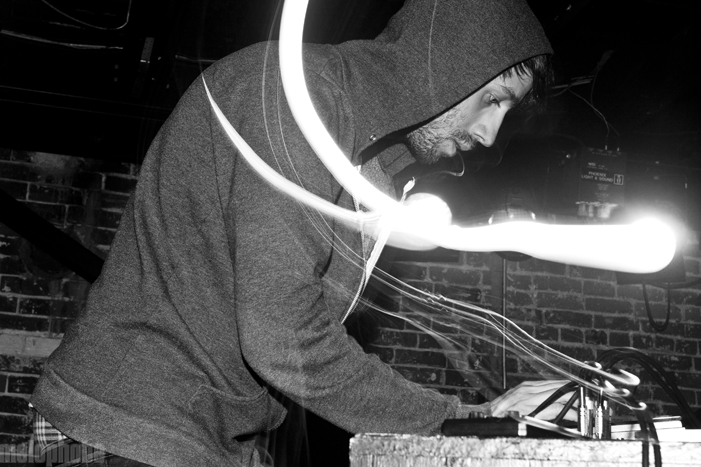
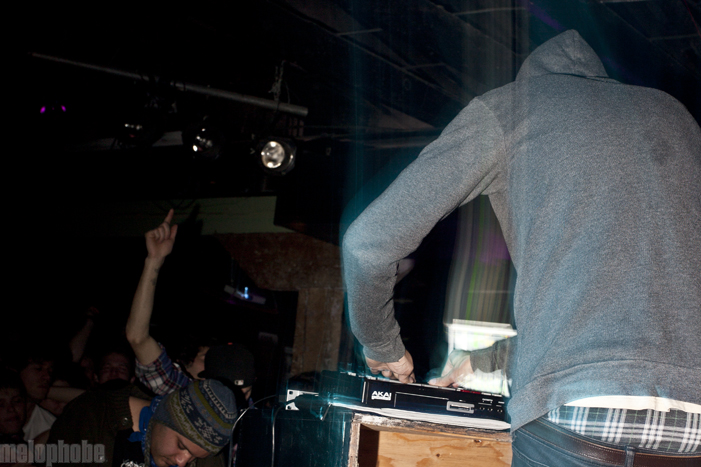
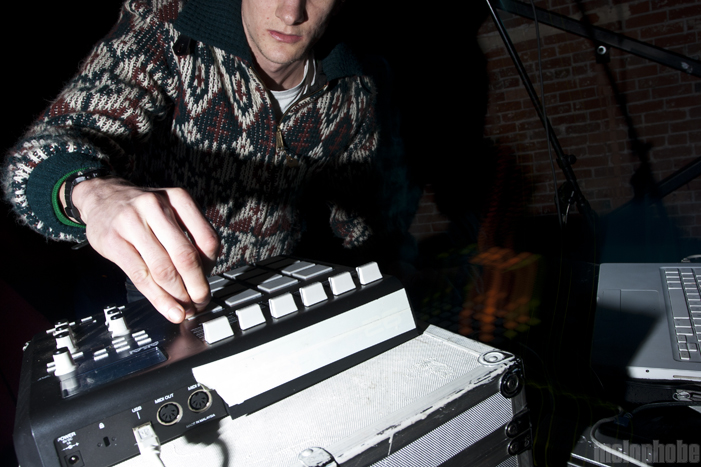
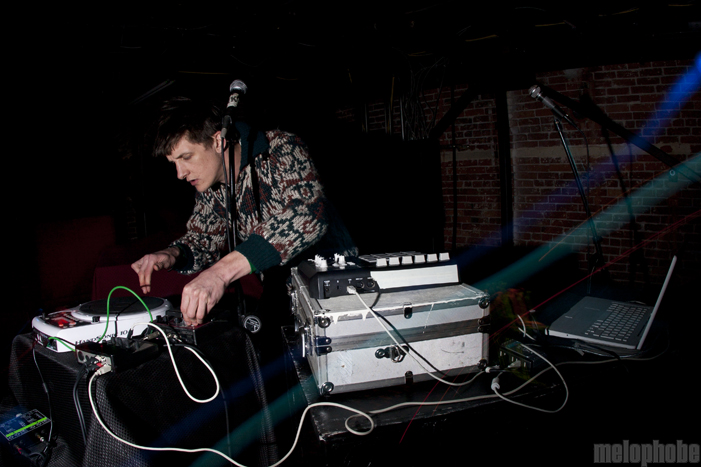
Gold Panda, upon taking the stage, was predictably greeted with a large roar. Though he would draw extensively on material from Lucky Shiner, Gold Panda was committed to the DJ format, working familiar elements in but rarely restricting himself to a simple reproduction of the recorded product. Not surprisingly, this tactic yielded somewhat mixed results. On those occasions that a recognizable tune emerged from the beat – “You,” the excellent first single off of Lucky Shiner being a prime example – the crowd responded enthusiastically. On the other hand, though a solid core of the room remained engaged throughout the set, there was a sense of drift around the fringes, with frequent trips to the bar and smoking patio, more conversation than usual, and a vague sort of listlessness increasingly in evidence. It was, for many, simply too difficult to relate what was being performed to the recorded body of work that is largely responsible for Gold Panda’s present notoriety. It’s an unfortunate situation, because he excels on both fronts, but the effect clearly was to attract an audience only peripherally interested in much of what he was trying to do. That’s not to say the show was a failure – there was enough on offer on both sides for most parties to walk away happy, as evidenced by the loud ovation he received at the conclusion of his set. Coupled with that, however, was the clear sense that Gold Panda had been confronted with two distinct factions in his audience, and the balancing act necessary to please them both, though successful, inevitably entailed a fair bit of compromise.