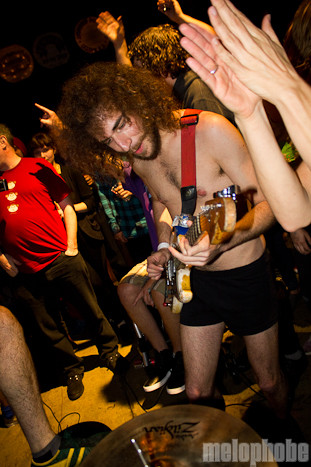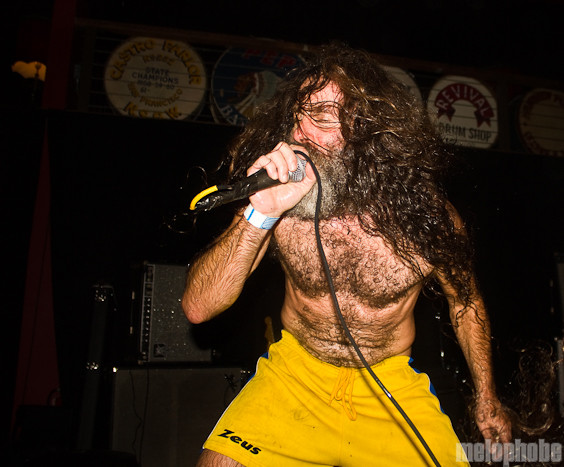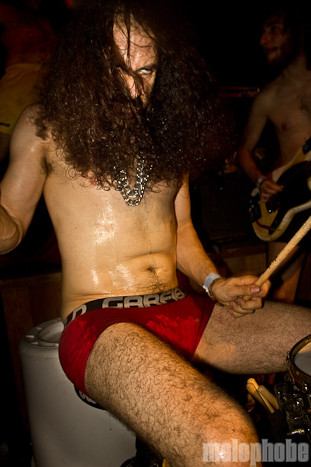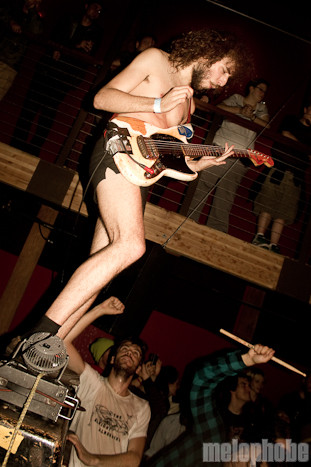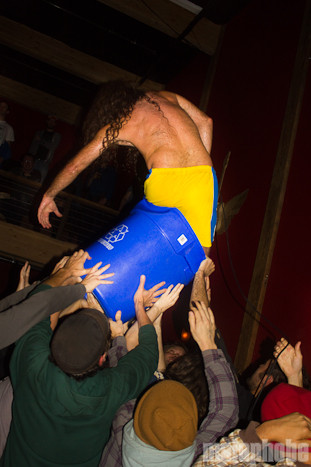
Street cred, Monotonix has it. Long before you stand around them, you will hear about the mayhem that clings to their name. It's their calling card, their essence, and the skill with which they make people want to join in on their madness is their greatest gift. What else explains the look of joy that washes over a concert goer's face after they've just been hit in the head with a recycling bin? Would George Michael's fans insist that he jump if he was hovering up in the balcony? Doubt it. Seeing Monotonix is like going to some hardcore wish fulfillment seminar that stirs up the mischief in you and sends you out the door convinced it's your only true friend. Yo ho ho.
The first opener did not share this same spirit. O Bruxo preferred to hover in jam band territory, playing pieces that were mostly instrumental and heavily influenced by Latin rhythms. At their best, O Bruxo evoked the sweet, Brazilian-born rhythms found on albums like the City of God soundtrack, but at their worst, they were just meandering—lost in the echo effects they loved to employ. It was fun to hear a spacey section complemented by a flute, though. Think calm and thoughtful, not easily excitable Jethro Tull. This is probably the only point where I thought, "Hey, here they sound different," but the problem, even then, was that the flute was left in the background. At no time did one instrument dominate the sound, which eliminated the band's chance to hit a true high. So the audience was left with stuff that invited a head-nod, but not a jaw drop. Some were dancing, but mostly side-to-side in a way that reminded me of that Dave Chappelle/John Mayer skit about how white people will dance anytime a guitar is playing. And as amusing as that was for a moment, I was mostly bored during their performance.
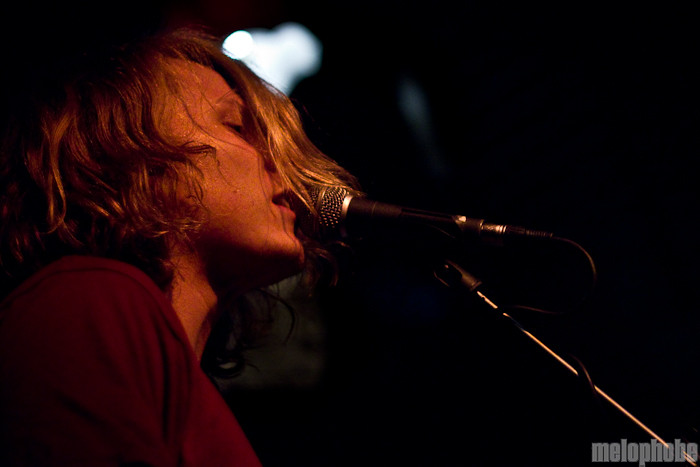
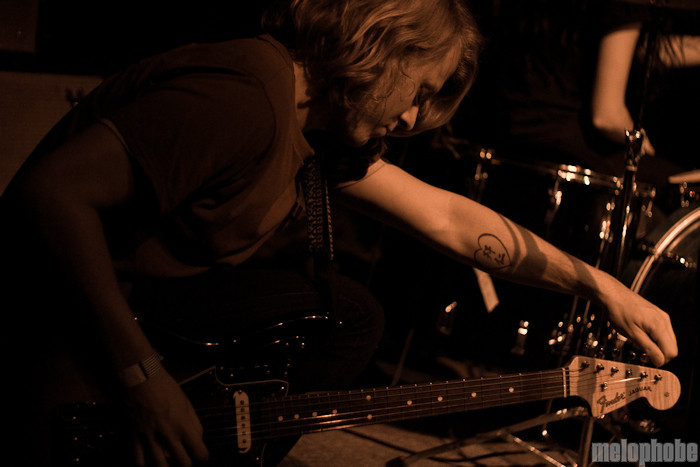
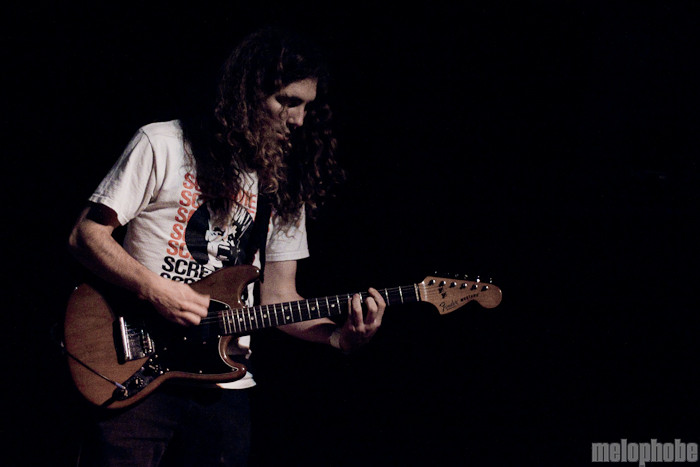
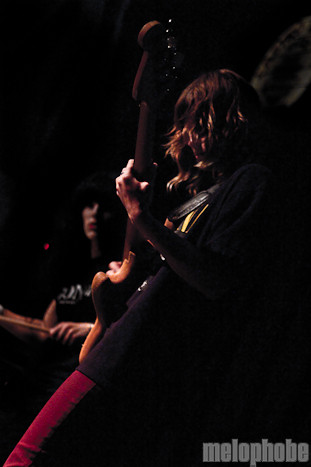
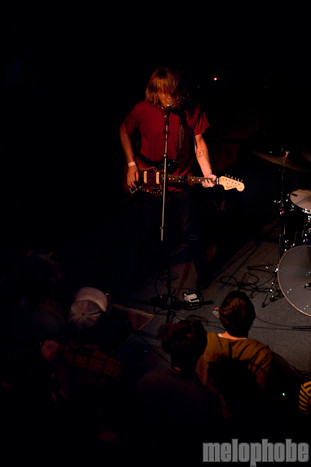
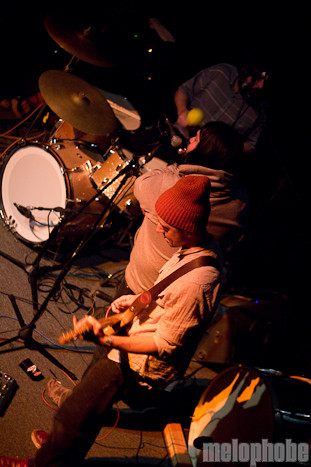
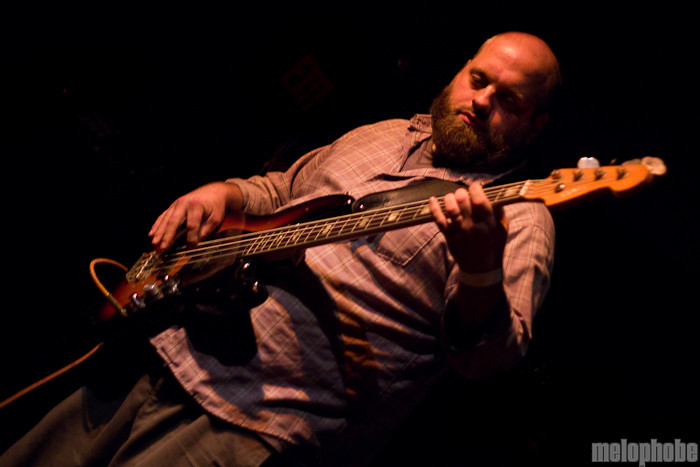
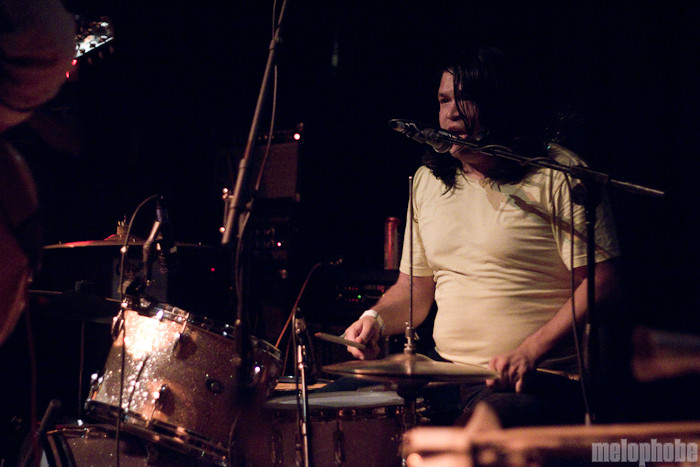
Ty Segall and his band did the room a favor by reinvigorating it with their set. Suddenly, it was like I was in the middle of one of those old grunge videos, where everyone on stage had long, dirty hair and Fender Mustangs. The bassist's Nirvana shirt only sealed the sentiment and I began to pretend that I wasn't only 8 when grunge emerged and that I too had participated in the Northwest club scene before the bang. Ty helped get me there by playing in a tone jacked from In Utero and a singing style that dipped between Ramones-style pacing and Jack White-esque howls. Most of the time they played what would be classified as garage punk—all power chords, heart, and most of the structure melodies require. The solos were simple, the distortion was fuzzy and the words were deceptively good; Ty Segall has mastered the art of making a familiar sound sound fresh. If you are the type that needs innovation in their music, don't look here, because there isn't any; however, what he does he does well, and that is a statement you can't attach to a lot what comes out. In fact, sometimes I think I'm more impressed by someone like Ty that is retreading the past without sounding annoying or commonplace than I am by the person that pushes every limit. Granted, the pusher has to overcome the people desirous of what's familiar, but the retreader has to overcome everything that came before them. If they sound like someone else, they either have to sound better or be so good at the style that they can get by on "They just write great songs." I would have to listen to more of his work to tell you if he writes great songs, but in that room, in the midst of the fuzz and screams, it appeared that he does.
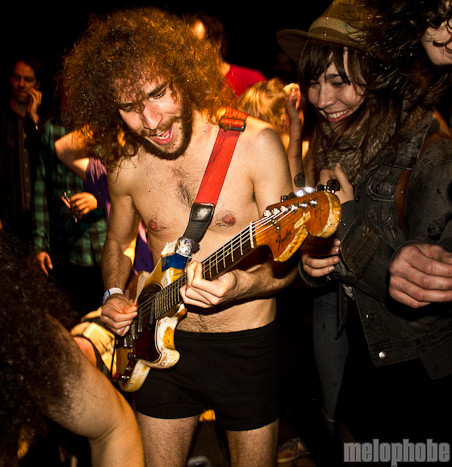
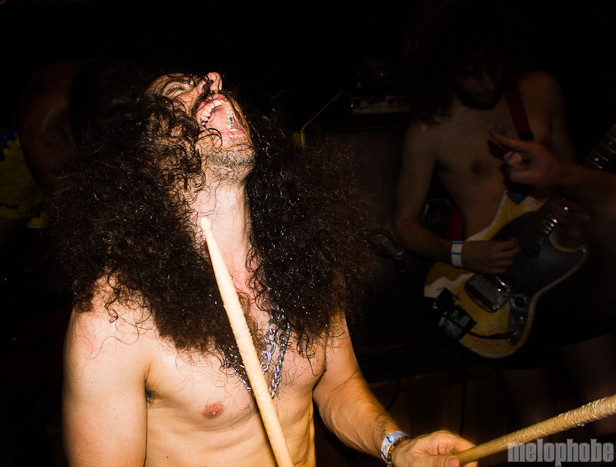
Monotonix. If I had to write a book on Monotonix I think I would call it "The Sound and the Mayhem," because in a lot of ways, that's all that they are. The scales will always tip towards the mayhem though. Soundwise, they aren't unique. On record they are usually classified as garage rock, though they have a beefier tone than something you would expect to hear on Nuggets. It's enjoyable, I like it, but it's not revolutionary or anything. So, why do people talk about them so much? It's because something shifts in a live setting when the sound and the mayhem unite. Garage rock pretty much gets thrown out the window for something more akin to hardcore (see the barked vocals, the dirty amp sound, etc), punk, and riff rock. The vocals become unintelligible most of the time because they aren't what's important. What's important is the energy, the frenzy, and the hurricane; without the sound, the mayhem would wither.
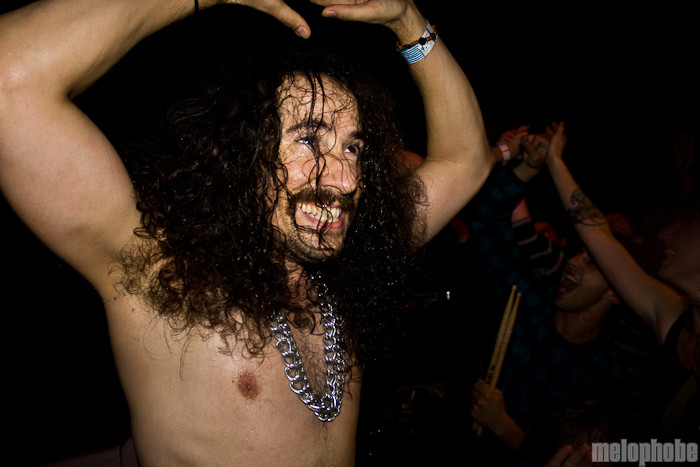
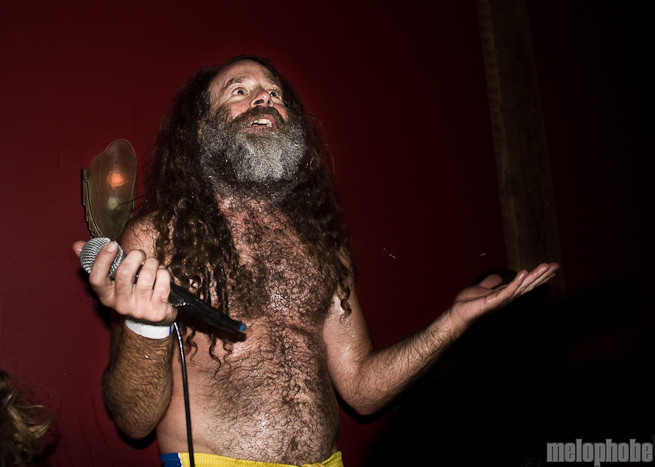
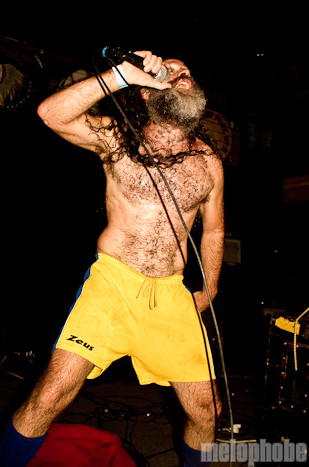
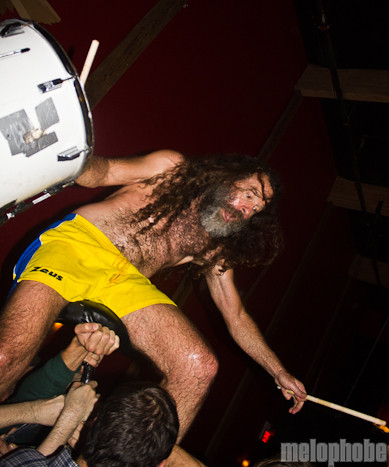
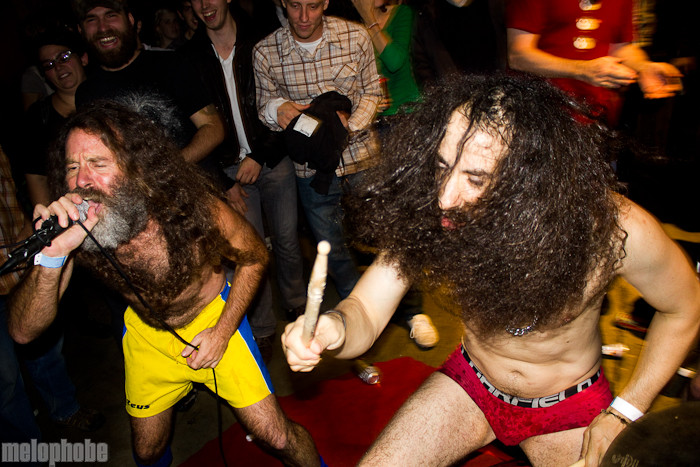
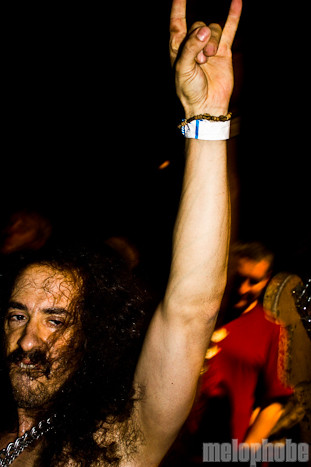
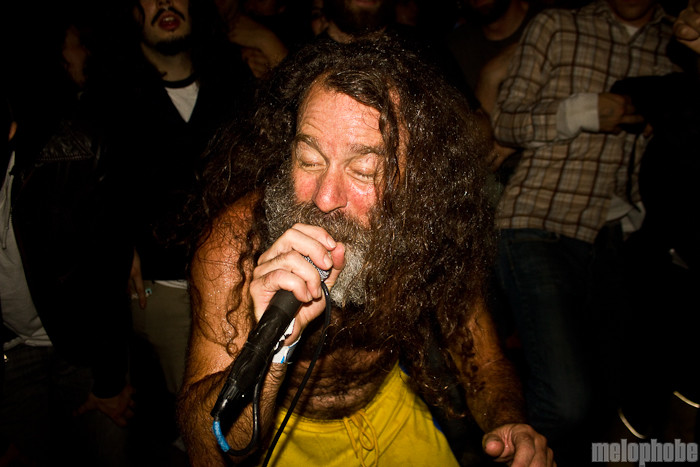
Watching from above, you could see this hurricane both brewing and laying waste to everything around it. In the eye was the band . . . at least for the beginning. They choose to set up in the middle of the floor and let the audience form a circle around them. This instantly hooks people in, not just because they are fingertips away from the action, but because they are forced to become part of the show, whether they like it or not. The message quickly becomes, "no one is safe." Ami Shalev, the group's lead singer, is a fearless specimen that will one day be arrested for inciting a riot. He is charismatic to say the least, and treats his body more like a pit fight than a temple. When the music starts, he gets the crowd to lift him up and pass him around the room, sometimes falling head first into the onlookers pretending they were safe on the outskirts of the circle. He will put a mic in your face and let you give it all you got, he will ride around the room in a trash can, and he will sing, though most of the time you don't notice it. This is why the mayhem wins. You absorb the music rather than just sit back and listen to it. There is too much visual stimuli, you have to pay attention. When you do, you are rewarded, sometimes just for the simple fact that because you were looking you were able to dodge a beer can coming right at your head. You can't dodge the beer though. You will get wet and if you are near the band, you will leave sweaty and possibly with a black eye.
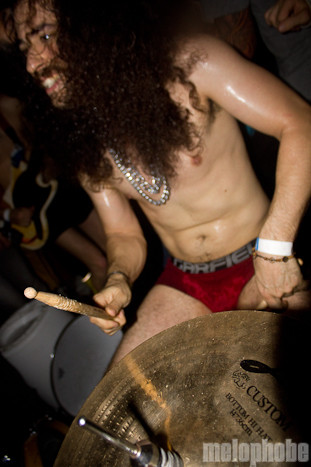
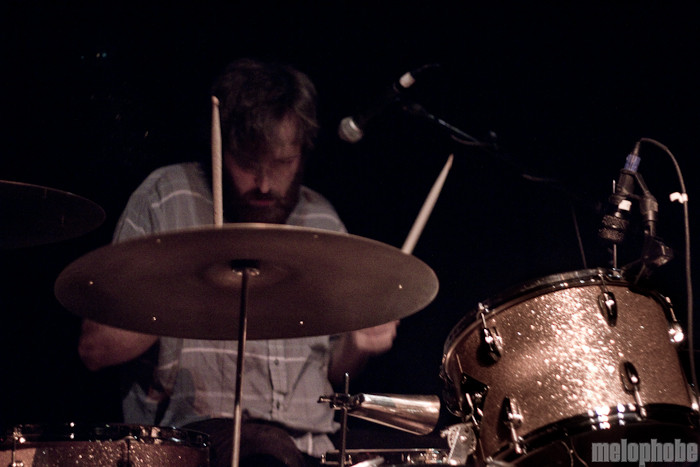
In all of this, the crowd was right there with them, firmly in the palm of their hand. And it was like this right from the beginning, or maybe from the point that Ami picked up a random girl and tried to set her on the drummer's shoulders while he's banging away at his kit. She looked surprised, but she played along. Was she the type that just goes for it or was she caught up in the vibe of the show? Either way she was loving it. We all were and somehow they managed to live up to expectations. Those expectations are weird though, because you go in expecting to see something that is unpredictably predictable. What I mean by that is, usually expectations materialize as you expecting to see a singer/group blow you away with their singing or soloing or something. But here, you expect to see something crazy, however since you know crazy stuff is going to happen, you aren't surprised when you see it. Weird feeling. In the end, you just enjoy it and then pass along the word: "You have to go. They are crazy live!" and then the cycle begins again.
Something that I didn't know going into the show was that they were funny. Ami frequently silences the songs at random moments to impart some of his viewpoints about a situation. For instance, once he stopped the music - while he was being held up on a drum stool by the crowd - to tell us "in the spirit of Dr. Strangelove, Shalom!" Shalom, Ami. Another time, he stopped the show to marvel at how someone had tossed the lid of a recycling bin like a frisbee onto a girl's arm across the room. The move had received cheers when it happened, but became even more amusing when Ami spent 5 minutes talking about how cool it was with that thick accent of his. My favorite moment came when he ascended to the balcony and teased us about jumping into the crowd. Friendly arms went up, prepared to catch him...actually let's stop the music right there, because this moment perfectly describes where the crowd's collective head was at during this entire show. People were so into what Monotonix were doing that they were prepared to catch a full grown man falling on them from a balcony. Nuts. Ami kept climbing over the railing and then climbing back, yelling for security to stop him and save him from himself. By turning the situation into a joke, he not only captured our interest, but made us fall deeper into his clutches. He never jumped, but he did kick the music back in and rock out from on high. The staff of Mississippi Studios = good sports.
The set ended with a couple of technically awful, incredibly fun, half covers of "Black Dog," "Stairway to Heaven," "God Save the Queen," and a Northwest tribute anthem ("Smells Like Teen Spirit"). They all sounded so off and out of tune and unpracticed, but they were charming. I'd like to say it was because Monotonix made those songs their own, all sludgy and headbang worthy, but really it was because of the spirit they carry with them throughout the show. Ami even admitted, "that was bad, but it sure was fun." That's a garage rock ethos if I've ever heard one. And while I might agree with his sentiment concerning their medley, I can't say the same for the rest of the show. It was just fun, pure and simple. There's no mystery about this band, no big statement, just fun and isn't that the point of rock 'n' roll?